- Art and culture
-
- History
-
- Indian society
-
- Geography
-
- Polity and Constitution
-
- Governance and Administration
- Exploit of system by future Bureaucrats
- Data Source [Date of Publication]
- Times of India [April 23 – May 7, 2025]
- Location
- Hanumangarh, Rajasthan (Hometown); New Delhi (UPSC HQ).
- Description
-

- Poorva Choudhary (AIR 533, UPSC 2024) became the center of a social media storm after her sister posted a celebratory reel titled "Cleared UPSC while serving this face card."
- The controversy ignited when eagle-eyed aspirants noticed her OBC-NCL status alongside images showcasing a lavish lifestyle, including luxury branded goods (Celine, Dior), international travel, and premium cars.
- Critics alleged that her father, Omprakash Saharan, a senior Rajasthan Administrative Service (RAS) officer (Additional District Collector), made her ineligible for the "Non-Creamy Layer" status, which typically requires a family income below ₹8 lakh (excluding agriculture).
- Analysis
- Exploit of legal loophole
- The core of the defense lies in government guidelines: If a parent is promoted to a Group A/Class I post after the age of 40, their children remain eligible for OBC-NCL status (provided other income criteria are met).
- Poorva’s father clarified he was promoted to RAS at age 44. Legally, this creates a loophole where an officer’s child can be an "NCL" candidate despite the parent's high-ranking administrative position.
- While she may be legally correct, the "lavish lifestyle" displayed on social media created an ethical dissonance. Reservation is intended for the socially and educationally backward and not for the candidates like her who have every means to compete.
- Digital vigilantism
- It showed a shift in candidate behavior, the "Aspirant-led Oversight" where fellow students now use social media and RTI to audit the backgrounds of toppers.
- This marks a new era where Digital Vigilantism can force a candidate to deactivate their social presence even if no official wrongdoing is proven.
- Weakening public trust for a civil servant
- The Principle of Anonymity vs. Digital Exhibitionism
- One of the core values of civil services is Anonymity. A bureaucrat is meant to be the "Steel Frame"—strong but invisible, focusing on the policy rather than the person.
- Legalism vs. Moral Integrity
- Legally, she may be 100% entitled to the NCL status. But in Ethics, we distinguish between "Law" and "Ethical Responsibility." Reservation is a tool for social justice intended for those with limited means.
- Probity
- A bureaucrat’s character is tested not by what they can "legally get away with," but by their Probity. If a candidate's lifestyle (luxury brands, international trips) is visibly disconnected from the spirit of "backwardness," it erodes public trust even if it is legally defensible.
- Lack of crisis management
- The act of deactivating accounts after a controversy suggests a lack of Crisis Management and transparency.
- A bureaucrat must be prepared to stand by their actions or admit mistakes, rather than "vanishing" from the public eye.
- Empathy and Social Sensitivity
- Shows lack of compassion to an aspirant from a marginalized background, seeing a privileged peer use a quota while flaunting wealth feels like a mockery of the system.
- A future bureaucrat must possess Emotional Intelligence (EI). They must be sensitive to the "Aam Aadmi’s" perception. Flaunting privilege while benefiting from affirmative action shows a lack of Empathy, a foundational trait for an officer serving the underprivileged.
- Economic Exclusion Policy
- The case forces a re-evaluation of the definition of "Creamy Layer." Should the ₹8 lakh ceiling be adjusted to include salary for government employees, or does the current focus on "rank at the time of entry/promotion" remain the fairest metric?
- Social Justice
- Miracle children & Visionary teacher
-
Click here to redirect
- Debate on the existence of god
- Data source [Date of publication]
- The Lallantop [December 25, 2025]
- Location
- JNU University, New Delhi, India
- Description
-

- A formal, academic-style debate moderated by Saurabh Dwivedi featuring renowned lyricist/rationalist Javed Akhtar and Islamic scholar Mufti Shamail Nadwi.
- The discussion transcends religious specifics to focus on the Ontological (nature of being) and Epistemological (nature of knowledge) existence of a "Necessary Being" or "God."
- It serves as a civil template for how two diametrically opposite worldviews—Atheism/Rationalism and Theism/Faith—can coexist in a public intellectual space.
- Analysis
- Mirror to Modern Secularism & Democracy
- Javed Akhtar’s stance is a live application of the Fundamental Duty to develop "Scientific Temper" (Article 51A). He argues that questioning is the engine of civilization.
- Social liberty and repression
- Javed challenges the "result" of religion, noting that highly religious regions often face high repression, while secular societies often enjoy more civil liberties.
- The debate forces a distinction between Blind Faith and Evidence-based Belief. Javed argues that demanding "Faith" is often an admission that one lacks "Justification".
- Digital/Media as a Tool for Accountability
- It shows how independent journalism can find "islands of excellence" that the official state machinery might ignore.
- It invites the public to think critically about the Metaphysical foundations of their own laws and ethics.
- International Relations
- Operation Absolute Resolve - The Capture of Nicolás Maduro
- Data Source [Date of Publication]
- U.S. Department of War [January 3–12, 2026]
- Location
- Caracas, Venezuela (Specifically a fortified compound/fortress); Southern District of New York (SDNY).
- Description
-
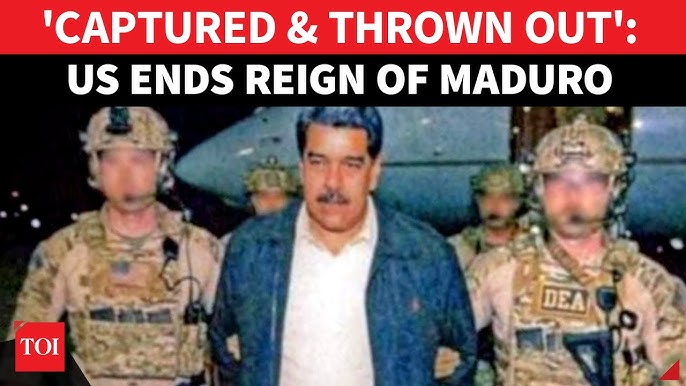
- On January 3, 2026, the United States launched a massive military operation involving over 150 aircraft and elite special forces (Delta Force) to extract Nicolás Maduro and his wife, Cilia Flores, from Caracas.
- The operation followed a 2025 escalation where the U.S. doubled the bounty on Maduro to $50 million and designated the Cartel de los Soles (Cartel of the Suns) as a terrorist organization.
- Maduro was transported to New York to face federal charges of narco-terrorism, cocaine importation conspiracy, and weapons possession.
- In his absence, Vice President Delcy Rodríguez was sworn in as acting president, though her government remains under heavy U.S. pressure.
- Analysis
- The "Noriega Precedent" and Modern Extraterritoriality
- This mirrors the 1989 capture of Manuel Noriega in Panama. However, unlike 1989, the 2026 operation occurred in a much more complex geopolitical landscape involving Russian and Chinese interests.
- This challenges the principle of Sovereign Immunity. Under international law, a sitting Head of State typically enjoys immunity from the jurisdiction of foreign courts. The U.S. bypasses this by arguing Maduro’s 2024 election was fraudulent, thus he is an "illegal usurper" rather than a sovereign.
- Geopolitics of Energy - The "Oil for Stability" Trade-off
- The U.S. has signaled that sanctions relief is contingent on Venezuela severing ties with Iran, Russia, and China, and granting U.S. firms exclusive rights to modernize the oil sector.
- This highlights Realpolitik—the use of military force to secure economic energy corridors. It marks a shift from "regime change for democracy" to "regime change for resource alignment."
- Internal Security - Power Vacuum and Paramilitary Risks
- The removal of the "head" of the Cartel de los Soles risks a "Hydra effect." Without a central authority, decentralized criminal gangs (like Tren de Aragua) may compete for control, leading to a surge in regional instability.
- Internal Security Insight:
- For India, this serves as a case study on non-state actors embedded within state machinery and the difficulty of dismantling such networks without causing a total state collapse.
- Ethics of Unilateral Intervention
- The "Rules-Based Order" vs. Unilateralism:
- Critics argue that bypassing the International Criminal Court (ICC) in favor of a domestic U.S. trial undermines global judicial institutions.
- Humanitarian Dilemma:
- While the U.S. claims the move is for "liberty," the immediate result has been increased military presence and economic blockades, raising questions about the ethical cost of "justice" for the average Venezuelan citizen.
- Showcase of USA military might
- Operation Absolute Resolve demonstrates the use of "surgical" military force as a tool of judicial enforcement. The ability to extract a world leader from a "heavily fortified fortress" with zero U.S. casualties signals a massive technological and intelligence disparity that will force other "adversary" nations to rethink their domestic security.
- Indirect "Mass Killing" - The Fentanyl Crisis (Present)
- Current U.S. rhetoric (especially in 2025/2026) classifies the 100,000+ annual overdose deaths as "killings" by cartels.
- This serves as the primary "National Security" justification for the capture of Nicolás Maduro and potential military strikes in Mexico. It shifts the definition of "Cartel Violence" from physical murder to Chemical Warfare.
- The Rise of Zohran Mamdani
- Data Source [Date of Publication]
- The Guardian [November 4, 2025]
- Location
- New York City, USA (Gracie Mansion/City Hall)
- Description
-

- Zohran Kwame Mamdani assumed office on January 1, 2026, as the first Muslim, first South Asian, and first African-born mayor in NYC history. Born in Kampala, Uganda (1991) to Indian-origin parents. His mother is world-renowned filmmaker Mira Nair, and his father is the post-colonial academic Mahmood Mamdani.
- He moved to NYC at age seven, became a U.S. citizen in 2018, and served in the New York State Assembly before defeating former Governor Andrew Cuomo in a historic upset.
- He is a a self-described Democratic Socialist (DSA-backed), he campaigned on a "People’s Platform" including rent freezes, a $30 minimum wage, and free public transit.
- Analysis
- Openness of American political system
- His rise from a "Naturalized Citizen" (2018) to Mayor (2026) in just eight years is a testament to the fluidity and openness of the American political system, contrasting with more rigid global structures.
- Why Americans chose an outsider?
- Focus on cost of living
- In a city where housing is a primary struggle, his promise to freeze rents for 2 million tenants acted as a "Socialist Safety Net" that resonated with the working class.
- His "Fast and Free" bus plan and "City-run Grocery Stores" were seen as direct solutions to the daily struggles of New Yorkers. For UPSC, this is a study in Populist Policy-making that prioritizes immediate relief over long-term fiscal conservatism.
- Social media mastery and mobilization at scale
- He used short-form video to bypass traditional media "gatekeepers." This allowed him to speak directly to voters, making his "outsider" status an asset rather than a liability.
- His campaign utilized over 30,000 "doorknockers." This high-intensity, ground-level engagement is similar to the grassroots organizing seen in successful Indian regional parties.
- Political Dynasty Fatigue:
- He mobilized a Youth Bulge—voters under 40 turned out in record numbers, much like the demographic shifts seen in Indian elections. In a time of "Gerontocracy" (rule by the elderly) in U.S. politics, Mamdani (34) became the youngest mayor in over a century.
- Voters were tired of the "Old Guard." Cuomo represented decades of established political machinery. Mamdani positioned himself as the antidote to political entrenchment.
- The "Third Wave" of the Indian Diaspora
- Historically, the Indian diaspora was known for professional success (Doctors/Engineers). Mamdani represents a shift toward Political Assertiveness.
- Unlike diaspora leaders who align closely with New Delhi, Mamdani’s progressive stance often critiques Indian domestic policy. This proves the diaspora is not a monolithic "Soft Power" tool but an independent political force.
- The 2025 "Gen Z" Revolution - Nepal
- Data Source [Date of Publication]
- Britannica [September 8, 2025]
- Location
- Kathmandu (Singha Durbar, New Baneshwor) and major urban centers across Nepal.
- Description
-
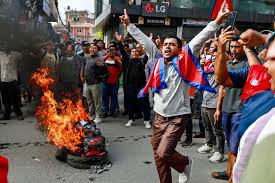
- In September 2025, Nepal witnessed its most widespread unrest in decades. Sparked by a government ban on 26 social media platforms (including Facebook, WhatsApp, and YouTube) on Sept 4, a leaderless "Gen Z" movement toppled the coalition government of KP Sharma Oli.
- The movement was fueled by the #NepoBaby trend, which contrasted the lavish lifestyles of political elites' children with the 20% youth unemployment rate.
- The climax occurred on September 9, 2025, after 19 protesters were killed in police firing. Protesters stormed the Federal Parliament and set fire to the private residences of several former Prime Ministers (including KP Oli's home in Balkot).
- Following the resignation of the PM, Sushila Karki (former Chief Justice) was sworn in as the Interim Prime Minister on September 12, 2025, to lead the country toward elections in March 2026.
- Analysis
- Digital Repression and the "Social Contract"
- The social media ban was the "final spark." In a country where remittances (33% of GDP) are the backbone, digital platforms are not just for leisure; they are critical economic tools for migrant workers and youth in the gig economy.
- This represents a breakdown of the digital social contract. The state's attempt at "Chinese-style" control failed because Nepal lacks the domestic digital infrastructure to replace global platforms.
- Political laxity and economic turmoil
- The Rasuwa GLOF (Glacial Lake Outburst Flood) in July 2025 destroyed 8% of Nepal's power capacity. The subsequent political instability delayed repairs, affecting India’s Cross-Border Electricity Trade (CBET) and Nepal’s ability to earn green-energy revenue.
- Nepal has seen a massive investment in education (funded by remittances), but the domestic economy remains a "Service-Remittance" trap. The youth who protested weren't just the uneducated poor; they were over-educated and under-employed, a demographic that is historically the most revolutionary.
- The Rise of "Leaderless" Political Agency
- Unlike the 2006 People’s Movement led by political parties, the 2025 uprising was coordinated via Discord and Telegram. Protesters carried no party flags, signaling a total rejection of the "Old Guard" gerontocracy.
- This mirrors the "Araggalaya" in Sri Lanka (2022) and the Bangladesh student protests (2024), highlighting a regional trend of Youth-led Technocratic demands.
- Constitutional Innovation - The "Judicial Executive"
- The appointment of Sushila Karki as Interim PM marks a rare return to a non-partisan, judicial-led caretaker government (similar to the 2013 Khil Raj Regmi cabinet).
- This highlights a recurring constitutional "safety valve" in Nepal where political deadlocks are resolved by turning to the Judiciary, though it raises long-term concerns about the Separation of Powers.
- Internal Security and the "Hydra" of Unrest
- During the chaos, over 12,500 prisoners escaped from various jails across Nepal. This creates a massive internal security vacuum that the interim government must address before the 2026 elections.
- Geopolitical Implications (India-Nepal-China)
- The fall of the Oli government—often seen as leaning toward Beijing—is a strategic pivot. While China faces a setback in its BRI (Belt and Road) implementation, India’s "Quiet Diplomacy" and support for the interim administration have strengthened its image as a "First Responder" for regional stability.
- Economy
-
- Science and tech
-
- Environment
-
- Disaster Management
-
- Internal security
- SpaceX Starlink Intervention in Iran
- Data Source [Date of Publication]
- Al Jazeera [January 14, 2026]
- Location
- Tehran and border regions of Iran; SpaceX HQ, California, USA.
- Description
-
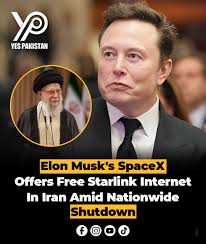
- In response to a near-total internet blackout imposed by the Iranian government (starting Jan 8, 2026) to quell nationwide protests, SpaceX activated free Starlink service for terminals inside Iran.
- Despite a formal ban and a 2025 law carrying penalties up to the death penalty for "unlicensed satellite use for espionage," an estimated 50,000–100,000 smuggled terminals are currently operational.
- SpaceX pushed a critical software update on Jan 13 to help terminals resist military-grade jamming (GPS/L-band interference) allegedly deployed by Iranian security forces.
- Analysis
- The Sovereign-Commercial Nexus & Challenges to Westphalian Sovereignty
- This event represents a shift where a private corporation (SpaceX) effectively overrides the domestic laws of a nation-state.
- In the digital age, "Sovereignty" is no longer just about borders; it is about Data Sovereignty. By providing a "Space-based bypass," SpaceX challenges the state's monopoly over its internal information environment.
- Internal Security:
- Asymmetric Digital Warfare
- Weaponization of Connectivity:
- For the state, the blackout is a tool for "Public Order." For the protesters, Starlink is "Critical Infrastructure" for mobilization.
- Intelligence Vulnerability:
- While Starlink provides access, it also creates a "Telltale Signal." Reports indicate Iranian authorities are using drones to spot Starlink dishes on rooftops, turning a tool of freedom into a target for kinetic raids.
- International Relations - Soft Power vs. Interference
- The US administration’s support for this move (under "Internet Freedom" licenses) blurs the line between humanitarian aid and regime change operations.
- Iran’s complaint to the ITU (International Telecommunication Union) highlights the friction between international radio regulations and the "Right to Information" as a universal human right.
- Ethics & The "Digital Iron Curtain"
- Article 19 (UDHR):
- The intervention serves the ethical imperative of the global right to "seek, receive, and impart information through any media and regardless of frontiers."
- Corporate Ethics:
- Does a private CEO (Elon Musk) have the ethical mandate to decide which nation’s "Government Shutdown" is illegitimate enough to warrant intervention? This highlights the "Technocracy vs. Democracy" debate.
- Science & Tech - Electronic Counter-Countermeasures (ECCM)
- The technical battle (Jamming vs. Software hardening) shows that Low Earth Orbit (LEO) constellations are the new frontline of Electronic Warfare.
- Unlike traditional geostationary satellites, the sheer number of LEO satellites makes "Total Jamming" nearly impossible, shifting the advantage back to decentralized users.
- PLFI (Naxal) Impersonation Gang
- Data Source [Date of Publication]
- The Indian Express [May 28 – June 15, 2023]
- Location
- Exam Centers in Ranchi and Hazaribagh, Jharkhand; Delhi (Coordination hubs).
- Description
-
- During the UPSC Prelims conducted on May 28, 2023, a high-tech impersonation racket linked to the People's Liberation Front of India (PLFI)—a splinter Naxal group—was intercepted.
- The gang utilized "Lookalike" candidates (professional examinees) to write papers for clients who had paid between ₹15 lakh to ₹25 lakh.
- The racket involved high-fidelity forgery of admit cards, where photos were digitally morphed to blend features of both the original candidate and the impersonator, making detection at the center gates extremely difficult for manual invigilators.
- Analysis
- Financing Insurgency through Academic Fraud
- The PLFI is traditionally known for extortion in the mining and railway sectors. Moving into UPSC impersonation marks a diversification of their funding streams.
- This represents a "Hybrid Threat" where an insurgent group compromises state institutions not through violence, but through systemic corruption.
- Abuse of technology and response
- The gang used sophisticated AI-based software to create Hybrid Face Morphs. If an invigilator looked at the photo, it shared enough characteristics with both the real candidate (for records) and the "solver" (for the exam day) to pass basic scrutiny.
- This led the UPSC to reconsider Biometric and Iris scanning at centers to move beyond the limitations of photo-based ID verification.
- Monetary benefits > National integrity
- Most impersonators were not Naxals themselves but bright students from prestigious universities (often referred to as "Munnabhais") who were recruited by the gang as "mercenary scholars."
- This highlights a dark side of the coaching industry where high-stakes pressure and financial desperation drive students into organized crime.
- Role of ground intelligence
- The bust occurred because of Human Intelligence (HumInt). Jharkhand police had been tracking PLFI communications, which led them to specific roll numbers.
- This proves that while technology is necessary, "Ground Intelligence" remains the most effective tool against organized cheating rackets.
- Ethics
- Miracle children & Visionary teacher
- Data source [Date of publication]
- The Lallantop [November 11, 2023]
- Location
- Gauri Ghat in Jabalpur, India
- Description
-

- Parag Dewan (referred to as Parag Bhaiya by the students) has been running this school since 2016. He started it after his mother's passing, initially even offering small sums of money to encourage local children to study instead of falling into bad habits. He often wears military-style clothing to motivate students toward careers in the armed forces (Agniveer).
- The students are primarily children of boatmen, priests, and laborers working at the ghats. Despite their humble backgrounds, children as young as 5 and 6 years old display an astonishing grasp of advanced subjects typically taught in 11th, 12th, or even college-level courses.
- The children are also taught Sanskrit shlokas and English to help them compete in modern competitive exams.
- Analysis
- The Boundless Potential of a Child
- A child's brain is naturally sharper to grasp and understand new information.
- Human brain can master concepts far beyond what is traditionally expected for their age.
- Ethical characteristics of the teacher
- Selflessness & Compassion
- Parag started this initiative in 2016 following his mother's death.
- He began by giving small amounts of money to children just to encourage them to sit and study rather than falling into substance abuse.
- Empathy for the underprivileged
- He specifically give attention to children who are often ignored by mainstream systems.
- Visionary leadership
- Parag’s ultimate goal is not just to teach, but to produce IAS and IPS officers from these backgrounds.
- He believes in "integration"—bringing many disparate elements together to create one strong future for these kids.
- Opportunity Gap and equalizing the starting line
- It supports the neurological theory that the Prefrontal Cortex is highly plastic in early childhood, and delaying "complex" subjects might actually be a missed opportunity for these children.
- Without Parag Bhaiya, these children would likely have remained boatmen or laborers.
- This supports the argument that reservations are not about "lowering standards," but about providing a ladder to those whose "prime years" were spent struggling for survival rather than studying.
- A Mirror to "Superiority Complexes"
- There is a common, often unspoken, bias that children from "backward" backgrounds or "low-income" families lack the intellectual depth for complex subjects.
- The video is a direct challenge to the "Social Darwinist" view that some groups are naturally more intelligent or capable than others.
- The video proves that "inferiority" is an artificial construct created by lack of access.
- Challenge to the rigid structure of modern schooling
- The video challenges the rigid structure of modern schooling where we assume a child must be 17 to understand Calculus.
- Teacher as a "Social Entrepreneur"
- By operating at the Ghat, he brings the school to the people rather than waiting for the people to come to a formal building. This "Decentralized Education" model is highly effective for marginalized groups.
- Digital/Media as a Tool for Accountability
- It shows how independent journalism can find "islands of excellence" that the official state machinery might ignore.
- Public awareness
- It forces the public and politicians to ask: "If one man at a Ghat can do this with zero budget, why can't the state-funded schools achieve the same?"
- Anthropology
-
- Art and culture
-
- History
- Arhant Sariputra and Arhant Maudgalyayana
- In 2026, India will send the holy relics of Arhant Sariputra and Arhant Maudgalyayana — two primary disciples of the Buddha—to Mongolia to strengthen "spiritual sibling" ties and foster cultural exchange.
- This initiative, announced following the 2025 visit of the Mongolian President, highlights their shared Buddhist heritage, bolstering bilateral relations and enhancing people-to-people connections, with free e-visas introduced for Mongolians.
- Indian society
-
- Geography
-
- Polity and Constitution
- UN International Year of Cooperatives 2025 (IYC 2025).
- Theme was "Cooperatives Build a Better World"
- Indore contaminated water deaths
- The recent health crisis in Indore caused by contaminated municipal tap water have exposed the vulnerability of urban governance particularly, urban water systems.
- Over 2,800 residents fell ill with severe vomiting and diarrhea, resulting in approximately 15 to 20 fatalities.
- National Human Rights Commission (NHRC) has taken suo motu cognizance of the incident in Indore.
- NHRC has noted that the main pipeline supplying drinking water to the area is found to be passing beneath a 'public toilet' thereby deteriorating the quality of the water.
- Contaminated tap water contained multiple harmful pathogens— including E coli, Salmonella and Vibrio cholerae bacteria, along with viruses, fungi and protozoa — that caused polymicrobial infections leading to multi-organ failure and sepsis among patients.
- Water supply is a state subject under Seventh Schedule
- State Government/Urban Local Bodies is responsible to plan, design, fund, execute, operate and maintain the water supply systems.
- 74th Constitutional Amendment gave an expansive mandate to municipalities - from land regulation to water supply, sanitation, and environmental protection.
- Bureau of Indian Standards (BIS) has specified drinking water quality standards (IS-10500-2012) in India.
- Initiatives taken for management of Urban Water Resources
- Jal Jeevan Mission (Urban):
- It provides universal coverage of water supply to all households through functional taps in all 4,378 statutory towns in accordance with SDG Goal- 6.
- Atal Mission for Rejuvenation and Urban Transformation (AMRUT) 2.0:
- It includes provisions for harvesting rainwater through storm-water drains into the water bodies, and strategies groundwater recharge through preparation of 'Aquifer Management Plan'.
- Under this, Pey Jal Survekshan was introduced as a competitive assessment to evaluate cities on water quality, quantity and coverage.
- Jal Shakti Abhiyan:
- Catch the Rain (JSA: CTR) campaign: Launched in 2019 for water conservation through people's participation.
- National Water Policy (2012):
- Advocates rainwater harvesting, conservation of water and the need for augmenting the availability of water through direct use of rainfall.
- Namami Gange Programme:
- Integrated conservation mission with the twin objectives of effective abatement of pollution, conservation and rejuvenation of National River Ganga.
- Governance and Administration
-
- Social Justice
-
- International Relations
- Responsible Nations Index (RNI)
- RNI was launched in New Delhi by the World Intellectual Foundation (WIF).
- About Responsible Nations Index (RNI)
- Core Philosophy:
- It aims to shift the global discourse from Power to Responsibility, arguing that true national strength lies in how responsibly a nation acts towards its people, the planet, and the international community.
- Developing Body:
- World Intellectual Foundation (WIF), Jawaharlal Nehru University (JNU) and IIM Mumbai.
- Scope:
- It evaluates 154 countries.
- Framework:
- RNI aggregates 58 specific indicators into 13 sub-themes and 7 themes to form the 3 main dimensions. (see infographic)
- Key Findings of the Report
- Top Performers:
- Singapore ranked 1st, followed by Switzerland (2nd) and Denmark (3rd).
- European nations dominated the top 10, reflecting strong institutional frameworks for social welfare and environmental protection.
- India's Performance = rank 16th globally
- India emerged as the highest-ranked country among major Asian nations (excluding Singapore).
- Strengths:
- The high rank reflects India's progress in healthcare accessibility, social equity programs, environmental initiatives (like the International Solar Alliance), and people-centric governance models.
- Performance of Major Powers:
- The index revealed a disconnect between economic/military power and responsibility.
- USA ranked 66th, China ranked 68th.
- This underscores that economic size does not automatically translate into ethical leadership or global responsibility.
- Significance of the Index
- Alternative to Western-centric Indices:
- RNI challenges traditional indices and offers a perspective on what constitutes development.
- Promotion of Ethical Governance:
- By quantifying responsibility, the index encourages nations to adopt policies that are ethically sound and socially inclusive.
- Aligning with the principles of Dharma and Ram Rajya.
- Alignment with Indian Values:
- The index reinforces India's civilizational ethos of Vasudhaiva Kutumbakam (The World is One Family), prioritizing shared global destiny over narrow national interests.
- Policy Tool:
- It serves as a diagnostic tool for governments to identify gaps in their governance and sustainability frameworks.
- The Limitations of Existing Frameworks
- Gross Domestic Product (GDP):
- Measures economic output but ignores ecological destruction, social inequality, and the cost of growth.
- Hard Power Indices (Global Firepower, etc.):
- Rank nations based on military arsenal, incentivizing arms races rather than peace-building.
- Western-Normative Indices (V-Dem, Freedom House, etc.):
- These have been criticized by the Global South for bias, opaque methodologies, and a failure to appreciate the cultural and developmental contexts of non-Western democracies.
- They tend to privilege a specific form of liberal individualism over collective welfare and responsibility.
- FTAs
- FTAs signed by India in Recent Years
- India-UAE CEPA:
- A comprehensive partnership agreement implemented in 2022 that covers goods, services, and digital trade.
- India-Australia ECTA:
- This agreement came into effect in December 2022, securing access to critical raw materials.
- India-EFTA TEPA:
- An agreement signed with the European Free Trade Association in March 2024.
- India-Oman CEPA:
- Signed in December 2025, this deal eliminates duties on over 99% of Indian exports to Oman.
- India-New Zealand FTA:
- Negotiations concluded in December 2025, completing India's strategy to have deals with all RCEP members except China.
- India-UK CETA:
- Signed in July 2025, this agreement grants duty-free access to 99% of Indian exports. It aims to double bilateral trade to $112 billion by 2030.
- India-EU FTA:
- Termed the "mother of all deals," this was signed in January 2026. It covers nearly 99% of India's export value to the bloc and opens access for Indian traditional medicine (AYUSH) practitioners.
- Negotiations began in 2007, with the talks suspended in 2013 and relaunched in 2022.
- The Presidents of the European Union (EU) Council and the EU Commission were Chief Guests at India's 77th Republic Day.
- Benefits of these FTAs
- Market Access:
- The India-EU deal is expected to remove duties on over 99% of India's export value to the region. Similarly, the Oman pact offers duty-free access to 98.08% of tariff lines.
- Boost to Labor-Intensive Sectors:
- Sectors such as textiles, leather, gems, jewelry, and footwear stand to gain significantly from duty elimination.
- Services and Mobility:
- New agreements focus heavily on services. The Oman deal allows for the long-term stay of Indian professionals and 100% FDI in key service sectors. The EU deal aids Indian traditional medicine (AYUSH) practitioners.
- Strategic Sourcing:
- Agreements with Australia and GCC nations secure energy sources and critical minerals necessary for India's growth.
- Investment Inflows:
- These partnerships aim to attract foreign investment. For example, the India-UK pact targets a bilateral trade of $100 billion by 2030.
- Integration of Micro, Small, and Medium Enterprises (MSMEs):
- Recent FTAs explicitly focus on MSMEs integration into the global economy as MSMEs contribute 50% of the country's exports.
- Mobility:
- Recent deals aggressively push for the movement of professionals.
- UK deal includes social security exemptions, and the New Zealand pact includes visa quotas for Indian workers.
- Geo-economics (Supply Chain Diversification):
- The "China Plus One" strategy drives India to forge ties with friendly nations to reduce economic dependence on a single supply chain.
- WTO's Decline:
- FTAs help overcome the decline of World Trade Organization (WTO) as trade negotiation platform for developing countries due to pressure from western nations, esp. USA.
- FTAs also allow countries to create rules for sectors the WTO has not successfully addressed, such as environmental protection and labor standards.
- Euratom
- India and the European Union have agreed to strengthen cooperation in the peaceful uses of nuclear energy under the India-Euratom Agreement.
- About Euratom
- EURATOM (European Atomic Energy Community) was established by the Treaty of Rome, 1957.
- Objective:
- Promote peaceful use of nuclear energy, research cooperation and dissemination of technical knowledge.
- Prevents diversion of civil nuclear material for military use.
- India and the EU signed an R&D agreement on peaceful uses of nuclear energy with EURATOM in July 2020, and India has been an associate member of CERN since 2017.
- Legality of FTA under International Trade
- WTO Article XXIV:
- While the WTO mandates non-discrimination (MFN treatment), Article XXIV of GATT allows members to form FTAs as an exception, provided they cover "substantially all trade" and do not raise barriers for non-members.
- Enabling Clause:
- It allows developing nations to reduce or eliminate tariffs on a limited range of products without opening their entire economy.
- Dispute Settlement:
- Unlike the World Trade Organization (WTO), which has a single, unified Dispute Settlement Understanding (DSU) for all members, FTAs are negotiated individually, meaning the rules for resolving conflicts are "custom-built" for each specific treaty.
- For example, the Model Bilateral Investment Treaty (BIT) 2015 Framework of India requires investors to first seek relief in domestic courts.
- If the local remedies fail, the investor must follow a structured path to Investor-State Dispute Settlement under various frameworks such as International Centre for Settlement of Investment Disputes (ICSID) Additional Facility Rules, or the UNCITRAL Arbitration Rules, etc.
- Key concerns with India's FTAs
- Rising Trade Deficits:
- Historically, India has seen widening trade deficits with FTA partners like ASEAN, Japan, and South Korea after signing agreements.
- Low Utilization Rates:
- The utilization of FTAs by Indian exporters is low, ranging between 5% and 25%, due to complex compliance rules and lack of awareness.
- Non-Tariff Barriers (NTBs):
- Indian goods often face sanitary and phytosanitary (SPS) barriers in markets like Japan and the EU, limiting the benefit of tariff cuts.
- Carbon Taxes:
- The EU's Carbon Border Adjustment Mechanism (CBAM) poses a risk to Indian steel and manufacturing exports, though India has sought safeguards.
- Sensitive Sectors:
- Negotiations frequently stall over market access for automobiles, wines, and the protection of the dairy/agriculture sectors.
- India excluded dairy from the EU and New Zealand deals to protect domestic farmers' livelihoods.
- Low Awareness:
- MSMEs often lack adequate information about FTA benefits.
- Key Recommendations by the High-Level Advisory Group chaired by Surjit Bhalla
- Strategic selection of partners and value chains:
- Combine trade intensification with traditional partners while exploring regions with low current linkages, such as Eurasia, Central Asia, Africa, and Latin America.
- India should launch a five-year program for the negotiation of FTAs identified based on complementarity and long-term sustainability.
- Integrated and deeper scope:
- Negotiations should adopt an integrated approach covering trade in goods, services, and investment. For services, India should move beyond just Mode 4 (movement of persons) to include Mode 3 (commercial presence), as Indian businesses are increasingly interested in investing abroad.
- India should identify and resolve non-tariff barriers that prevent exports to key partners and implement extensive technical regulations based on international standards to facilitate access to partner markets.
- Institutional and process reforms:
- An institutional mechanism should be established to seek inputs from stakeholders prior to finalizing an FTA to minimize adjustment costs for the industry.
- The "whole of government" approach is required, ensuring that different ministries and state governments are involved in decision-making.
- Government should create a database detailing the utilization of various FTAs and CEPAs.
- Advocacy and MSME support:
- A sustained medium-term advocacy program should be launched to spread awareness among the industry about potential opportunities and utilization of FTAs, with a specific focus on the MSME sector.
- Managing Trade deficit and Rules of Origin:
- Adequate provisions for trade remedies (like anti-dumping) should be available within FTAs and used based on scientific economic proof.
- USA Strikes on Venezuela
- The United States of America conducted strikes codenamed 'Operation Absolute Resolve', in and around Venezuelan Capital Caracas leading to capture of the Venezuelan President.
- Key Developments post the strikes
- United Nations:
- UN Secretary-General expressed deep alarm, stating that the strikes failed to respect the rules governing the use of force and stressed the need for "full respect" of the UN Charter.
- Strikes have highlighted issues such as violations of international law, violation of national sovereignty, unilateral armed aggression, and US imperialism.
- UN human rights office:
- Rejected the U.S. justification that the raid was necessary to combat human rights abuses, insisting that accountability cannot be achieved through military interventions.
- Response from various nations:
- In Criticism of attack:
- Nations including Russia and China as well as Colombia, Brazil, Mexico, Chile, Panama, and Cuba from Latin America expressed deep concern and criticized the action.
- In support of attack:
- Argentina, Paraguay and Israel praised the U.S. operation as a decisive step against narcotics trafficking and terrorism.
- European nations:
- They positioned themselves delicately to avoid strong condemnation while upholding international norms.
- India:
- It expressed deep concern and reaffirmed commitment to sovereignty and non-intervention, and called for peaceful, diplomatic dialogue.
- Probable reasons for the Strikes on Venezuela
- Official U.S. Justifications:
- Combating drug trafficking, narco-terrorism, mass immigration crisis and to combat transnational organized crime that threatened U.S. and regional security which is supported by Venezuelan regime as per USA.
- Political Illegitimacy:
- The U.S. argued that Maduro was not the legitimate head of state following the disputed 2024 elections.
- Control of Oil Reserves:
- Venezuela has vast crude oil reserves- 17% of global crude (largest in the world), mostly in the Orinoco Belt.
- Hemispheric Hegemony:
- The operation is widely viewed as the resurrection of the Monroe Doctrine now dubbed the "Donroe Doctrine" based on National Security Strategy 2025 of USA aimed at forcibly re-establishing absolute U.S. hegemony in the Americas.
- Severing Chinese and Russian Influence:
- The strikes are seen as a calculated move to purge extra-regional rivals, namely China, Russia, and Iran, from America's "near abroad".
- U.S. aims to sever Latin America's growing ties with China, redirect Venezuelan crude exports toward the U.S. market, and choke off a vital energy supply line to China.
- Spread of Socialism:
- United Socialist Party of Venezuela is in power largely in last two decades in Venezuela which is not aligned with US capitalist policies.
- About Monroe doctrine
- Proclaimed:
- In 1823 by U.S. President James Monroe (United States' policy on the new political order).
- Objective:
- To establish U.S. dominance and security in its surrounding region.
- 3 main concepts of the doctrine
- Non-colonization:
- European powers should not establish new colonies in the Americas.
- Non-intervention:
- Europe must not interfere in the affairs of independent American states.
- U.S. Non-interference:
- The U.S. would not meddle in European wars or colonies.
- About "Donroe Doctrine," named after President Donald Trump
- It is not official policy, but general features are,
- Transactional Resource Extraction:
- Prioritizes seizing and controlling vital natural resources (such as Venezuela's massive crude oil reserves and lithium) for U.S. economic profit.
- "Regime Management" over Regime Change:
- Instead of dismantling a target nation's government and army.
- Expansionist Coercion:
- Normalizes bullying tactics, using the threat of military intervention or weaponized tariffs.
- Potential consequences of US Imperialism
- Violations of International Law and Norms:
- The "apprehension and forced exile" of Venezuelan President is condemned as a "flagrant violation of international law" and a direct contravention of Article 2 of the UN Charter.
- Article 2 of UN charter legally mandated states to refrain from use of force with some exception such as self-defence.
- Destabilization:
- E.g., the 2003 invasion of Iraq resulted in the destabilization of West Asia and the rise of groups like ISIS.
- Weakened multilateralism:
- The U.S. has circumvented the UN Security Council, weakening multilateralism under institutions like the United Nations.
- Warning to International community:
- Failure of the post-Cold War hope for a "stable liberal order" is underscored by the actions of both the US and Russia (e.g., the ongoing conflict in Ukraine).
- Economic Fragmentation:
- Trade wars, economic sanctions, and export controls disrupt global supply chains through "Friend-shoring" and "de-risking" weaken globalization.
- Erosion of Sovereignty:
- Military interventions and sanctions may undermine national sovereignty.
- E.g., US President's threat to Greenland of military action to annex it fracturing the Transatlantic Alliance and asking Canada to become 51st state of USA.
- Way forward
- United Nations reforms:
- Reforming the United Nations Security Council to reflect contemporary realities by including India, Japan, Germany, Brazil (G4) and greater African representation to reduce dominance of permanent UNSC members (P-5).
- Gujral Doctrine as a Model for Regional Stability:
- Though originally for India and its neighbors, it can be helpful for global peace through its principles like- Non-interference in internal affairs, Respect for sovereignty and territorial integrity, Peaceful resolution of disputes etc.
- New World Order:
- On the principles of Multipolar & Inclusive Framework transitioning from unipolar dominance to multi-polarity involving the U.S., China, EU, India, and emerging and middle powers.
- Strategic Autonomy & Multi-Alignment:
- India should pursue diversified partnerships rather than bloc politics avoiding overdependence on any one power for defence, technology, or energy as recently India concluded free trade agreements with UK, EU, and UAE etc.
- Promoting resilient supply chains:
- Need of "Re-Globalization" to address issues ranging from security, poverty to environment and global cooperation. (World Trade Report, 2023).
- US Claim on the Greenland
- The U.S. withdrew its tariff threat linked to Greenland, stating that the U.S. and NATO have developed a framework for a future arrangement.
- Significance of Greenland
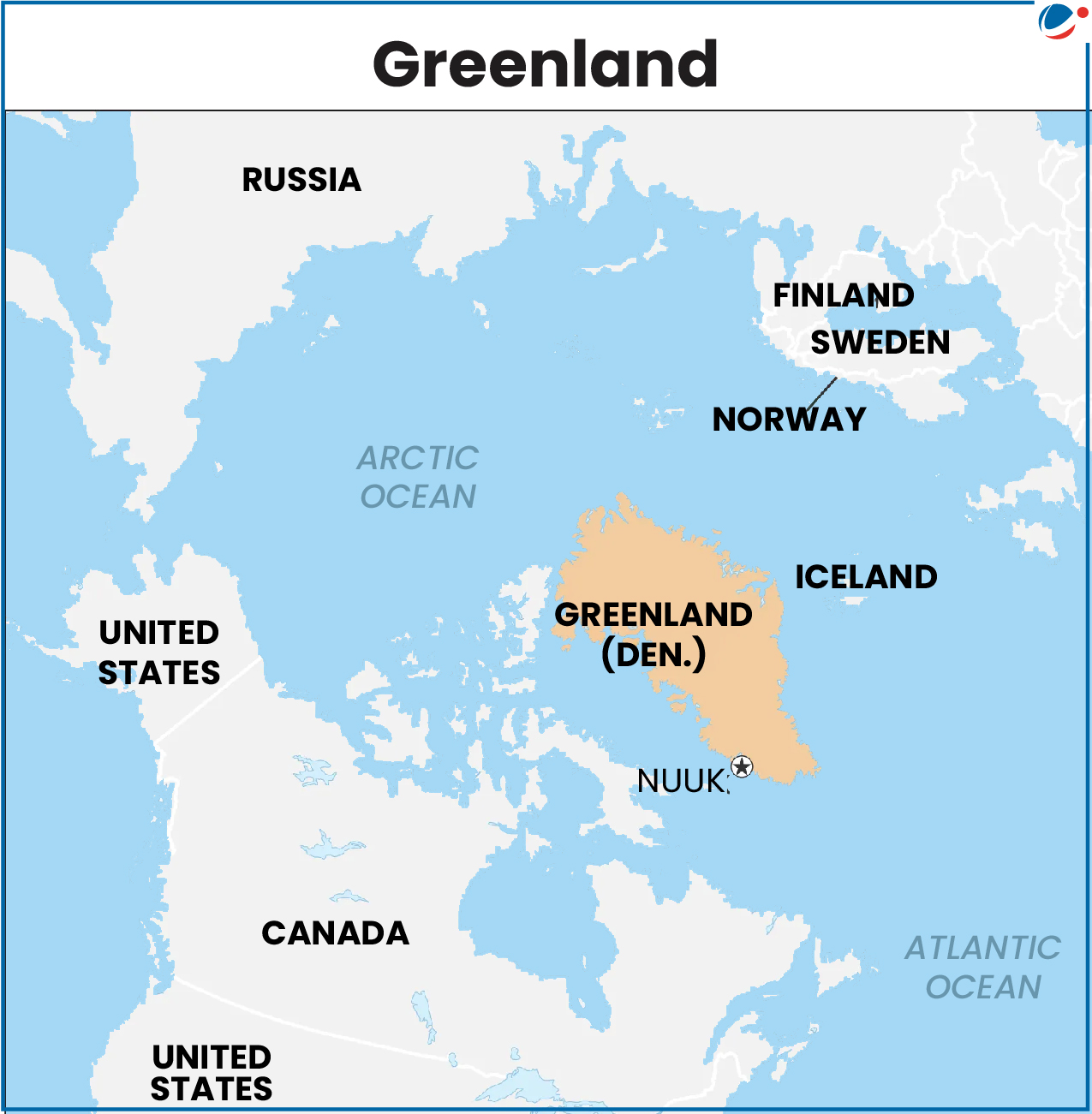
- Map of Greenland
-
- Strategic and Military Location
- Geopolitical Crossroads:
- Located between North America, Europe, and the Arctic and forms part of the "GIUK Gap" (Greenland-Iceland-United Kingdom), a heavily contested maritime corridor crucial for monitoring submarine activities in the northern Atlantic.
- Missile Defense and Early Warning:
- Greenland is essential to North American aerospace defense and hosts the Pituffik Space Base, which is integrated into the U.S. early-warning radar network,
- US consider Greenland vital for the proposed "Golden Dome" project, a space-based missile defense system designed to protect the U.S. from long-range attacks.
- Countering Russia and China:
- As climate change melts Arctic ice and opens new shipping lanes, the region is seeing increased strategic competition for military, economic footprint.
- Natural Resources
- Rare Earth Elements (REEs):
- Greenland possesses some of the world's largest untapped reserves of REEs, significant deposits include the Kvanefjeld (also contains uranium) and Kringlerne sites both in South Greenland.
- US by controlling these reserves want to Break Chinese Monopolies in global rare-earth market,
- Fossil Fuels:
- Greenland is believed to hold considerable reserves of oil and natural gas, which are becoming easier to access as the ice sheet recedes.
- Climate and Environmental Significance
- The "Albedo Effect":
- Greenland acts as a planetary cooling mechanism with its massive white ice reflecting solar radiation back into space.
- Systemic Economic Risk:
- It holds enough frozen water to raise global sea levels by more than seven meters if entirely melted leading to a massive economic risk, affecting coastal infrastructure and global supply chains.
- Climate Archive:
- The ice sheet is an indispensable historical record for scientists, who use "ice cores" to understand the Earth's climate history over hundreds of thousands of years.
- Ideological Value for the U.S.:
- Greenland holds immense symbolic value for the Trump administration's foreign policy a "Donroe Doctrine" which asserts absolute U.S. preeminence and sphere of influence in Western Hemisphere.
- Stance of various nations on US claims on Greenland
- Absolute Rejection of Annexation:
- Denmark has indicated it would invoke Article 5 of NATO which talks about collective security, where an attack on one member is an attack on all.
- Danish Prime Minister has stated that Greenland is "not for sale" and warned that if the U.S. chose to attack Greenland militarily, it would mean the end of NATO and post-WWII security.
- Unified Military Solidarity:
- The leaders of France, Germany, Italy, Poland, Spain, the UK, and Denmark issued a joint statement affirming that territorial integrity and borders are non-negotiable, many participate in "Operation Arctic Endurance" as a clear signal of military solidarity.
- Some initiatives undertaken to resolve the issue
- NATO Mediation:
- Talks on "Framework of a Future Deal" To de-escalate the US rhetoric.
- Military Basing Arrangements:
- U.S. officials suggested renegotiating the 1951 U.S.-Denmark defense agreement to allow the U.S. to build more military bases in Greenland.
- One proposed model is granting the U.S. control over small specific areas similar to the British sovereign bases in Cyprus (Akrotiri and Dhekelia).
- Arctic Sentry Mission:
- NATO allies proposed contributing to a new "Arctic Sentry" mission to increase the surveillance of ships and submarine activity in the High North to reassure the U.S. regarding Russian and Chinese threats.
- US Withdrawal from International Organizations
- US President signed a presidential memorandum to cease participation in and funding for 35 non-UN organizations and 31 UN entities.
- Reasons for the US withdrawal from international organizations
- Eliminating Disproportionate Financial Burdens:
- The administration argues that the U.S. spends billions on poorly run, mismanaged bureaucracies with little return.
- U.S. Agency for International Development (USAID) (dismantled now) was allocated $44.2 billion in the 2024 budget which accounted for nearly 42% of all humanitarian aid tracked by the UN in 2024.
- Protection of National Sovereignty:
- The administration argues that many of these international bodies threaten or undermine U.S. independence and seek to impose external pressures on American domestic policies.
- "America First" Policy:
- A shift away from multilateralism toward prioritizing national interests over international consensus.
- The U.S. withdrawal is expected to leave a 22% budget shortfall for the UNFCCC and IPCC which may increase welfare spending in USA.
- Economic alignment:
- Entities promoting decarbonization or energy transitions through "Climate Orthodoxy" is deemed disadvantageous to US fossil fuel interests and economic growth.
- Ideological divergence:
- The administration expresses reservations about organizations that prioritise "globalist agendas", suggesting that these approaches may not always align with its policy preferences.
- For example, the withdrawal from UNESCO was justified by claims that the agency supports "woke, divisive cultural and social causes" alongside a perceived anti-Israel bias.
- Important Organizations from which the USA is withdrawing
- Climate, Environment, and Energy:
- UN Framework Convention on Climate Change (UNFCCC) (USA officially left the Paris Climate Agreement for the second time in January 2026); Intergovernmental Panel on Climate Change (IPCC); International Solar Alliance (ISA); International Renewable Energy Agency (IRENA), International Union for Conservation of Nature etc.
- Health and Gender Equality:
- World Health Organization (WHO) (including Gavi, the Vaccine Alliance); UN Population Fund (UNFPA); UN Women etc.
- Peace, Security, and Development:
- United Nations Human Rights Council (UNHRC); Peacebuilding Commission and Peacebuilding Fund; Global Counterterrorism Forum; UN Conference on Trade and Development (UNCTAD); United Nations Relief and Works Agency for Palestine Refugees in the Near East (UNRWA); UNESCO (third US exit from UNESCO- 1984, 2017 previously) etc.
- Potential Impact of US withdrawal on multilateral organizations
- Humanitarian and Global Health Crises:
- A study in The Lancet estimates that cuts to international aid by the U.S. and other Western nations could lead to more than 22 million deaths from preventable causes by 2030.
- China's Ascendance:
- The retreat leaves the door wide open for China to dominate the UN system and global markets.
- E.g., without U.S. economic prowess in international climate forums, China's Belt and Road Initiative is positioned to occupy center stage in global renewable energy markets.
- Weakened Multilateral Budgets:
- The UN regular budget is already falling by 7% in 2026 and around 20% of WHO's total revenue is diminishing international humanitarian and development aid.
- Uneven Standards:
- Instead of universal rules, global cooperation is fracturing into smaller, ad-hoc instruments, trade measures, and bilateral deals impacting globalization forces and trust in multilateral forums.
- Climate change:
- Hinder global efforts to curb greenhouse gases because it gives other nations the excuse to delay their own actions and commitments.
- Fragmenting Multilateralism:
- US withdrawal will further weaken international governance, enhance power rivalries, leading to shift towards protectionism and smaller ad-hoc regional blocs.
- Global Peace:
- Absence of US contribution for Peacebuilding Commission will hamper peace efforts in conflict-ridden areas (e.g. in Africa or the Caribbean).
- Push for UN Reform:
- It highlights the flaws of the current consensus-based system, calling for reforms to overcome deadlocks and creating diversified funding models through South-South cooperation.
- Way forward
- Reforming the Multilateral System:
- Reforming key UN bodies such as UNSC as suggested by G4 nations for fair representation; improve coordination of existing forums to address interconnected challenges like climate change and health etc.
- Financial Self-Reliance:
- Diversify funding structure and strengthen international financial institutions to ensure global issues are adequately funded.
- Accelerating South-South Cooperation and Autonomy:
- E.g., International Solar Alliance is advancing a $1 trillion solar energy goal outside the traditional structures of the UN.
- Building National Resilience:
- Nations heavily reliant on foreign aid must rapidly develop "national resilience mechanisms" to ensure essential services, such as healthcare and climate adaptation.
- Diversifying Alliances:
- Instead of nationalist and transactional diplomacy world must diversify its alliances building alternative leadership structures at regional level through forums like G20, BRICS+ and SCO etc.
- Board of Peace, NCAG and ISF
- About Board of Peace
- The Board of Peace is being seen as a new approach to resolving Global Conflict, beyond its role in Gaza and the Middle East. It can be seen as a shift toward minilateral, leader-centric institutions over universal multilateralism.
- Board of Peace is a core element of the US 20-point Gaza Peace Plan (Comprehensive Plan to End the Gaza Conflict), which was endorsed by the UN Security Council Resolution 2803 (2025).
- About NCAG and ISF
- The formation of the National Committee for the Administration of Gaza (NCAG) and the International Stabilization Force (ISF) was also initiated.
- Can the Board of Peace be an alternative to the United Nations (UN)?
- Arguments in Favour
- Efficiency and Outcomes:
- Due to its structure, the Board can be more result-oriented compared to the UN consensus model which practically delays or hinders action-oriented outcomes.
- Diverse Stakeholder approach:
- Inclusion of private sector experts along with world leaders makes it multi-faceted in ensuring sustainable outcomes.
- Arguments Against
- Undermines international law
- Potentially undermines international law and democratic representation. E.g. lacks checks and balances of the UN General Assembly
- Sovereignty Concerns:
- Potentially favours external trusteeship instead of local democratic voice.
- Exclusionary nature:
- Possible limited and paid membership may hinder balanced global order by marginalizing the "Global South."
- Third path or Carney doctrine
- Third Path Framework for a Reformed, Inclusive and Networked Multilateralism
- Canadian PM in his speech at World Economic Forum in 2026 outlined a new agenda for the world i.e. -“Third Path” amid US-China rivalry and fading Rule based world order.
- About Third path or Carney doctrine:
- The third path or Carney doctrine is based upon “Value-Based Realism”, “co-operation of middle powers” against hegemons and a policy of “variable geometry”.
- Value-Based Realism defends core principles such as sovereignty, territorial integrity, and human rights while recognizing incremental progress, diverging national interests, and partners having value differentials.
- Crucially, values-based realism rests on building domestic strength.
- Policy of “variable geometry” involves forming different coalitions for different issues, based on values and interests.
- E.g. Schengen Area, G7 Grouping, Quad Formation etc.
- This third path framework is relevant for other middle powers, including and particularly India.
- The infographic shows significance of cooperations among middle powers.
- What are middle powers?
- Great powers are often defined as countries with a permanent seat on UNSC (i.e.China, France, Russia, United Kingdom and United States). These countries exert economic, political and military dominance over the world.
- Middle powers are states below great powers that do not dominate the international system but possess significant diplomatic, economic, technological or normative influence.
- Examples include India, Canada, Australia, Japan, South Korea, Indonesia, Brazil, and several EU states.
- Global Risk Report 2026
- Global Risk Report 2026 Focuses on Geoeconomic Confrontation
- Released by the World Economic Forum (WEF), the report identifies geoeconomic confrontation as the most significant global risk.
- Key Highlights of the Report
- In the current and immediate term (2026) and the short-to-medium term (up to 2028), the report highlights major risks such as geoeconomic confrontation, state-based armed conflicts, extreme weather events, rising societal polarisation, etc.
- The infographic explain about geoeconomics confrontation.
- In the long term (up to 2036), the most significant risks identified include extreme weather events, biodiversity loss and ecosystem collapse, etc.
- Major Risk faced by India:
- Cyber insecurity, Inequality (wealth, income), Insufficient public services and social protections (incl. education, infrastructure, pensions), etc.
- What is Geoeconomic Confrontation?
- Refers to strategic use of economic instruments by global or regional powers to reshape cross-border economic relations by restricting trade, technology, services, capital, or knowledge flows aimed at promoting self-reliance, constraining geopolitical rivals, and consolidating spheres of influence.
- Actions Recommended:
- Economic inducements that foster mutual gains should be prioritized, Reinforce existing multilateral institutions, Invest in local resilience, etc.
- Pax Silica
- India has joined the Pax Silica initiative by becoming a signatory to the Pax Silica Declaration.
- India also signed a Joint Statement on the "India-U.S. AI Opportunity Partnership” as a bilateral addendum to the Declaration.
- About Pax Silica
- It is an U.S. led initiative to build a secure, resilient, innovation-driven technology ecosystem
- The program covers the full technology supply chain, spanning:
- Semiconductors and AI infrastructure
- Critical minerals and energy inputs
- Advanced manufacturing and high-end hardware
- Compute and data logistics
- Objectives:
- Reduce coercive dependencies.
- Protect sensitive technologies and build trusted digital infrastructure.
- Members:
- Japan, South Korea, Singapore, United Kingdom, Israel, etc.
- Spain Joins the Indo-Pacific Oceans Initiative (IPOI)
- IPOI is a non-treaty-based voluntary arrangement that promotes cooperation for a free and open Indo-Pacific and the rules-based regional order.
- Indo-Pacific is as an interconnected space between the Indian and the Pacific Ocean, joined together by its main trading channel, the Malacca strait.
- It is home to more than half of the world's population, and nearly 2/3rds of the global economy.
- IPOI Genesis:
- IPOI was launched by India at the East Asia Summit in 2019, held in Bangkok (Thailand).
- It builds upon the “Security and Growth for All in the Region” (SAGAR) initiative announced by India in 2015.
- Key Significance of IPOI
- Countering China's assertiveness:
- E.g., In 2020, India and Vietnam agreed to enhance their bilateral cooperation in line with IPOI.
- Convergences with other global initiatives:
- E.g., AIIPOIP (Australia-India Indo-Pacific Oceans Initiative Partnership), AOIP (ASEAN Outlook for the Indo-Pacific), IPEF, etc.
- Visit of President Of UAE To India
- Key Outcomes of Visit:
- Strategic Announcements:
- Trade Target:
- Agreed to double bilateral trade to over US$ 200 billion by 2032.
- Both countries will promote new markets through initiatives like Bharat Mart, Virtual Trade Corridor and Bharat-Africa Setu.
- Civil Nuclear Cooperation:
- Explore partnerships in advanced nuclear technologies, including Small Modular Reactors (SMRs) and nuclear safety, following enactment of the SHANTI Act 2025.
- SHANTI ACT 2005
- The SHANTI Act, 2025 (Sustainable Harnessing and Advancement of Nuclear Energy for Transforming India Act) is a historic legislation that completely overhauled India's civil nuclear sector, enabling private sector participation and modernizing liability laws
- Key Pillars of the Act
- Private Sector Participation:
- For the first time since independence, Indian private companies and government-private joint ventures are permitted to build, own, operate, and decommission nuclear power plants. However, highly sensitive activities like fuel enrichment and spent-fuel reprocessing remain exclusively with the Central Government.
- Statutory Regulator:
- The Atomic Energy Regulatory Board (AERB) has been granted formal statutory status, making it independent and directly answerable to Parliament.
- Revised Liability Framework:
- The Act repealed the Civil Liability for Nuclear Damage (CLND) Act, 2010, and introduced a tiered operator liability cap ranging from ₹100 crore (for Small Modular Reactors) to ₹3,000 crore (for large plants) based on power capacity.
- Elimination of Supplier Liability:
- It removes the right of recourse against equipment suppliers for defective parts in the event of an accident, bringing India in line with international nuclear liability conventions and boosting investor
- Establishment of Digital/ Data Embassies:
- A Digital/Data embassy is an offshore centre where a nation-state stores its critical digital data, to ensure digital continuity and sovereignty against cyberattacks, natural disasters, or geopolitical conflicts.
- AI & Tech:
- Collaboration for a supercomputing cluster under AI India Mission.
- Key Agreements / MoUs / LoIs:
- Strategic Defence Partnership:
- Aims to establish framework for deepened defence cooperation across technology, training and cyber domains.
- Energy Supply:
- SPA (Sales & Purchase Agreement) for 0.5 MTPA LNG supply from ADNOC Gas to HPCL for 10 years.
- Key aspects of India- UAE Relations
- Signed the Comprehensive Economic Partnership Agreement (CEPA) in 2022, which helped boost bilateral trade to nearly USD 100 billion by FY 2024–25.
- UAE is consistently India's third-largest trading partner and second-largest export destination.
- UAE is India’s major crude oil and LNG & LPG supplier.
- The UAE is also assisting India in strengthening its Strategic Petroleum Reserves (SPR).
- India and Germany Sign Agreements
- The agreements were signed during the visit of the German Chancellor.
- The visit coincided with a milestone phase in bilateral ties, as India and Germany celebrated 25 years of their Strategic Partnership in 2025 and marking 75 years of diplomatic relations in 2026.
- Key outcomes
- Defence and Security:
- Signed Joint Declaration of Intent to develop a Defence Industrial Cooperation Roadmap was signed, emphasizing technology partnerships, co-development, and co-production of defence platforms.
- Germany’s expressed intent to participate in Indian Naval Exercise MILAN of, Indian Ocean Naval Symposium, Air Combat Exercise Tarang Shakti etc.
- Track 1.5 Foreign Policy and Security Dialogue was also established
- Track 1.5 Diplomacy occurs when government representatives and non-governmental experts engage in dialogue in less formal ways
- Trade and economy: To ensure supply chain resilience, agreements were signed focusing on the Semiconductor, Critical Minerals, etc.
- Visa and Mobility:
- Germany announced a visa-free transit facility for Indian passport holders.
- Other:
- Announced a new bilateral Indo-Pacific consultation mechanism.
- Education and skilling- Indo-German Comprehensive Roadmap on Higher Education was adopted.
- Other Key aspects of Indo- German Relations
- Economic Relations
- Indo-German bilateral trade surpassed USD 50 billion in 2024 (Germany accounts for over 25% of India's trade with the European Union)
- FDI status:
- Germany is 9th largest foreign direct investor in India (2024)
- Environment
- Green and Sustainable Development Partnership (GSDP) is partnership between India and Germany to align their climate cooperation to the Paris Climate Agreement
- Technology and Innovation:
- E.g., Indo-German Science and Technology Centre (IGSTC)
- Shaksgam Valley
-
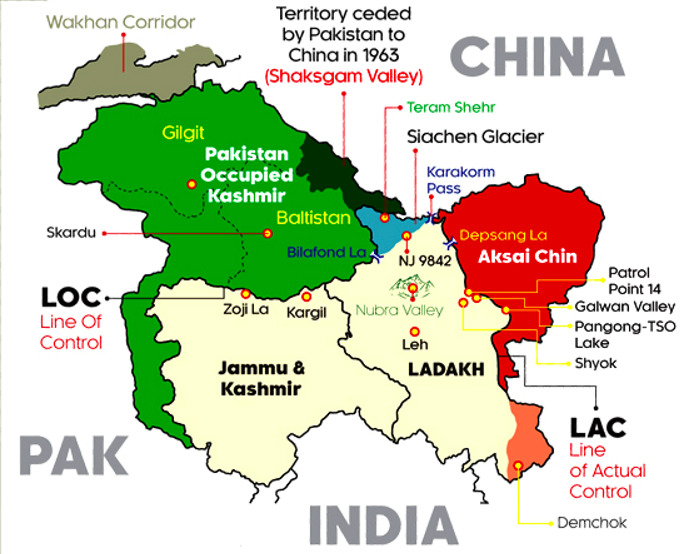
- India has formally objected to China’s infrastructure projects in the Shaksgam Valley.
- About Shaksgam Valley
- Strategically located territory in Ladakh, north of the Karakoram watershed and an integral part of India.
- Illegal cession:
- Pakistan occupied since 1947, unlawfully ceded to China under the 1963 China–Pakistan Boundary Agreement.
- Also known as the Trans-Karakoram Tract, lying along both sides of the Shaksgam River.
- Geography:
- Bounded by the Kun Lun Mountains and Karakoram range; it lies adjacent to the Siachen Glacier.
- Diego Garcia
-
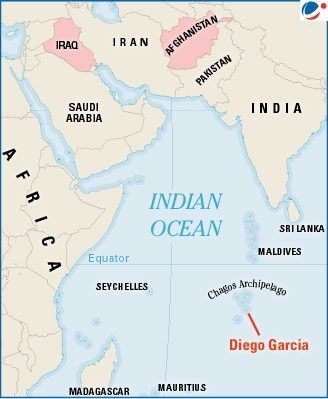
- US President Trump has criticised the potential return of Diego Garcia by the UK to Mauritius which hosts a vital US military base.
- About Diego Garcia
- Location:
- Diego Garcia is a coral atoll in the central Indian Ocean, part of the Chagos Archipelago.
- History:
- The Chagos Archipelago was administered by the United Kingdom as the British Indian Ocean Territory (BIOT) from 1965.
- In May 2025, the United Kingdom and the Republic of Mauritius signed an agreement under which Mauritius is recognised as sovereign over the entire Chagos Archipelago, including Diego Garcia (with UK having a 99 years lease of Diego Garcia)
- Military use:
- Diego Garcia hosts a joint UK–US military facility.
- Weimar Triangle
-
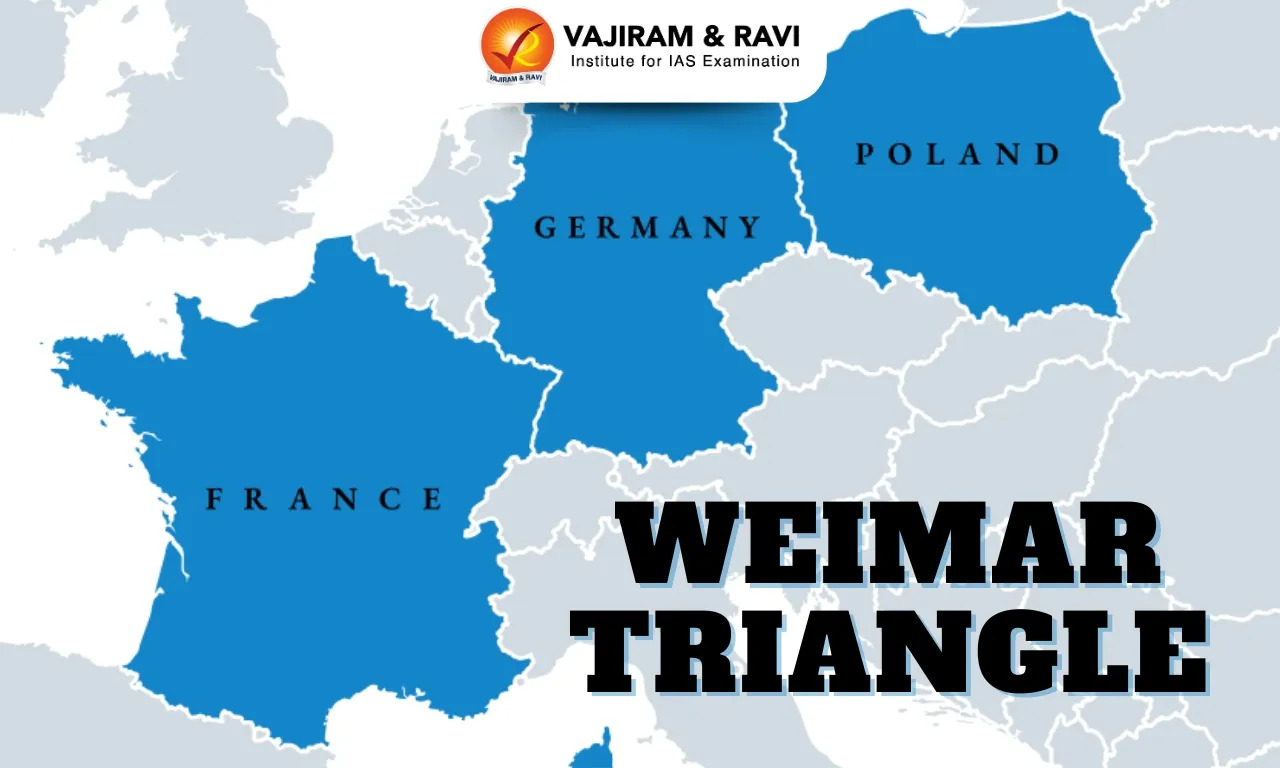
- The Minister of External Affairs participated in India’s first-ever engagement in the Weimar Triangle.
- About Weimar Triangle
- It is a regional alliance of France, Germany, and Poland set up in 1991 in the German city of Weimar.
- Initially formed as a key forum for supporting German-Polish reconciliation.
- Aim:
- To promote European integration, political dialogue, security cooperation, etc.
- Economy
-
- Science and tech
-
- Environment
-
- Disaster Management
-
- Internal security
-
- Ethics
-
- Anthropology
-
- Art and culture
-
- History
-
- Indian society
-
- Geography
-
- Polity and Constitution
-
- Governance and Administration
- Systemic Fraud and Institutional Response (Puja Khedkar)
- Data Source [Date of Publication]
- Union Public Service Commission (UPSC) [July 31, 2024]
- Location
- Pune & Washim (Maharashtra); UPSC HQ (New Delhi).
- Description
-
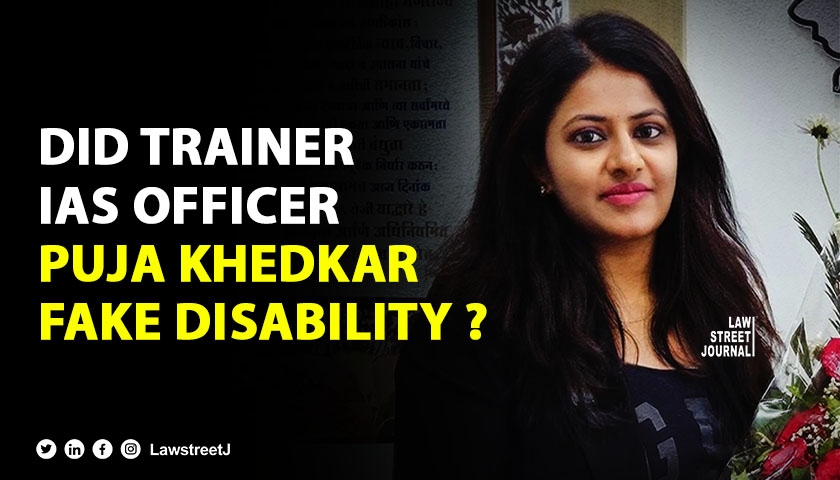
- Puja Khedkar (AIR 821, CSE 2022) had her provisional selection cancelled by the UPSC on July 31, 2024, after a probe revealed "unprecedented" fraud.
- The investigation found she had faked her identity—altering her name, her parents' names, and even her signature and email—to bypass the limit of 9 attempts allowed for her category (OBC + PwBD).
- She was accused of wrongly availing OBC-Non Creamy Layer benefits despite her father being a wealthy retired bureaucrat, and PwBD (Persons with Benchmark Disabilities) benefits for "mental illness and blindness" while repeatedly avoiding mandatory medical re-examinations at AIIMS.
- In September 2024, the Central Government (DoPT) officially sacked her from the IAS with immediate effect under Rule 12 of the IAS (Probation) Rules, 1954.
- Analysis
- The "Identity Forgery" Breach
- Khedkar’s ability to create multiple digital identities to appear for the exam 12 times (exceeding the 9-attempt cap) exposed a major vulnerability in the UPSC’s application filtering system.
- This case forced the Commission to move toward Aadhaar-based authentication and more stringent document verification protocols to ensure "One Candidate, One Identity."
- Abuse of the Disability Quota (PwBD) and exploitation of vulnerable
- Khedkar claimed 47% disability but missed six scheduled medical appointments between 2022 and 2023. Her refusal to undergo a standard verification check at a government hospital highlighted how the quota could be "gamed" by influential individuals.
- This is a classic case of "Distributive Injustice," where a resource intended for the most vulnerable is usurped by the most privileged through deceit.
- VIP status and moral decay
- The case only came to light due to her non-bureaucratic conduct during probation—demanding a private cabin, using a red-blue beacon on a private Audi, and her father allegedly threatening local staff.
- It proves that "Intellectual Ability" (clearing the exam) is not a substitute for "Moral Aptitude." Her desire for VIP status as a trainee officer was the catalyst for the scrutiny that eventually ended her career.
- The "High-Tech" Cheating Case (Safeer Karim)
- Data Source [Date of Publication]
- The Hindu [February 2018]
- Location
- Presidency Girls Higher Secondary School, Egmore, Chennai (Exam Center); Hyderabad (Accomplice location).
- Description
-
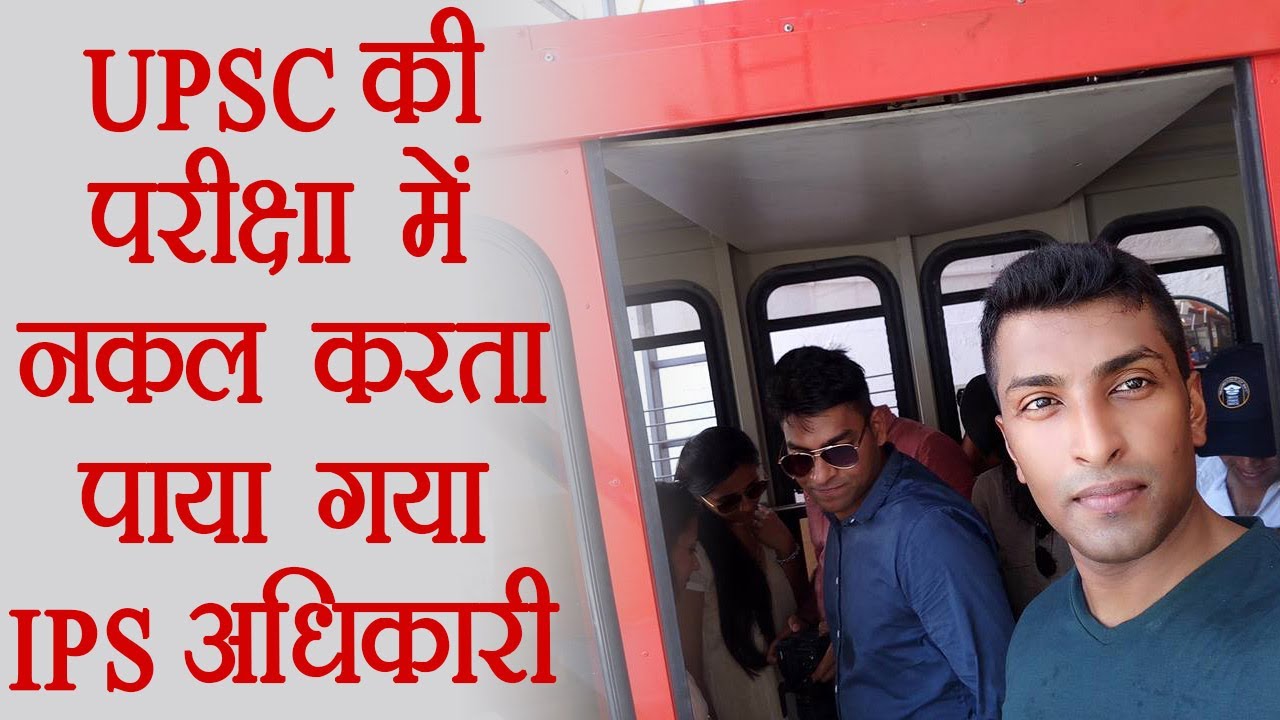
- Safeer Karim (AIR 112, CSE 2014), a serving Assistant Superintendent of Police (ASP) on probation in Tamil Nadu, was caught cheating during the UPSC Mains 2017 exam while attempting to switch to the IAS.
- He used a sophisticated setup: a miniature camera (disguised as a shirt button) to take photos of the question paper, an iPhone hidden in his socks to transmit images to his wife in Hyderabad via Google Drive, and micro-earpieces to receive dictated answers.
- His wife, Joicy Joy, and a coaching center director, P. Rambabu, were arrested in Hyderabad for aiding the malpractice from a remote location.
- Analysis
- Character of a "Munna Bhai" Bureaucrat
- Hubris of Power:
- Karim reportedly bypassed the initial security frisking by using his status as a "Probationary IPS Officer" to intimidate the guards. This misuse of the "uniform" even before the exam started is a grave ethical failure.
- Lack of Contentment:
- Despite already holding a rank (IPS), his desperate obsession with becoming an IAS officer led him to criminal conspiracy. This is a case study on "Greed vs. Ambition."
- Social Justice
-
- International Relations
-
- Economy
-
- Science and tech
- China from mere manufacturing hub to AI and robotics
- Data source [Date of publication]
- ChatGPT [January 18, 2026]
- Location
- China
- Description
-

-
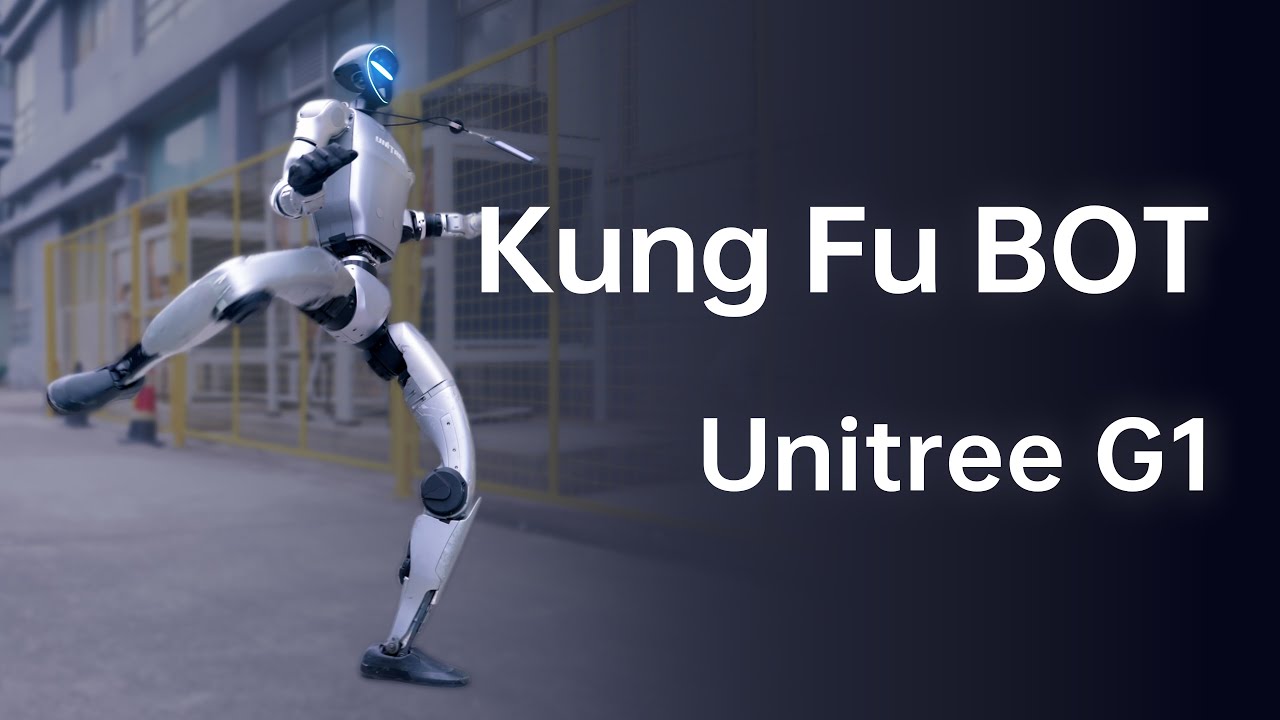
- As of early 2026, China has transitioned from a fast follower to a dominant global leader in several key segments of AI and robotics. While the United States remains the leader in high-end AI research and advanced semiconductors (like NVIDIA’s latest chips), China has achieved a "supply chain sovereignty" that allows it to commercialize and deploy these technologies at a scale and speed no other nation can currently match.
- Chinese companies like AgiBot (Zhiyuan Robotics) and Unitree now control approximately 80% of the global market for humanoid robot shipments. This is the most technology driven field.
- Analysis
- China's advantage
- Supply chain sovereignty (Unrivaled industrial ecosystem)
- In cities like Shanghai and Shenzhen, 80-100% of the components needed to build a complex robot—sensors, actuators, "dexterous hands," and compute platforms—can be sourced within a 150-kilometer radius.
- Data abundance
- With over 1.1 billion mobile users and the world's largest manufacturing base, China has a massive "data lake" to train AI for industrial automation and consumer scenarios.
- Infrastructure
- China has the world's most extensive 5G/6G and ultra-high-voltage power networks, providing the low-latency connectivity and energy required to run massive AI data centers and robot fleets.
- Education
- As of 2025-26, the Chinese Ministry of Education has embedded AI into the national curriculum. Students in 4th and 8th grades are now required to take at least one compulsory AI class per week. They don't just learn to code; they use AI to simulate physics experiments (like nuclear fission) or biology models (gene frequencies).
- Chinese students have access to low-cost robotics kits and components. Schools in cities like Shenzhen and Hangzhou often have AI-powered labs where students build real-world autonomous drones or humanoid parts.
- Turning disadvantages into an advantage
- Faced with U.S. export controls on advanced chips (like the H100), China has pivoted its AI strategy toward Efficiency-Driven AI and Embodied AI.
- Low-Cost Large Language Models (LLMs):
- Startups like DeepSeek have disrupted the market by developing influential AI models at a fraction of the cost of OpenAI or Google.
- This "frugal innovation" allows Chinese AI to be integrated into everyday hardware quickly.
- Government support
- 15th Five-Year Plan (2026–2030):
- This plan (launched this year) centralizes AI and robotics as the core of the economy. The goal is to move from "follower" to "global innovation center" by 2030.
- Direct Subsidies & Vouchers:
- Cities like Shenzhen have launched massive funds (e.g., a 10 billion yuan / $1.4B fund) specifically for "embodied intelligence" (AI in robot bodies). They provide "computing vouchers" that cover up to 60% of a startup's cloud costs.
- AI+" Initiative:
- Similar to "Internet+," this policy forces the integration of AI into traditional sectors like manufacturing, healthcare, and agriculture, creating a guaranteed domestic market for startups.
- Why India is lagging behind
- R&D Investment
- China spends ~2.4% of GDP on R&D; heavily business-led.
- India spends ~0.64% of GDP; mostly government-funded.
- Hardware Focus
- China is the world's "factory"; unrivaled hardware prototyping speed.
- India has been traditionally strong in Software Services (SaaS), not hardware.
- Compute Power
- China has massive sovereign GPU clusters (despite US sanctions).
- India has high dependency on foreign chips (NVIDIA); domestic GPU clusters are still scaling up.
- Funding Nature
- China's "Patient capital" via state-backed funds focused on long-term tech.
- In India VC funding favors "fast-return" apps like Fintech or E-commerce.
- Brain Drain
- China is successfully "reversing" brain drain with elite labs and high pay.
- India's top AI research talent often migrates to the US or Europe for better infrastructure.
- If India cannot compete in terms of money, then it can benefit an individual via other means like by making policies to enhance respect of an individual in society, offering special exclusive tourist destinations which are not available to any normal citizen, anything to make them feel that they are cared for.
- Incompetence
- According to the QS World Future Skills Index 2025, China scores exceptionally high in Academic Readiness (93.9/100) and Economic Transformation (88.5/100).
- A 2025 report from a prominent VC (Deedy Das) noted that at the highest level of performance (+3 Standard Deviations), the best engineers in the world are increasingly Chinese due to the sheer scale of the talent pool and intensive PhD output (60,000 per year vs. India's 6,000).
- National Employability Report's historical and updated data suggest that nearly 80% of Indian engineers are not employable for any knowledge-economy job. More alarmingly, only about 2.5% possess the advanced skills required for AI, machine learning, and data science.
- In 2023–24, thousands of seats in core engineering (Mechanical, Civil, Electrical) remained vacant.
- India's response
- IndiaAI Mission:
- A ₹10,300 crore investment is currently being used to build a 10,000+ GPU supercomputing infrastructure and a "Unified Data Platform" to provide Indian startups with the fuel (data and power) they need.
- India Semiconductor Mission (ISM):
- Recognizing that you can't lead in AI without chips, the government is subsidizing 50% of the cost of setting up semiconductor fabs (factories). As of 2026, several major units are under construction (e.g., Tata-PSMC fab).
- Focus on "Green AI":
- At the AI Impact Summit 2026 in New Delhi, India introduced the "Planet Sutra," a mandate to focus on energy-efficient AI models, carving out a niche as the leader in "Sustainable AI" for the Global South.
- Environment
- The Ivory Pyre - Conservation through Destruction
- Data source [Date of publication]
- Al Jazeera [April 30, 2016]
- Location
- Nairobi National Park, Kenya
- Description
-
- President Uhuru Kenyatta set fire to 11 giant pyres containing 105 tonnes of ivory and 1.3 tonnes of rhino horn. The stockpile represented nearly 8,000 elephants and 343 rhinos lost to poaching.
- At the time, the black-market value of the stockpile was estimated at $150 million to $200 million. This was the largest ever destruction of ivory in history, intended to render the "white gold" worthless.
- Analysis
- Why Burn and Not Sell?
- Signalling market value (Price vs. Value)
- Selling the ivory, even legally, confirms that it has a monetary value. By burning it, Kenya sent a message that ivory is only valuable on a live elephant.
- To break the demand loop:
- Market Value -> Sustained Demand -> Price Spike -> Poaching
- Preventing money laundering
- Legalizing the sale of stockpiles often allows "dirty" (poached) ivory to be mixed with "clean" (legal) ivory, making it impossible for authorities to distinguish between the two.
- Symbolic Leadership (Values in Administration):
- It shows a leader willing to take a "non-utilitarian" step for a higher moral cause.
- The act was a "Statement of Values" over "Statement of Accounts". Kenya chose to destroy wealth to protect a species, valuing Ecological Integrity over Gross Domestic Product (GDP).
- By destroying such a massive sum, Kenya put ethical pressure on consumer nations (like China and Vietnam at the time) to shut down their domestic ivory markets.
- One-time Gain vs. Sustainable income (Sustainable Development)
- A single rhino horn can earn a poacher $50,000 once. However, a living elephant is estimated to be worth $1.6 million in tourism revenue over its lifetime.
- It proves that protecting natural capital yields higher long-term dividends than liquidating it.
- Critique of the strategy
- Some economists argue that destroying supply makes ivory rarer, which could actually drive up the price for the remaining ivory, further incentivizing poachers.
- $200 million could have been used to fund better-equipped forest rangers and drone surveillance.
- Disaster Management
-
- Internal security
-
- Ethics
-
- Anthropology
-
 - Analysis
- Text