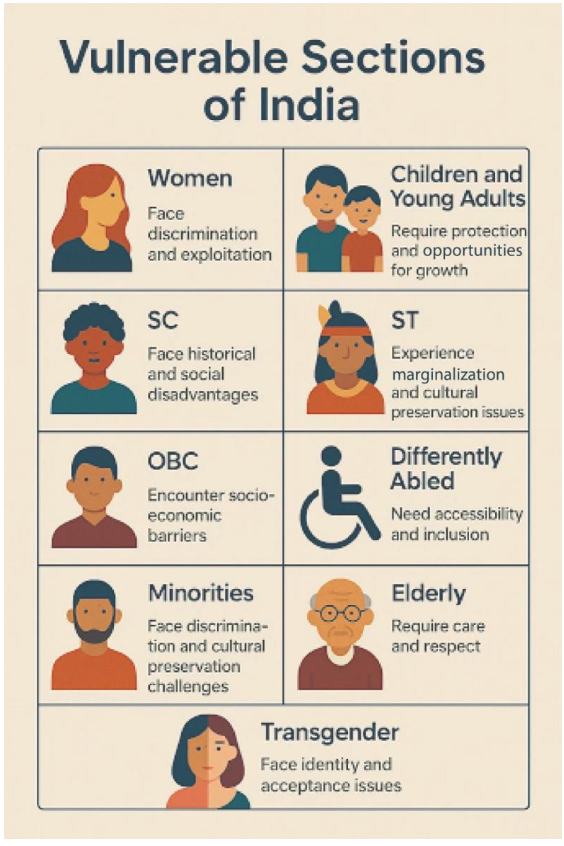
 - Vulnerable sections refer to groups of people who face higher risks and disadvantages due to various socio-economic, cultural, and environmental factors. These populations experience systemic exclusion, marginalization, and inequitable access to resources, rights, and opportunities.
- Vulnerability is often influenced by the intersectionality of factors such as economic status, gender, caste, disability, age, and ethnicity. Vulnerable groups typically lack the power to influence social, political, and economic decisions and are subject to discrimination, neglect, or abuse.
- Rationale of Welfare Schemes for Vulnerable Sections
- Constitutional Basis
- The Preamble of the Constitution promotes justice, equality, and dignity.
- Fundamental Rights protect and promote the idea of equality, the right to live with dignity, and rights against untouchability and exploitation.
- Directive Principles emphasize the state’s responsibility for citizens' welfare, helping India become a Welfare State.
- Economic Reasons
- The Idea of Inclusive growth is considered vital for sustained economic progress of any nation.
- Welfare schemes for vulnerable sections help reduce poverty, support the labor force, and facilitate active participation of Vulnerables in economic development.
- Nation Building
- Excluding vulnerable groups leads to social resentment and inequality, hindering nation-building efforts.
- Ensuring equitable access improves societal harmony, fostering a sense of unity and inclusion.
- 1.1. Women in India
- "When one woman is empowered, she becomes a catalyst for change" - Michelle Bachelet (Former Chilean President)
- Women in India are recognized as a vulnerable section of the population, facing systemic disadvantages due to socio-cultural, economic, and political factors. This vulnerability is often structured, stemming from imperfect or unjust societal systems. Women specifically face significant barriers in terms of access to education, economic independence, legal justice, and healthcare.
- Key Data Regarding Women's Vulnerabilities
- Health & Social Vulnerabilities
- Child Marriage (2019–21):
- 23.3% of women aged 20–24 were married before reaching the legal age of 18.
- Sex Ratio at Birth (2018–20):
- The ratio remains unfavorably low at 907 female births for every 1,000 male births, pointing to the persistence of son preference.
- Maternal Mortality (2018–20):
- The Maternal Mortality Ratio (MMR) stood at 97 deaths per 100,000 live births, compared to the SDG benchmark of 70.
- Malnutrition (2019–21):
- 18.7% of women between the ages of 15–49 have a Body Mass Index (BMI) that is below normal.
- Health Awareness (2019–21):
- Only 21.6% of women have comprehensive knowledge of HIV/AIDS.
- Economic Vulnerabilities
- Labour Force Participation (2023–24):
- The Labour Force Participation Rate for females aged 15 and above is only 41.7%.
- Wage Gap (Jan–Mar 2024): In casual labour, women earned significantly less than men.
- Rural:
- Women earned an average of ₹286 per day compared to men's ₹407.
- Urban:
- Women earned an average of ₹358 per day compared to men's ₹529.
- Burden of Unpaid Work (2024):
- On an average day, female participants spend 330 minutes on unpaid domestic services, while male participants spend only 101 minutes on the same.
- Educational Disadvantages
- Gender Gap in Literacy (2017–18):
- A significant literacy gap of 14.4 percentage points persists between men and women aged 7 and above.
- Dropout Rate (2023–24):
- The dropout rate for girls increases significantly with the level of education, reaching 12.60% at the secondary level (Class IX–X).
- Crime and Violence
- Domestic Violence (2019–21):
- 29.3% of ever-married women aged 18–49 have experienced physical, sexual, or emotional violence committed by their husband.
- Major Crimes (2022):
- "Cruelty by Husband or his Relatives" was the most reported major crime against women, with 140,546 cases filed.
- Rape and Cyber Crimes (2022):
- There were 31,516 reported victims of rape. 15,969 cases of cybercrimes targeting women were reported.
- 1.1.1. Key Challenges Faced by Women in India
- Deep-Rooted Patriarchy & Social Discrimination
- From Birth to Adulthood:
- Discrimination starts early—female foeticide, child marriage, and dowry practices reinforce inequality.
- Restricted Roles:
- Patriarchal norms confine women to household duties, limiting education and career growth.
- Stigma & Shame:
- Menstruation remains taboo, forcing many girls to drop out of school, while working women lack menstrual leave policies.
- Honor & Control:
- Practices like honor killings and acid attacks suppress women’s freedom under the guise of "family reputation."
- Violence & Exploitation – A Daily Battle
- Rising Crimes:
- 87 rape cases are reported daily (NCRB), and domestic abuse remains widespread.
- Unsafe Public Spaces:
- Fear of harassment restricts mobility and independence.
- Economic Inequality – The Invisible Struggle
- Low Workforce Participation:
- Only 36.9% of women are in formal jobs (2025), far below global averages.
- Gender Pay Gap:
- Women earn just 39.8% of men’s wages for the same work. Most working women are in low-paying, unstable jobs with no social security.
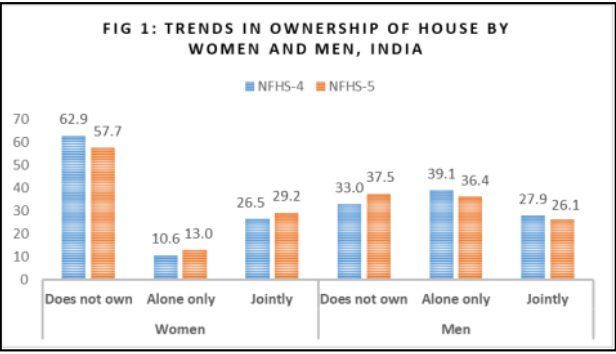
- Ownership Trends Image:
-
 - Unpaid Labor Burden:
- Women spend 5.6 hours daily on unpaid care work—equivalent to an invisible tax, draining their potential.
- Unequal Ownership of Assets:
- Women in India consistently have lower ownership levels than men across key assets, including houses (42.3% for women vs. 62.5% for men), land (31.7% vs. 43.9%), mobile phones (54% vs. 91%), and bank accounts (79% vs. 86%).
- Health & Nutrition – Ignored & Underserved
- Anemia & Malnutrition:
- Half of Indian women suffer from anemia (NFHS-5).
- Maternal Health Risks:
- High maternal mortality and lack of proper healthcare endanger mothers.
- Cancer & Neglect:
- Cervical cancer (2nd most common among women) lacks awareness and HPV vaccine access.
- Cervical Cancer Statistics Image:
-
 - Aging Without Care:
- Widows and elderly women face neglect, with little support for their health needs.
- Lack of Representation & Power
- Political Marginalization:
- Only 14.4% of Lok Sabha MPs are women.
- Sarpanch Pati Culture:
- Often husbands take oaths for elected women leaders, mocking grassroots empowerment.
- Limited Access to Rights:
- Many women lack property ownership, legal aid, and digital literacy, keeping them dependent.
- Limited Access to Rights:
- Many women lack property ownership, legal aid, and digital literacy, keeping them dependent.
- Side note
- The Shadow Pandemic- Gender Violence and Mental Health Crisis
- The Shadow Pandemic refers to the rise in gender-based violence (GBV), especially domestic violence, during the COVID-19 lockdowns (UN Women).
- Factors like isolation, economic stress, and social unrest worsened violence, impacting women, children, and vulnerable groups.
- Simultaneously, mental health issues like stress, depression, and anxiety increased due to the lockdown.
- Policy responses included emergency helplines, shelters, and mental health services to support affected individuals.
- Invisible Labor- The Unacknowledged Tax
- The "Invisible Labor Tax" highlights the disproportionate burden of unpaid care work on women.
- This unacknowledged "tax" consumes time and energy, limiting women’s economic participation and well-being.
- Addressing this requires re-engineering societal structures. Investing in universal care infrastructure (like childcare) and promoting shared responsibilities can reduce this burden.
- Support for Working Women and Survivors of Violence
- Sakhi Niwas:
- Provides safe, affordable housing for working women and job seekers. These hostels offer daycare facilities for children, helping women maintain economic independence. States receive financial aid to run these centers.
- Sakhi Centres (OSCs):
- Over 800 operational centres provide essential services like medical, legal, and psycho-social support to women affected by violence. These centres have assisted over 1.1 million beneficiaries, offering crucial relief and safety.
- 1.1.2. Government Schemes and Policies for Women's Protection and Empowerment
- Constitutional Safeguards
- Fundamental Rights (Articles 14, 15, 21, 23):
- Guarantee equality, protection from discrimination, and the right to live with dignity.
- Article 42 and 73rd Constitutional Amendment (Article 243D):
- Article 42 ensures humane conditions for women in workplaces. Article 243D mandates one-third reservation for women in Panchayati Raj Institutions.
- Legislative Interventions
- Prohibition of Child Marriage Act (2006):
- Aims to protect women from child marriage.
- Domestic Violence Act (2005):
- Aims to protect women from domestic violence.
- Sexual Harassment of Women at Workplace Act (2013) and Maternity Benefit Act (2017):
- Sexual Harassment Act mandates mechanisms to combat workplace harassment. Maternity Benefit Act provides 26 weeks of paid maternity leave.
- Welfare Schemes for Girls
- Beti Bachao Beti Padhao (BBBP):
- Addresses gender-biased sex selection and promotes girls' education.
- Sukanya Samriddhi Yojna:
- Encourages saving for girls' education and marriage.
- Udaan Scheme:
- Provides scholarships for girls from minority communities for higher education.
- Welfare Schemes for Women's Safety
- One Stop Centre Scheme:
- Provides support to women affected by violence.
- Swadhar and Short Stay Homes:
- Offer shelter and rehabilitation for destitute women.
- Nirbhaya Fund:
- Finances initiatives for women's safety and dignity.
- Economic Empowerment of Women
- Pradhan Mantri Mudra Yojana (PMMY):
- Facilitates collateral-free loans for women entrepreneurs.
- Deendayal Antyodaya Yojana:
- Empowers rural women through Self-Help Groups (SHGs).
- Rashtriya Mahila Kosh (RMK):
- Provides micro-financing to poor women for income-generating activities.
- Stand Up India Scheme:
- Supports SC/ST and women entrepreneurs with bank loans for greenfield enterprises.
- Health and Social Security
- Pradhan Mantri Jan Arogya Yojana (PMJAY):
- Provides health insurance to vulnerable women, including Anganwadi workers and their families.
- Pradhan Mantri Ujjwala Yojana:
- Ensures free LPG connections for BPL women to safeguard their health and well-being.
-
 - Nari Shakti Vandan Adhiniyam (Women's Reservation Act)
-
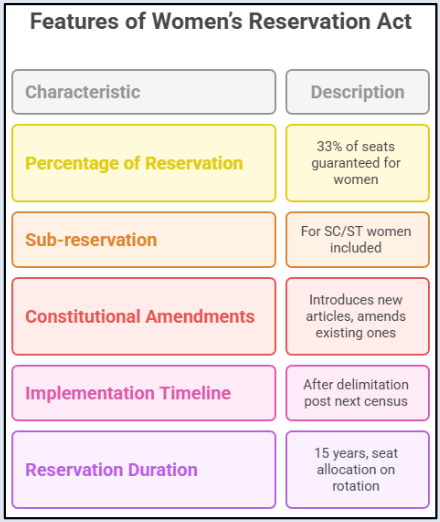 - The Nari Shakti Vandan Adhiniyam, passed in 2023, is a landmark constitutional amendment aimed at improving women’s participation in Indian politics.
- It mandates the reservation of one-third of seats for women in the Lok Sabha, State Legislative Assemblies, and the Delhi Assembly.
- Though hailed as a long-pending reform, its full implementation depends on future census and delimitation exercises.
- Implementation Challenges
- The rotational nature of reserved seats may discourage long-term investment by elected women.
- There is also concern over proxy representation by male relatives, limited inclusion of OBC and minority women, and lack of broader electoral reforms to support genuine empowerment.
- Learning from an Example- Women Empowerment in Norway
- Norway offers a powerful case study in using policy reform to accelerate women’s representation in leadership. In 2003, it mandated a 40 percent quota for women on corporate boards, raising female representation from just 9 percent to over 40 percent in a few years. This is a clear example of how strong legal mandates can drive visible change.
- However, the move also revealed a crucial lesson. While quotas can open doors at the top, they do not automatically dismantle deeper structural and cultural barriers that prevent women from becoming CEOs or holding key executive roles.
- Key takeaway- True empowerment requires a two-pronged approach.
- First, there must be affirmative policies to ensure women get a seat at the table.
- Second, there must be long-term investment in equality of opportunity through mentorship, skill development, inclusive work cultures, and access to leadership pipelines. Empowerment must reach every level, not just the boardroom.
- 1.2. Children
- "Every child comes with the message that God is not yet discouraged of man" - Rabindranath Tagore
- In India, children are defined as individuals under the age of 18 years, unless they reach adulthood earlier by applicable law. Children account for 39% of the population of India according to Census 2011.
- Children represent one of the most vulnerable sections of society, and are highly susceptible to exploitation, abuse, and neglect.
- Their vulnerability is further heightened in difficult circumstances such as being orphans, refugees, child laborers, or victims of abuse.
- 1.2.1. Key Challenges Faced by Children
-
 - Education
- Learning Gaps and Dropout Rates:
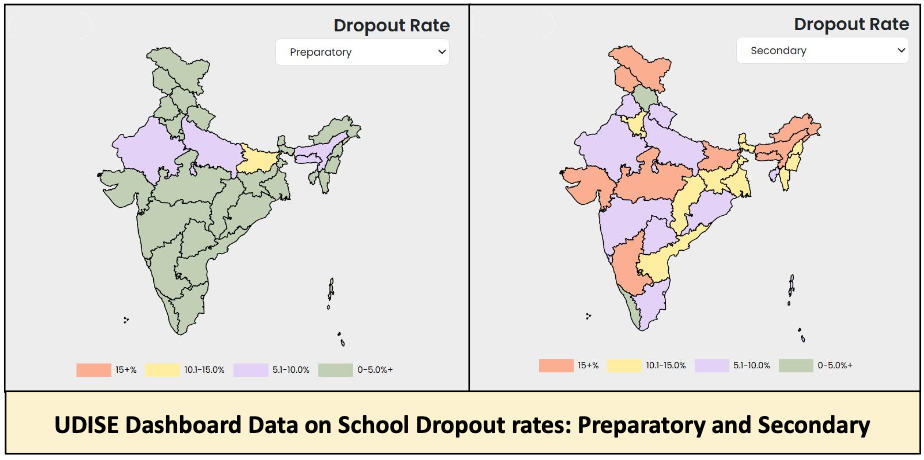
- Malnutrition and inadequate early childhood education contribute to learning gaps. 1.72 crore children dropped out, and school enrolment fell from 26.5 crore in 2021-22 to 24.8 crore in 2023-24.
- Access to Pre-Primary Education:
- Children from economically weaker sections are less likely to access pre-primary education, which impedes their learning journey.
- Best Practices:
- Shala Praveshotsav
- Gujarat's annual school enrollment drive has reduced dropout rates from 35% in 2003 to just 0.85% in 2024, enrolling children in kindergarten and Classes 1, 9, and 11.
- Thalliki Vandanam Scheme:
- Andhra Pradesh's initiative provides ₹13,000 per student to mothers of 42.69 lakh school-going children, aiming to support education costs and reduce dropout rates.
- Child Abuse and Exploitation
- Crime Rates Image:
-
 - Child Marriage:
- Driven by poverty and patriarchal norms, child marriage forces early pregnancies and limits education, perpetuating the poverty cycle.
- Crimes Against Children:
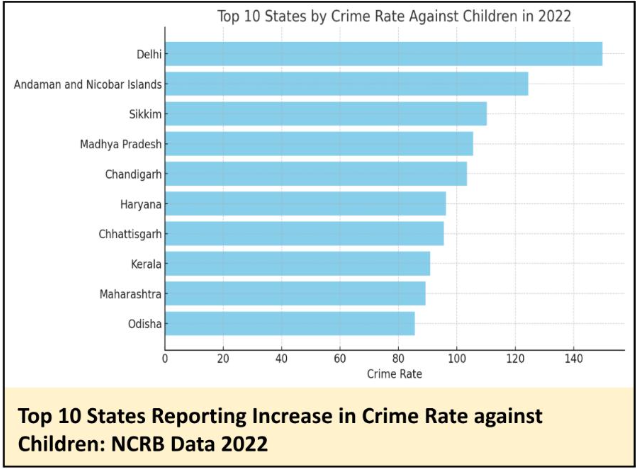
- According to the NCRB 2022, 18 crimes against children occur every hour, with one-third under the POCSO Act. Family members or acquaintances are often perpetrators.
- Child Labor:
- India has the largest number of working children globally, with over 10 million children aged 5-14 involved in child labor.
- Health and Nutrition
- Malnutrition:
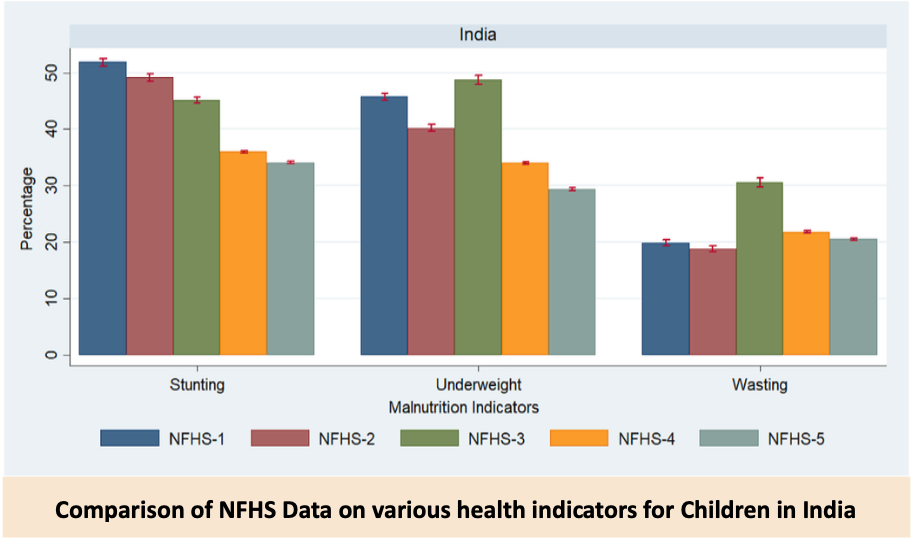
- India faces a high rate of malnutrition, with 32.1% underweight, 35.5% stunted, and 19.3% wasted children. This, along with poor early childhood education, exacerbates learning difficulties.
- Mortality and Health Indicators:
- India has one of the highest Infant Mortality Rates (IMR) at 34 per 1,000 live births. Diarrhea and malnutrition are primary causes of death for children under five.
- Health Comparison Image:
-
 - Best Practices:
- Rajiv Aarogyasri Scheme
- Telangana has extended health insurance coverage to 2,215 orphans and BPL children in Child Care Institutions, offering cashless treatment up to ₹10 lakh for over 1,835 procedures.
- ICDS and Bharat Ratna Dr APJ Abdul Kalam Amrut Aahar Yojana:
- Maharashtra reported a 51,141 decrease in severely malnourished children from 2023 to 2025, attributed to initiatives like ICDS and the 'Bharat Ratna Dr APJ Abdul Kalam Amrut Aahar Yojana'.
- Gender Discrimination
- Child Marriage and Violence:
- Female children face infanticide, neglect of nutritional needs, lack of education, and gender-based violence. 7% of girls aged 15 or younger were married between 2014-2020.
- Child Sex Ratio:
- The child sex ratio (0-6 years) was 919 girls per 1,000 boys in 2011, reflecting ongoing gender imbalances.
- Other Vulnerabilities
- Digital Well-Being:
- The digital well-being of children in India is a growing concern, with 60% of children at risk of digital addiction. 70-80% of children exceed recommended screen time, leading to issues like cyberbullying, mental health concerns, and behavioral changes.
- Digital Safety Image:
-
 - Climate Change Impact:
- Children are disproportionately affected by natural disasters and climate change, exacerbating their vulnerabilities. In 2023, approximately 24.1 million children in India were impacted annually by climate-related disasters such as floods, cyclones, and heatwaves.
- Side note
- Learning through Example- A Special Start- Finland's Baby Box
- Finland’s Baby Box policy is a powerful example of how governments can promote equal opportunity from birth. Since 1949, every new mother has received a free "Baby Box" containing essential items for newborn care.
- This initiative does more than offer material support. It encourages prenatal care, fosters early child well-being, and has played a role in significantly reducing infant mortality rates in Finland.
- Key takeaway:
- Social policies that provide universal access to early life resources can have lasting impacts. The Baby Box illustrates how state-led interventions can bridge gaps in healthcare, reduce inequality, and promote a strong, healthy start for every child, regardless of background.
- 1.2.2. Government Schemes and Policies for Children
- Constitutional Safeguards
- Article 39(f):
- Ensures children's development in a healthy and dignified environment, protecting them from exploitation.
- Article 21A:
- Guarantees free and compulsory education for children aged 6-14 years.
- Articles 23 & 24:
- Prohibit child trafficking and forced labor, with specific restrictions on hazardous labor.
- Article 45:
- Directs the provision of early childhood care and education for children up to six years.
- Welfare and Development Schemes
- Integrated Child Development Services (ICDS):
- Focuses on the nutritional and health development of children under six.
- POSHAN Abhiyaan:
- Targets reduction of malnutrition in children.
- Samagra Shiksha Abhiyan:
- Aims to improve learning outcomes for disadvantaged children, focusing on quality education.
- National Education Policy (NEP) 2020:
- Prioritizes Early Childhood Care and Education (ECCE) for foundational literacy and numeracy.
- Childline-1098 and Mission Vatsalya:
- Childline-1098 is a 24-hour emergency helpline for children in distress. Mission Vatsalya has supported 1.7 lakh children under non-institutional care programs in 2024–25, aiming to provide family-based care and rehabilitation.
- Protection and Legal Frameworks
- Juvenile Justice (Care and Protection of Children) Act, 2015:
- Focuses on the care, protection, and rehabilitation of children in need.
- Protection of Children from Sexual Offences (POCSO) Act, 2012 and Prohibition of Child Marriage Act, 2006:
- POCSO Act provides strict protection against child sexual abuse. Prohibition of Child Marriage Act criminalizes child marriage.
- 1.3. Young Adults (Youth)
- "The youth are the living messages we send to a future we will never see." - John F. Kennedy
- In India, the National Youth Policy 2014 defines youth as individuals between the ages of 15 and 29 years.
- Youth is considered a period of transition from dependence to independence, encompassing the age groups of adolescents (10-19 years) and young adults (15-24 years).
- With 65% of India's population under 35 years, youth form a critical demographic for national development.
- 1.3.1. Key Challenges Faced by Young Adults
- Employment Crisis and Skill Mismatch
- High Unemployment:
- Youth unemployment remains high, with a significant portion of the youth population either underemployed or disengaged from both employment and learning. Youth unemployment Rate: 17.9% in Urban areas and 13.7% in Rural regions as of May 2025.
- Skill Gap:
- A substantial mismatch exists between available talent and the needs of the industry. Only 4.4% of the workforce aged 15-29 has received formal skills training, contributing to a high unemployment rate.
- Informalization:
- An increasing trend toward informal, short-term contracts in the job market pushes youth into the informal economy, where social security benefits are absent.
- Exploitation under Gig Economy:
- Precarious working conditions in the gig economy leads to exploitation of youth. Key factors for such conditions include poor pay, lack of social security, and absence of worker protection regulations.
- Mental Health Crisis, Drug Abuse and Suicide Epidemic
- Addiction Image:
-
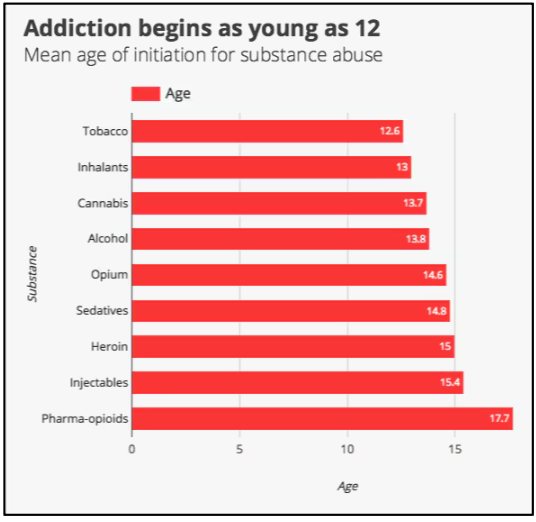 - Drug Abuse:
- Around 13% of drug users in India are under 20 years old, exacerbating physical and mental health issues.
- Mental Health Issues:
- A growing crisis of mental health problems, including depression and suicidal tendencies, especially among LGBTQIA+ youth, calls for urgent attention.
- Suicide Epidemic:
- Student suicides highlight the immense social and psychological pressures faced by youth mainly due to mental health issues, social pressures as well as drug abuse. India reported 13,044 student suicides in 2022 (NCRB data), nearly doubling in a decade.
- Side note
- Learning through Example- Switzerland's Secret to Youth Success
- Switzerland offers a strong example of how practical education can prepare youth for meaningful careers. Around 70% of Swiss teenagers choose vocational apprenticeships after school rather than traditional academic routes.
- These apprenticeships combine classroom learning with on-the-job training. Companies like Nestlé pay students as they work and learn, ensuring they gain real-world skills and income at the same time. As a result, Switzerland enjoys one of the lowest youth unemployment rates in the world.
- Key takeaway:
- A well-designed vocational training system equips youth with job-ready skills, reduces unemployment, and bridges the gap between education and industry. It highlights the importance of aligning education with practical experience and market needs.
- 1.3.2. Government Schemes and Policies for Youth
- Youth Development and Engagement
- National Youth Policy 2014:
- Aims for holistic youth development to empower youth for nation-building.
- Nehru Yuva Kendra Sangathan:
- Provides rural youth with opportunities for nation-building and skill development.
- National Service Scheme (NSS) and Life Skill Training for Adolescents:
- NSS promotes volunteerism and social service. Life Skill Training equips youth with skills to cope with pressures and make healthy life choices.
- Mera Yuva Bharat (MY Bharat):
- A platform launched in 2023 to engage youth in volunteerism and nation-building activities.
- Skill Development and Employment Generation
- National Skill Development Mission (NSDM) and Pradhan Mantri Kaushal Vikas Yojana (PMKVY):
- NSDM provides a framework to coordinate skill development efforts. PMKVY provides skill training to improve youth employability.
- Employment-Linked Incentive (ELI) Scheme:
- The Indian government approved an ₹1 trillion Employment-Linked Incentive (ELI) scheme, aiming to create approximately 35 million jobs between August 2025 and July 2027.
- Start-Up India and Stand Up India:
- Facilitates entrepreneurship by providing financial support to youth entrepreneurs, especially from SC/ST backgrounds.
- Social Security and Health
- Code on Social Security (2020):
- Expands social security benefits to include gig and platform workers, where majority of those employed are youth.
- Pradhan Mantri Jeevan Jyoti Bima Yojana (PMJJBY) and Pradhan Mantri Suraksha Bima Yojana (PMSBY):
- Affordable insurance schemes for underprivileged youth.
- Mental Health Care Act (2017):
- Aims to reduce stigmatization and improve access to mental health care for youth.
- National Youth Policy (in detail)
-
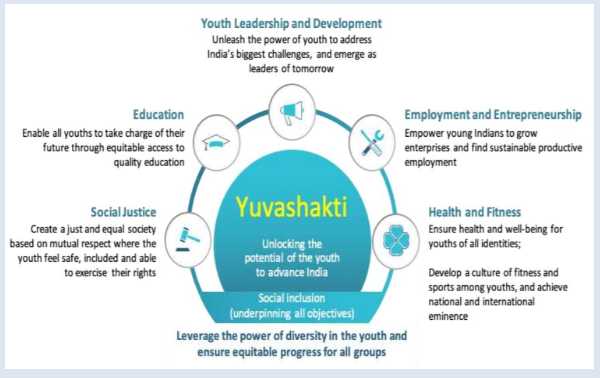 - The National Youth Policy (NYP) provides a structured approach to youth development in India. The last finalized version, NYP 2014, focused on empowering individuals aged 15–29 to achieve their full potential.
- It aimed to align youth energy with the goals of national development through five key priority areas: education, employment and entrepreneurship, health and sports, youth leadership, and social justice.
- The policy emphasized inclusion, skill-building, and active participation in civic life, and was aligned with national policies like NEP 2020 and international frameworks such as the Sustainable Development Goals.
- Over time, the need for an updated framework became clear due to changing economic realities, rapid technological shifts, and rising mental health concerns among youth.
- Responding to this, the government released the Draft National Youth Policy 2024, building on past learnings and aiming for deeper impact during the Amrit Kaal period.
- Key Features Draft National Youth Policy 2024:
- Tackling NEET Crisis:
- Aims to reduce the NEET (Not in Education, Employment or Training) rate, which is 32.9% of youth aged 15–29 (NSSO 2020–21).
- Focus on Youth Demographic:
- Targets individuals aged 15–29 years, who constitute India’s largest working-age population segment.
- Skill, Up-skill, Re-skill Model:
- Emphasizes readiness for Industry 4.0 through continuous skill enhancement aligned with market needs.
- Digital Empowerment via YUVA Portal:
- Introduces a one-stop online platform for internships, job opportunities, mentoring, and career counseling.
- Entrepreneurship and Job Creation:
- Encourages youth to become job creators by promoting innovation, startup ecosystems, and e-commerce access.
- Leadership Development:
- Proposes a School of Leadership at RGNIYD and platforms like Youth Parliament Festival to shape future leaders.
- Inclusion of Vulnerable Groups:
- Prioritizes outreach to dropouts, rural, disabled, and disadvantaged youth through tailored programs.
- Mental Health and Well-being:
- Integrates counseling, stress management, and awareness around substance abuse into youth health strategy.
- Fitness as Daily Culture:
- Promotes “Fitness ki Dose, Aadha Ghanta Roz” and strengthens youth engagement in sports and adventure activities.
- Data-Driven Governance:
- Recommends District Youth Information & Resource Centers and analytics for real-time youth tracking and support.
- The draft aims to create a youth ecosystem that not only supports individuals but positions them as leaders of change in a rapidly evolving India.
- 1.4. Elderly (Senior Citizens) in India
- "A society that abandons its elders cuts its own roots." - Confucius
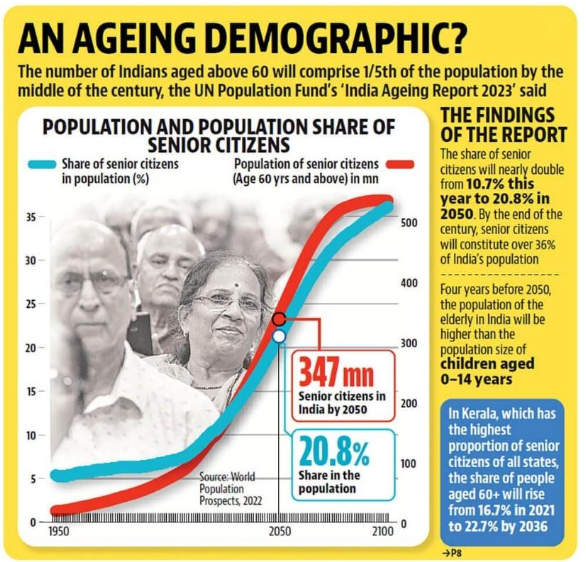
- In India, "elderly" refers to citizens aged 60 and above. According to the 2011 Census, there were nearly 104 million senior citizens, constituting 8.6% of the population.
- This number is projected to triple by 2050, reaching 300 million (18%), with a rising proportion of elderly women, particularly in rural areas, facing issues like poverty, dependency, and loneliness.
-
 -
 - 1.4.1. Key Challenges Faced by the Elderly
- Health Concerns
- Chronic Illnesses:
- High prevalence of chronic illnesses like diabetes, heart diseases, and cataracts.
- Limited Geriatric Care:
- Limited access to geriatric care, with few healthcare providers trained for elderly-specific health needs.
- Rising Treatment Costs:
- Rising treatment costs for conditions like cancer, leading families into financial distress.
- Mental Health Issues:
- Mental health issues, including depression, loneliness, and identity crises, are common, as they face emotional neglect. Approximately 18% of elderly individuals experience depression, with loneliness affecting about 35% of seniors, particularly in urban areas.
- Social Challenges
- Changing Family Structures:
- The rise of nuclear families has led to a lack of companionship and caregiving. Many elderly thus suffer from social isolation, especially those living alone. A study indicates that 34% of seniors experience social isolation, with 55.4% reporting feelings of loneliness.
- Elder Abuse:
- Elder abuse is rampant, with incidents of physical, verbal, and emotional abuse, particularly by family members. Elder abuse remains a significant issue, with prevalence rates varying from 9.6% to 61.7% across different states.
- Economic Challenges
- Limited Pension Coverage:
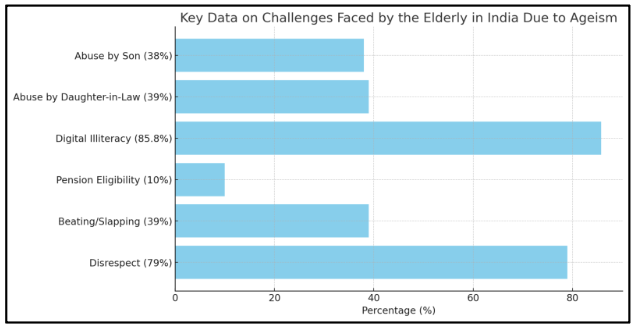
- Only 10% of India's workforce has access to pensions. Even through government schemes, the amount paid is a meagre Rs 200-500 per month, which is insufficient to meet basic needs.
- Dependence on Children:
- Due to limited pension access, many elderly individuals rely on their children for financial support.
- Lack of Health Insurance:
- A large portion of elderly individuals work in the informal sector, leaving them without health insurance. This leads to high medical costs and inadequate healthcare.
- Housing Challenges:
- Many elderly individuals struggle to access adequate housing due to limited financial resources.
- Challenges Faced by Elderly Women
- Widowhood:
- Widowhood is more prevalent among elderly women, leading to increased financial vulnerability.
- Gender-Based Discrimination:
- Older women are more likely to face abuse and denied property rights due to gender discrimination and traditional societal norms.
- Technology Barriers
- Digital Literacy Challenges:
- Many elderly face challenges with digital literacy, hindering their ability to access services that are increasingly digitalized.
- Aadhaar Exclusions:
- Elderly individuals' fingerprint degradation can lead to exclusion from welfare schemes that require Aadhaar verification.
- Side note
- Learning through Example- The Graying Globe
- As the world sees a rapid rise in the elderly population, Japan’s experience offers valuable lessons. Often called a “Silver Democracy”, Japan’s political landscape is increasingly shaped by its ageing voters, with policy focus shifting toward pensions, healthcare, and elderly welfare.
- One major issue Japan faces is the growing burden of elderly care. To tackle this, it has turned to technological solutions, such as the Robear Care Robot, which assists caregivers and showcases how innovation can ease care responsibilities.
- Key takeaway:
- Preparing for an aging society requires more than just policy—it demands foresight, welfare planning, and the use of technology. Japan’s approach reminds us that ensuring dignity, inclusion, and support for the elderly is not optional, but essential for social justice in aging democracies.
- 1.4.2. Government Schemes and Policies for the Elderly
- Constitutional and Legal Framework
- Article 41:
- Ensures the right to public assistance for old age.
- Maintenance and Welfare of Parents and Senior Citizens Act, 2007 (Amended 2019):
- Mandates children to provide maintenance to elderly parents and ensures protection of life and property.
- Welfare Schemes for the Elderly
- Indira Gandhi National Old Age Pension Scheme (IGNOAPS):
- Provides monthly pensions to BPL elderly citizens.
- Pradhan Mantri Vaya Vandana Yojana (PMVVY):
- Ensures a pension for senior citizens with an 8% return on lump sum investments.
- National Programme for the Health Care for the Elderly (NPHCE):
- Provides preventive and curative healthcare for the elderly.
- Rashtriya Vayoshri Yojana (RVY):
- Distributes assistive devices (e.g., wheelchairs, hearing aids) to BPL senior citizens.
- Senior Citizens Health Insurance Scheme (SCHIS):
- Offers health insurance coverage to elderly people in BPL families.
- Specific Government Policies and Schemes
- National Policy for Senior Citizens, 2011 and Elder Line:
- National Policy focuses on welfare, promoting preventive care, income security, and social participation. Elder Line provides a helpline for senior citizens in distress.
- Pradhan Mantri Jan Arogya Yojana (AB-PMJAY):
- Extended to include all citizens aged 70 and above, covering healthcare costs up to ₹5 lakh.
- The Second Demographic Dividend
- The second demographic dividend occurs when a large working-age population enters their highest income-earning years, typically between 40-49 years. During this period, individuals focus more on saving for retirement and are at their most productive, contributing to economic growth.
- India’s Case:
- India should focus on the second demographic dividend by addressing challenges like skill deficits (NEP 2020's goal to improve GER), employment issues (underemployment, especially in the informal sector), and promoting savings, investment, and social security to support future growth. Empowering women and managing urbanization challenges are also critical.
- Maximizing Benefits from India's Second Demographic Dividend
| S.No. | Strategy | Example |
|---|---|---|
| 1 | Investing in Human Capital | South Korea fueled growth by investing in universal education and vocational training, creating a skilled workforce. |
| 2 | Generating Productive Employment | China absorbed rural workers into urban industrial jobs using SEZs and export-oriented policies during its demographic dividend peak. |
| 3 | Promoting Savings and Investment | Singapore mobilized savings through CPF, supporting infrastructure development and economic diversification. |
| 4 | Strengthening Social Security and Healthcare Systems | Japan supported its aging population with universal healthcare and pension systems. |
| 5 | Empowering Women | Vietnam boosted female labor force participation through investments in education, childcare, and gender equality policies. |
 - 1.5.1. Key Challenges Faced by Scheduled Castes
- Social Exclusion
- Social Ostracism:
- SCs face social ostracism due to the entrenched caste system. Discrimination persists in public spaces, restricting access to resources, including basic necessities.
- Discriminatory Practices:
- Social practices like honour killing, female foeticide, child marriage, and manual scavenging continue to affect them.
- Economic Disadvantage
- Poverty:
- As per Census 2011, 34% of SCs lived below the poverty line, much higher than the national average of 9%.
- Landlessness:
- Approximately 45% of SC households are landless.
- Wealth Distribution:
- SCs own only 7% of India’s wealth, despite comprising 25.2% of the population.
- Informal Sector Employment:
- Many SCs work in low-skilled, informal sectors, facing job insecurity and earning lower wages than other castes.
- Political Underrepresentation
- Limited Representation:
- Despite constitutional provisions for reservations, SCs remain underrepresented in decision-making bodies, holding only 4% of senior positions in the government.
- Vulnerability and Exploitation
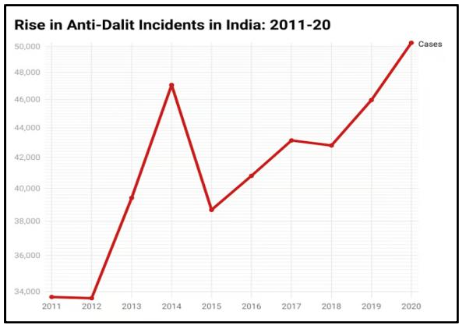
- Anti-Dalit Crimes Image:
-
 - Violence and Human Rights Violations:
- SCs are disproportionately affected by violence and human rights violations. In 2022, 57,582 crimes were reported against SCs.
- Manual Scavenging:
- Manual scavenging, primarily undertaken by Dalit women, remains a practice of exploitation.
- Overrepresentation in Prisons:
- SCs are overrepresented in prisons, constituting 20.74% of the prison population.
- Access to Basic Services
- Education:
- Malnutrition and lack of early childhood education hamper SC children’s learning.
- Health:
- IMR among SCs is 83 per 1,000 live births, significantly higher than the national average of 61.8.
- Basic Amenities:
- Only 28% of SCs had access to electricity in 2011, compared to the national average of 48%.
- Internal Disparities
- Inequalities within SC Communities:
- There are significant inequalities within SC communities, with advanced SC sub-groups benefiting more from reservations than marginalized sub-groups.
- Manual Scavenging in India- Persistence of a Grave Injustice
-
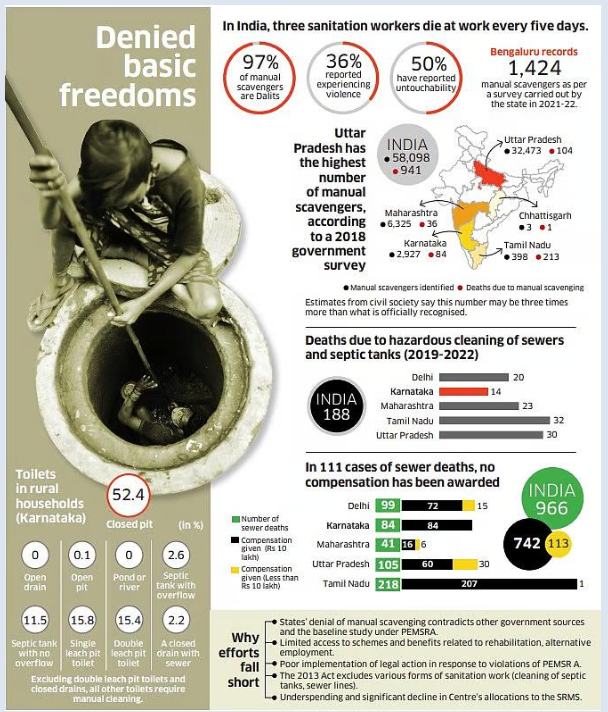 - Manual scavenging remains one of India’s most pressing social and human rights challenges, disproportionately impacting Dalits, especially Dalit women. Although outlawed under the Employment of Manual Scavengers and Construction of Dry Latrines (Prohibition) Act, 1993, and further criminalized by the Prohibition of Employment as Manual Scavengers and their Rehabilitation Act, 2013, the practice continues due to a nexus of caste hierarchies, economic deprivation, and poor enforcement.
- Scale and Impact
- Caste and Gender:
- An estimated 98% of manual scavengers are Dalits, and 95% are women (Shah et al., 2015; UN Women, 2014), indicating intersectional marginalisation rooted in caste and patriarchy.
- Deaths and Lack of Justice- Over 40 deaths were reported in just six months of 2024 (Safai Karmachari Andolan).
- From 1993 to 2020, 1,013 deaths were officially recorded, yet convictions remain rare.
- Most cases are labelled as "accidents," and affected families often do not receive compensation or meaningful rehabilitation.
- Structural Reasons for Persistence of Manual Scavenging
- Entrenched Caste System and social stigma
- Lack of alternative livelihoods, education, or land
- Poor sanitation infrastructure and slow mechanization
- Weak implementation of laws and accountability mechanisms
- Apathy from authorities and wider society
- Way Forward
- Strict enforcement of existing laws with accountability mechanisms
- Full mechanization of sanitation work and modern sewage systems
- Robust rehabilitation programs, including land, education, and employment
- Skill development and financial inclusion for liberated manual scavengers
- Societal change through education, media, and sustained public discourse to end caste-based occupational segregation
- Sub-Classification of Scheduled Castes (SCs)
- The Supreme Court of India, in the State of Punjab & Others v Davinder Singh & Others case, has ruled that sub-classification of Scheduled Castes (SCs) is permissible.
- This landmark judgment allows for creating separate quotas for more backward groups within the SC category, addressing specific needs and ensuring better representation in education and employment.
- Key Highlights of the Judgment
- Constitutional Clarity:
- The Supreme Court affirmed that sub-classification within SCs does not violate Article 341(2), as the reservation list is flexible.
- State’s Responsibility and Data Collection:
- States are allowed to sub-classify SCs based on inadequate representation in public services. However, the state must provide empirical data supporting the claim of backwardness in these groups.
- Creamy Layer Principle:
- The debate on extending the "creamy layer" concept to SCs and STs was discussed, but the judgment does not mandate its implementation.
- Arguments Supporting Sub-Classification of SCs:
- Substantive Equality:
- The approach ensures the most marginalized within SCs are given targeted support.
- Efficient Governance:
- Sub-classification can improve governance efficiency by addressing the unique challenges faced by various SC groups.
- Recognition of Diversity:
- Acknowledges the heterogeneity of SCs, with some groups facing more severe discrimination and social exclusion than others.
- Arguments Opposing Sub-Classification of SCs:
- Risk of Division:
- Critics fear that it could lead to fragmentation within the SC community, weakening their collective voice in socio-political matters.
- Potential for Political Exploitation:
- There are concerns about the manipulation of sub-classification for vote bank politics.
- Data Limitations:
- Lack of accurate caste data makes it difficult to substantiate claims of underrepresentation within specific SC subgroups.
- The Supreme Court’s ruling on sub-classification marks a significant shift in India’s reservation policies for SCs. However, the government has clarified on multiple occasions that subclassification shall not be done for SCs.
-
 - Learning through Example- Japan - Dowa Education Movement
- Japan’s Burakumin community, once treated as social outcasts, faced generations of systemic discrimination. In response, they initiated the Dowa Education Movement, using education as a transformative tool.
- Schools were encouraged to teach about Burakumin history and human rights, aiming to challenge prejudice early in life. By raising awareness among children, this approach helped shift mindsets and promote dignity and equality.
- Key takeaway:
- Long-term social change often begins in the classroom. Curriculum reform and inclusive education are powerful means to challenge stereotypes and build a more equitable society from the ground up.
- 1.5.2. Government Schemes and Policies for Scheduled Castes
- Constitutional and Legal Safeguards
- Article 14:
- Ensures equality before the law for SCs.
- Article 15(4) & 15(5):
- Enables the State to make provisions for the advancement of SCs in education and public services.
- Article 17:
- Abolishes untouchability and prohibits its practice in any form.
- Article 46:
- Directs the State to promote the welfare and protect SCs from social injustice and exploitation.
- Key Acts for Protection
- Protection of Civil Rights Act, 1955:
- Legal safeguards against caste-based discrimination.
- Scheduled Castes and Scheduled Tribes (Prevention of Atrocities) Act, 1989:
- Prevents atrocities and provides financial assistance to victims.
- Prohibition of Employment as Manual Scavengers and their Rehabilitation Act, 2013:
- Bans manual scavenging and mandates rehabilitation.
- Government Initiatives and Schemes
- SC Sub-Plan (SCSP):
- Allocates funds specifically for the development of SCs across various sectors.
- Post-Matric Scholarships:
- Financial assistance for SC students pursuing higher education.
- Mahila Adhikarita Yojana:
- Financial assistance for SC women to promote income generation.
- National Safai Karamchari Finance and Development Corporation (NSKFDC):
- Provides financial assistance for income-generating schemes for SCs.
- Health and Social Welfare
- NAMASTE Scheme:
- Aims to train sewer/septic tank workers and provide PPE kits.
- Rashtriya Swasthya Bima Yojana (RSBY):
- Health insurance component for SCs and other vulnerable groups.
- Economic Empowerment
- Stand Up India and PM Mudra Yojana:
- Stand Up India facilitates bank loans for SC/ST and women entrepreneurs to promote self-employment. PM Mudra Yojana provides collateral-free loans to promote micro-enterprises, including those owned by SCs.
- Institutional Support
- National Commission for Scheduled Castes (NCSC) and National Commission for Safai Karamcharis (NCSK):
- NCSC monitors and safeguards the socio-economic interests of SCs. NCSK focuses on the welfare of manual scavengers.
- 1.6. Scheduled Tribes (STs) in India
- "The land does not belong to us; we belong to the land." - Gond proverb (Tribal Wisdom)
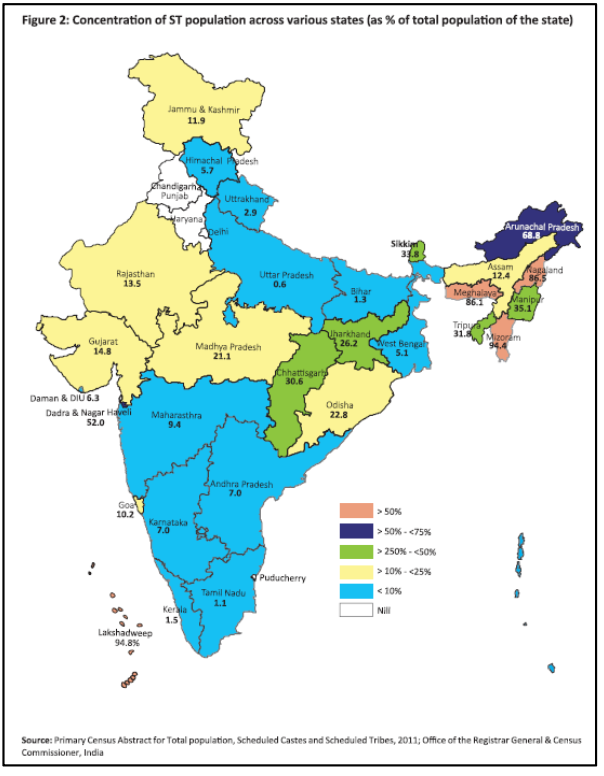
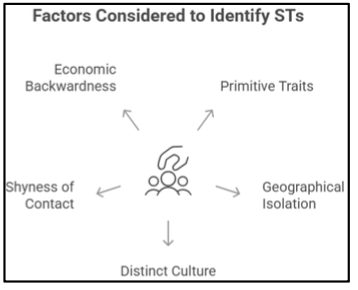
- Scheduled Tribes (STs) in India are social groups identified by the Constitution as suffering from poverty, powerlessness, and social stigma. The Constitution of India defines Scheduled Tribes under Article 366 (25), which designates them for special treatment and ensures their protection and welfare.
- According to the 2011 Census, STs constitute approximately 8% of India's total population, with a literacy rate of 60%, lower than the national average of 75%. They also face high levels of poverty, unemployment, and social exclusion.
-
 -
 - 1.6.1. Key Challenges Faced by Scheduled Tribes
- Poverty and Economic Disadvantage
- High Poverty Rates:
- 45.3% of rural ST populations live below the poverty line, a significantly higher proportion compared to other social groups.
- Limited Economic Opportunities:
- Many ST households are landless or have limited access to economic opportunities, contributing to their economic disadvantage.
- Land Alienation and Resource Depletion
- Impact of Development Projects:
- Development projects, such as mining and dam constructions, have led to land alienation, depriving STs of their traditional land and natural resources, thereby impacting their livelihood and culture.
- Educational and Health Disadvantages
- Poor Health and Education Outcomes:
- STs face poor health outcomes, including higher infant mortality rates (IMR), under-five mortality rates (U5MR), and high levels of anemia among women. They also suffer from low literacy rates (59% in 2011) and high dropout rates, hindering educational progress.
- Crime and Violence
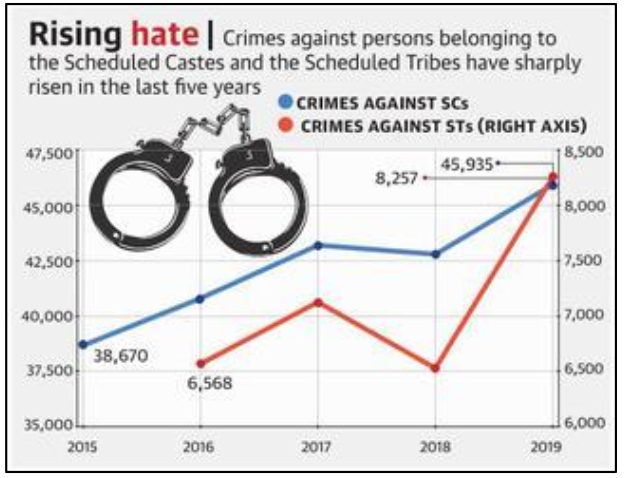
- Rising Hate Crimes Image:
-
 - Violence Against Tribal Women:
- Tribal communities, particularly tribal women, are disproportionately affected by violence. In 2022, there were 1,347 rape cases and 1,022 assault cases reported against tribal women, highlighting their vulnerability and lack of protection.
- How the Forest Rights Act (FRA) Gives Power Back to Forest-Dwelling Tribes
- For generations, STs living in forests faced injustice, with governments taking away their land and rights. The Forest Rights Act (FRA), passed in 2006, aims to correct these wrongs and give STs and other traditional forest dwellers legal control over their ancestral forests.
- 1. Fixing Past Injustices- Recognizing Land & Resource Rights
- Legal Ownership:
- The FRA gives STs legal recognition of their rights over the forest land they’ve lived on for generations.
- Types of Rights Granted:
- Individual Forest Rights (IFR):
- The right for families to live on and use forest land for their livelihood.
- Community Forest Rights (CFR):
- The right for entire villages to manage common resources like grazing land, water sources, and Minor Forest Produce (MFP) such as bamboo and herbs.
- Community Forest Resource Rights (CFRR):
- The right and responsibility to protect, regenerate, and manage local forests sustainably.
- 2. Empowering Tribal Communities- Putting Decisions in Local Hands
- Gram Sabha is Key:
- The Gram Sabha (village assembly) has the power to decide on forest rights, giving STs authority over local governance.
- Protection from Forced Removal:
- The Act protects STs from illegal evictions and ensures proper rehabilitation and resettlement if land is taken for important projects.
- Securing Tribal Homelands:
- For Particularly Vulnerable Tribal Groups (PVTGs), the FRA secures their rights to their entire traditional habitat, even if some parts are classified as revenue land.
- 3. Building Better Livelihoods & Economic Security
- Access to Forest Bounty:
- Legal rights to collect, use, and sell Minor Forest Produce (MFP) help create sustainable livelihoods and improve food security.
- Development Needs Met:
- The Act allows the use of small amounts of forest land for building essential community services like schools, health clinics, and roads.
- 4. Protecting Culture & Conserving Forests Together
- Valuing Traditional Knowledge:
- The FRA protects the traditional knowledge of STs about biodiversity and conservation.
- Community-Led Conservation:
- The Act empowers STs to manage forests sustainably, helping preserve biodiversity, combat climate change, and protect cultural heritage.
- Changes to the Act- Steps Forward & Concerns
- Positive Change (2017):
- Reclassifying bamboo as Minor Forest Produce (MFP) allowed STs to harvest and sell bamboo freely, boosting incomes.
- Recent Concerns (2023 Amendments):
- Amendments to the Forest Conservation Act (FCAA 2023) raised concerns that changes could weaken the requirement for Gram Sabha consent and FRA compliance before diverting forest land for projects, threatening ST rights.
- Implementation Problems:
- Despite positive changes, slow and inconsistent FRA implementation across many states remains a challenge.
- Particularly Vulnerable Tribal Groups (PVTGs)
-
 - PVTGs are a sub-class of Scheduled Tribes recognized by the Government of India as the most socio-economically marginalized tribal communities. There are currently 75 PVTGs spread across 18 states and the Andaman & Nicobar Islands.
- Identification Criteria for PVTGs
- Pre-agricultural level of technology
- Stagnant or declining population
- Extremely low literacy levels
- Subsistence-level economy
- Key Issues faced by PVTGs
- Displacement and Loss of Livelihoods:
- Displaced by development, conservation, and infrastructure projects with poor rehabilitation support.
- Denial of Land and Habitat Rights:
- Despite laws like the Forest Rights Act, many remain alienated from ancestral lands and resources.
- Extreme Poverty and Malnutrition:
- High levels of hunger, health issues, and literacy rates around only 30–40%.
- Exploitation and Market Exclusion:
- Limited access to markets for forest produce and vulnerability during health or climate crises.
- Data Gaps and Outdated Lists:
- Inadequate surveys and demographic data result in ineffective targeting of welfare programs.
- Government Initiatives
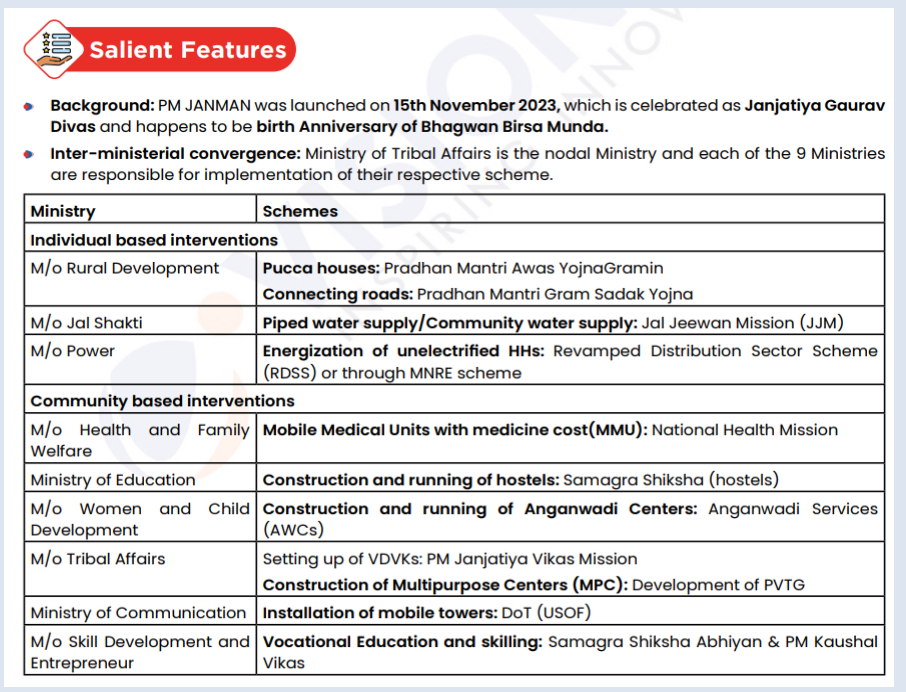
- PM-JANMAN Scheme:
- It is a new scheme launched by Government of India, especially focused on saturating PVTG habitations with basic amenities such as:
- Housing
- Drinking water
- Healthcare and nutrition
- Road connectivity
- Education and skill development
- ₹24,000 crore allocated for implementation.
- Way Forward
- Ensure community-led planning and culturally sensitive development.
- Improve infrastructure and access to public services.
- Guarantee legal and land rights, with effective implementation of the Forest Rights Act.
- Promote livelihood diversification through skill training and forest-based enterprises.
- Strengthen data collection and regularize PVTG lists to enable targeted delivery.
-
 - Side note
- Learning through Example- First Nations Education Stewardship (Canada)
-
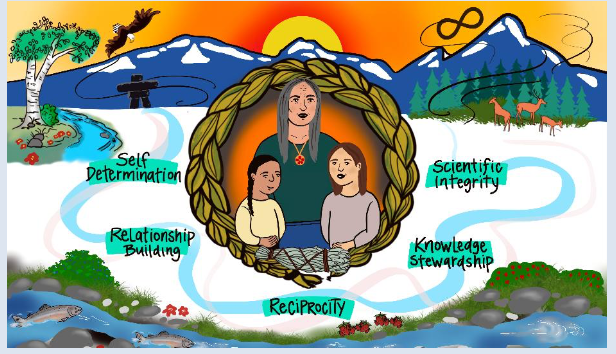 - In Canada, First Nations communities have reclaimed control over their children’s education through a model called Education Stewardship.
- Instead of following externally imposed curricula, tribal councils now design their own content—teaching indigenous languages, traditional skills like hunting, and land-based knowledge.
- This model moves beyond colonial systems to build cultural pride, relevance, and resilience. Children learn in ways that affirm their identity, heritage, and community values, fostering both educational engagement and strong self-worth.
- Key Takeaway:
- When communities shape their own education:
- Learning becomes culturally rooted and contextually meaningful
- It strengthens identity, dignity, and participation
- Bridges trust gaps between learners and institutions
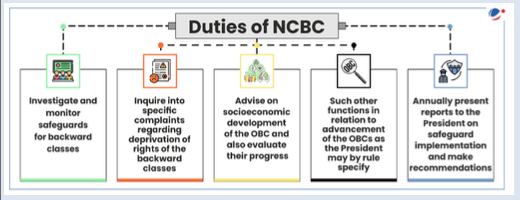
- Empowers the next generation to preserve heritage while progressing - Empowering marginalized groups to steer their educational journey can drive lasting inclusion and development. - 1.6.2. Government Schemes and Policies for Protection and Welfare of STs - Constitutional Provisions - Article 15(5): - Allows the state to make special provisions for the advancement of STs in educational institutions. - Article 16(4): - Permits the reservation of vacancies for STs in public services. - Article 17: - Abolishes untouchability, ensuring STs are not discriminated against. - Article 46: - Directs the State to promote the educational and economic interests of STs. - Article 338A: - Establishes the National Commission for Scheduled Tribes (NCST) to monitor and safeguard STs' rights. - Legal Safeguards - Scheduled Castes and Scheduled Tribes (Prevention of Atrocities) Act, 1989: - Provides legal protection and punitive measures for atrocities committed against STs. - Forest Rights Act, 2006: - Grants STs and other forest-dwelling communities the right to access and manage forest resources. - Welfare Schemes and Educational Initiatives - Kasturba Gandhi Balika Vidyalayas: - Residential schools for tribal girls to improve their education. - Eklavya Model Residential Schools (EMRS): - Provides quality education with a focus on tribal culture and heritage. - Post-Matric Scholarships: - Financial aid for ST students pursuing higher education. - Healthcare Initiatives - National Tribal Health Care Plan: - Focuses on improving healthcare accessibility for tribal populations. - Pradhan Mantri Jan Arogya Yojana (PMJAY): - Extends health insurance benefits to vulnerable tribal populations. - Economic Empowerment - Mahila Adhikarita Yojana: - Offers financial assistance to ST women for income-generating activities. - Dharti Aaba Janjatiya Gram Utkarsh Abhiyan (DAJGUA): - Initiatives like the Dharti Aaba Janjatiya Gram Utkarsh Abhiyan (DAJGUA), with an outlay of ₹80,000 crore over five years, aim to enhance the socio-economic conditions of tribal communities. - 1.7. Other Backward Classes (OBCs) in India - "An OBC student doesn't need lowered cutoffs - she needs the childhood nutrition you had." - Savitribai Phule Study Circle pamphlet - Other Backward Classes (OBCs) in India refer to a group of communities that are educationally or socially disadvantaged but do not fall under the categories of Scheduled Castes (SCs) or Scheduled Tribes (STs). - Although the term "OBC" is not directly defined in the Constitution, it allows the State to make special provisions for the advancement of these classes. The Mandal Commission report, 1980, recommended identifying backward communities based on certain social and educational criteria, leading to the establishment of a list for OBCs. As per the 2004-05 NSSO round, OBCs make up about 41% of India's population. - 1.7.1. Key Challenges Faced by OBCs - Socioeconomic Disparities - Poverty and Inequality: - A significant proportion of OBCs live below the poverty line, with limited access to essential services like education and healthcare. - Concentration in Rural: - OBCs are often concentrated in rural areas, where they are primarily engaged in agriculture or low-skilled informal jobs, leading to low incomes and limited job security. Many are landless or marginal farmers. - Educational Challenges - High Dropout Rates: - Economic pressures and lack of support often lead to high dropout rates among OBC students, particularly in rural areas. - Low Literacy Levels: - OBCs typically exhibit lower literacy rates than other social groups, which limits their opportunities for skilled employment. - Political Underrepresentation - Limited Representation: - Despite various constitutional provisions, OBCs have limited representation in decision-making bodies, which means their issues are often inadequately addressed in the policy-making process. - Social Discrimination - Ongoing Discrimination: - OBCs continue to face discrimination and exclusion, despite constitutional safeguards aimed at promoting their welfare and integration. - Internal Disparities - Unequal Benefits: - The OBC category is diverse, and some dominant landowning groups within OBCs have disproportionately benefited from reservation policies, which leaves marginalized sub-groups without adequate support. - Side note - Learning through Example- Affirmative Action- Divergent Paths for Backward Classes - Malaysia’s Bumiputera Policy (since 1971) offers a bold model of affirmative action. It grants significant preferences—like university seat quotas and business licenses—to the Malay majority, aiming to bridge economic gaps and promote social cohesion through state-led redistribution. - In contrast, India introduced 27% reservations for OBCs in 1990. Though met with public backlash during the Mandal protests, it led to a quiet transformation: by 2022, OBCs made up nearly 23.5% of new IAS officers, reflecting the power of sustained inclusion policies. - Key Takeaway: - Affirmative action can take radical or incremental forms, depending on historical context - Both models—Malaysia’s majority-targeted upliftment and India’s backward-class empowerment—aim to level the playing field - Political will and public support are crucial to balance social justice with cohesion - Long-term, well-structured policies can lead to real representation and equity even if social resistance is high initially - 1.7.2. Government Schemes and Policies for OBC Protection and Welfare - Constitutional Provisions - Article 15(4) & Article 16(4): - Empowers the State to make special provisions for the advancement of OBCs, including reservations in educational institutions and public employment. - Article 340: - Allows the President to appoint commissions to investigate the conditions of OBCs. - National Commission for Backward Classes (NCBC): - Established under the 102nd Constitutional Amendment Act, 2018, granting constitutional status to the NCBC. -
 - Welfare Schemes and Initiatives
- Pre and Post-Matric Scholarships:
- Provides financial support to OBC students for primary, secondary, and higher education.
- National Fellowship for OBCs:
- Financial support for OBC students pursuing M.Phil. and Ph.D. studies.
- Shilp Sampada Scheme:
- Enhances technical skills of OBC communities, especially in traditional crafts.
- PM-DAKSH (Pradhan Mantri Dakshta Aur Kushalta Sampann Hitgrahi):
- Provides skill development opportunities for OBC communities via a portal and mobile app.
- New Swarnima Scheme for Women:
- Provides loans up to ₹1,00,000 to OBC women for self-reliance without requiring personal investment.
- Saksham Scheme:
- Offers term loans for young professionals from OBC backgrounds.
- Stand Up India and PM-YASASVI:
- Stand Up India facilitates bank loans for SC/ST and OBC women entrepreneurs to promote greenfield enterprises. PM-YASASVI provides scholarships for OBC, EBC, and DNT students pursuing higher education.
- State Initiatives
- Uttar Pradesh OBC Hostel Funding:
- In Uttar Pradesh, the government allocated ₹2 crore to improve hostel facilities for OBC students, benefiting over 30 lakh students through scholarships and fee reimbursements.
- Side note
- Subcategorisation of Backward Classes
- Subcategorisation refers to dividing the broader OBC, SC, and ST categories into smaller sub-groups to ensure a fairer distribution of reservation benefits. It stems from evidence showing that dominant sub-castes often corner most benefits, leaving the most marginalized underrepresented. The move aims to make affirmative action more inclusive, equitable, and effective.
- Key Arguments and Recent Developments:
- Supports Social Justice:
- Aligns with Articles 14, 16(4), and 46 of the Constitution, ensuring adequate representation for all deprived groups.
- Empirical Backing:
- Supported by data from the Rohini Commission and state-level studies, showing intra-group disparities.
- Legal Shift:
- The 2024 Supreme Court verdict overruled Chinnaiah (2004), allowing data-based subcategorisation within SCs and STs without excluding any group.
- State Initiatives:
- States like Telangana, Karnataka, and Bihar have already piloted sub-group quotas or rationalised reservation structures.
- Concerns Raised:
- Critics warn of political misuse, administrative complexity, and the risk of excluding deserving castes if not carefully implemented.
- Implementation Needs:
- Relies on robust data from sources like the 2025 caste census and regular policy reviews to ensure impact and fairness.
- The move towards subcategorisation represents a critical evolution in India’s reservation system. If implemented transparently and backed by strong data, it can deepen social justice by ensuring that benefits reach the most deprived within deprived groups, fulfilling the true spirit of affirmative action.
- 1.8. Minorities in India
- "The essence of democracy is minority protection." - Gandhian Insight
- In India, minorities are those social groups that face specific challenges due to social, political, and economic systems that create disparities. The Constitution of India uses the term 'minority' in several articles, but does not provide a direct definition.
- The National Commission for Minorities Act, 1992 identifies religious minorities such as Muslims, Sikhs, Christians, Buddhists, Zoroastrians (Parsis), and Jains, and linguistic minorities at the state level. According to the 2011 Census, religious minorities make up approximately 19.3% of India's population, with Muslims being the largest group at 14.2%.
- 1.8.1. Key Challenges Faced by Minorities
- Socio-Economic Disparities
- Poverty and Inequality:
- Minorities often face lower literacy rates, poorer health indicators, and limited access to basic services. For instance, the 66th round NSSO survey indicated that Muslims generally had lower literacy and education rates than other communities.
- Employment Barriers:
- Many minorities face underrepresentation in formal employment and high-paying jobs. The Sachar Committee report highlighted Muslims’ overrepresentation in informal sectors like street vending and underrepresentation in public services.
- Social Discrimination and Exclusion
- Prejudice and Marginalization:
- Minorities face societal prejudice, leading to social exclusion and identity-based discrimination.
- Communal Tensions:
- The persistence of communal riots and violence affects the security and well-being of minority groups.
- Political Underrepresentation
- Limited Representation:
- Minorities often have limited representation in key political and civil service bodies, preventing their issues from being adequately addressed in policy formulation.
- Challenges for Minority Women
- Intersectional Disadvantages:
- Minority women face intersectional disadvantages related to gender and community, which compound their vulnerability and inequality.
- Threats to Culture and Identity
- Cultural Erosion:
- Rapid socio-economic changes and urbanization pose risks to the traditional cultures of minority groups, sometimes leading to the erosion of unique practices.
- Side note
- The Waqf (Amendment) Act, 2025
- Enhance transparency and accountability in the administration of waqf properties.
- Ensure representation of Muslim women on waqf boards and protect inheritance rights.
- Promote sectarian inclusivity by mandating representation from various Muslim sects on waqf boards.
- Learning through Example- Ensuring Minority Voice- A New Zealand Model
- New Zealand offers a powerful model of minority empowerment. Since 1867, the Māori people—its indigenous population—have had reserved seats in Parliament. Today, 7 out of 120 seats are guaranteed, and Māori voters can choose whether to vote on the general or Māori electoral roll.
- This system has worked:
- Māori now hold 21% of Parliament seats, exceeding their 17% population share, with many leaders in prominent positions.
- Key Takeaway:
- Dedicated political pathways can ensure real representation for minority communities
- Such inclusion builds trust in democratic institutions and reflects the nation's diversity
- India can explore inclusive electoral reforms to uplift underrepresented groups, ensuring equity goes beyond social schemes and into the heart of decision-making
- 1.8.2. Government Schemes and Policies for Minority Welfare
- Constitutional Safeguards and Institutional Frameworks
- Article 15:
- Prohibits discrimination based on religion, race, caste, sex, or place of birth.
- Article 29 & 30:
- Protects the rights of minorities to preserve their distinct culture and establish educational institutions.
- National Commission for Minorities (NCM):
- Established to safeguard and protect the interests of notified minority communities.
- Ministry of Minority Affairs:
- Formed in 2006, oversees policies, plans, and programs for the development of minority communities.
- Welfare Schemes and Educational Empowerment
- Educational Scholarships:
- Scholarships for minority students through Pre-Matric, Post-Matric, and Merit-cum-Means Scholarships.
- Maulana Azad National Fellowship (MANF):
- Provides support for higher education for minority students.
- Nai Udaan & Naya Savera:
- Free coaching for competitive exams and skill development for minorities.
- Madrasa Modernization:
- Includes schemes like Nai Manzil to bridge the gap between madrasa education and the mainstream education system.
- Skill Development and Economic Empowerment
- Seekho Aur Kamao and USTTAD:
- Focus on imparting employable skills and preserving traditional crafts for minorities.
- NMDFC and Nai Roshni:
- NMDFC provides microfinance and loans to minorities for economic empowerment. Nai Roshni empowers minority women through leadership programs.
- Social and Cultural Protection
- Hamari Dharohar:
- Preserves the cultural heritage of minorities.
- Jiyo Parsi Scheme:
- Addresses the declining population of Parsis.
- Waqf Management and Pradhan Mantri Jan Vikas Karyakram (PMJVK):
- Includes initiatives for computerization and financial support for waqf properties. PMJVK focuses on infrastructure development in districts with significant minority populations.
- 1.9. Differently-Abled Persons (PwDs) in India
- "Disability is a matter of perception" - Sudha Chandran (Indian classical dancer with prosthetic leg)
- In India, Differently-Abled Persons (PwDs), also known as Persons with Disabilities, are recognized as a vulnerable section of the population facing systemic disadvantages due to various physical, social, and economic factors.
- The United Nations Declaration on the Rights of Disabled Persons (1975) defines a disabled person as someone unable to ensure, wholly or partly, the necessities of normal life due to deficiencies in physical or mental abilities.
- Globally, 1.3 billion people live with disabilities, with a significant portion residing in developing countries and rural areas.
- As per the 2011 Census, approximately 2.21% of India’s population is affected by one or more disabilities, the majority of whom live in rural areas.
- 1.9.1. Key Challenges Faced by Differently-Abled Persons
- Health Challenges
- Preventable Disabilities:
- Many disabilities are preventable, resulting from issues like birth complications, maternal conditions, malnutrition, and accidents.
- Limited Healthcare Access:
- PwDs face limited access to affordable healthcare services and essential aids such as wheelchairs, hearing aids, and prosthetics.
- Educational Barriers
- Lack of Inclusive Education:
- The education system in India often lacks inclusivity, with less than 1% of institutions being disabled-friendly.
- Scarcity of Special Schools:
- Special schools are scarce, and there is a lack of trained teachers and suitable educational materials, leading to low literacy rates among PwDs, with 45% of PwDs being illiterate. For example, only 5% of deaf children attend school, and their course structure often does not accommodate their needs.
- Employment Disparities
- Employment Discrimination:
- PwDs face significant employment discrimination, with a lower employment rate compared to the general population.
- Low Representation in Corporate Sector:
- Among the Nifty 50 companies, only five have more than 1% PwDs on their payrolls. This contributes to their higher incidence of poverty and informality in the workforce.
- Accessibility Hurdles
- Physical Barriers:
- There are physical barriers in public infrastructure such as buildings, public transport, and essential services, making it difficult for PwDs to navigate daily life.
- Inaccessible Services for DHH:
- Many services and communications (such as public transport announcements and TV shows) are inaccessible for Deaf and Hard of Hearing (DHH) individuals due to the lack of sign language interpreters and other support services.
- Discrimination and Social Exclusion
- Stigma and Discrimination:
- PwDs face stigma and discrimination, particularly for those with mental illness or intellectual disabilities. This leads to social exclusion and negative self-perception among PwDs, further exacerbating their isolation.
- Lack of Data and Coordination
- Inconsistent Disability Data:
- Inconsistencies in disability data across different censuses and lack of standard reporting mechanisms hinder effective policymaking.
- Poor Sectoral Coordination:
- Poor coordination between various sectors, ministries, and NGOs impedes access to relevant data for planning and implementation.
- Side note
- Universal Design- From Barriers to Inclusion
- Universal Design Thinking is an approach that asserts disability stems from the environment, not the individual.
- It advocates designing everything to be inherently usable by all, moving beyond mere compliance (like ramps) towards truly inclusive solutions from inception.
- Policies must mandate these principles across infrastructure, digital platforms, and education.
- This cultivates designers who instinctively create accessible environments, ensuring future spaces and technologies are built for everyone's equitable use.
- Learning through Example- Empowering the Differently-Abled- A Global Ripple
-
 - The Americans with Disabilities Act (ADA) of 1990 was a game-changer in treating disability as a societal issue, not just a personal challenge. It mandated equal rights and accessibility in public spaces, jobs, education, and transport.
- India took cues from this progressive approach. The Rights of Persons with Disabilities (RPwD) Act, 2016 reflects similar principles, emphasizing dignity, inclusion, and non-discrimination.
- Key Takeaway:
- Strong legal frameworks can shift societal mindsets and infrastructure toward true inclusion
- Global examples like the ADA show how legislation can lead to awareness, accountability, and accessibility
- India must keep strengthening implementation to ensure the law translates into lived reality for all differently-abled citizens
- 1.9.2. Government Schemes and Policies for Their Protection
- Constitutional Safeguards and Institutional Frameworks
- Preamble:
- Secures justice, liberty, and equality for all citizens, including PwDs.
- Article 14:
- Right to Equality, extends to PwDs.
- Article 15:
- Prohibits discrimination on grounds of disability.
- Article 41 and Article 46:
- Article 41 mandates the provision of right to work, education, and assistance for PwDs. Article 46 directs the State to promote the educational and economic interests of weaker sections, including PwDs.
- Department of Empowerment of Persons with Disabilities (DEPwD):
- Formed in 2012, focuses on policies and support for PwDs.
- Legal Frameworks
- Rights of Persons with Disabilities Act, 2016 (RPwD Act):
- Expands definition of disability, provides reservations and ensures accessibility.
- Mental Healthcare Act, 2017:
- Provides rights and mental healthcare services for persons with mental illness.
- Marrakesh Treaty:
- Facilitates the production and international exchange of accessible books for the visually impaired.
- Welfare Programs and Initiatives
- National Policy for Persons with Disabilities, 2006:
- Aims to create an inclusive environment for PwDs by ensuring equal opportunities.
- Accessible India Campaign (Sugamya Bharat Abhiyan):
- Aims to build a barrier-free environment in public spaces, transport, and ICT.
- Assistance to Disabled Persons for Purchase of Aids and Appliances (ADIP):
- Provides financial assistance for aids like wheelchairs and hearing aids.
- Deendayal Disabled Rehabilitation Scheme:
- Promotes social justice and empowerment by creating an enabling environment.
- Rajiv Gandhi Fellowship Scheme/National Fellowship for Students with Disabilities (RGMF) and SMILE-75 Initiative:
- RGMF provides scholarships for PwDs pursuing higher education like M.Phil. and Ph.D. SMILE-75 focuses on rehabilitating persons engaged in begging, providing medical aid, counseling, education, and skill development.
- Global Measures India Supports
- UN Convention on the Rights of Persons with Disabilities (UNCRPD):
- India ratified the UNCRPD in 2007, aligning its national legislation on rights of disabled persons with these international principles.
- Biwako Millennium Framework:
- A framework for ensuring a barrier-free and inclusive society for PwDs in Asia.
- Incheon Strategy:
- An initiative to realize the rights of PwDs across Asia and the Pacific.
- International Day of Persons with Disabilities:
- Promotes awareness and understanding of disability issues globally.
- 1.10. Transgender Persons in India
- "I don't want to be tolerated; I want to be celebrated." - Laxmi Narayan Tripathi
- In India, transgender is an umbrella term which is defined under the Transgender Persons (Protection of Rights) Act, 2019 as a "transgender person" refers to an individual whose gender does not align with the gender assigned at birth.
- This includes trans-men and trans-women, whether or not they have undergone sex reassignment surgery, hormone therapy, or other treatments.
- It also includes people with intersex variations, gender-queer individuals, and those with socio-cultural identities such as kinner, hijra, aravani, and jogta.
- India’s transgender population, as per the 2011 Census, is approximately 4.9 lakh (490,000).
-
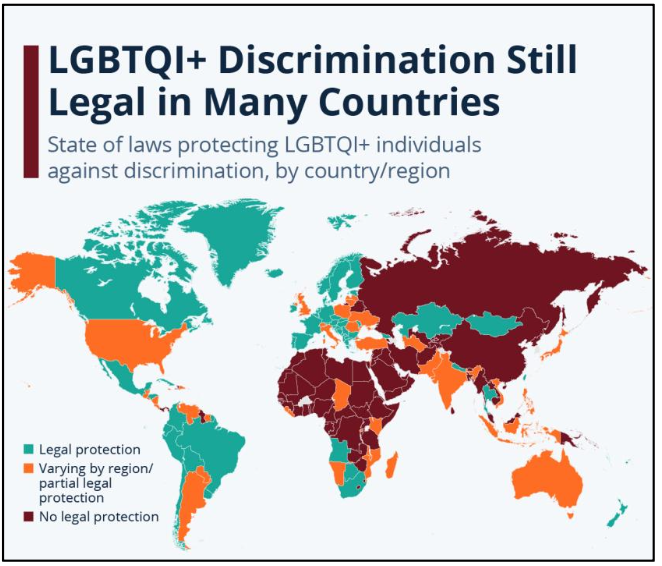 - 1.10.1. Key Challenges Faced by Transgender Persons in India
- Discrimination and Social Exclusion
- Social Rejection:
- Transgender people encounter prejudice in employment, housing, healthcare, and education. 99% of transgender individuals have faced repeated instances of social rejection, according to a study by the National Human Rights Commission (NHRC).
- Stigma and Mental Health:
- Social stigma, homophobia, and transphobia frequently lead to marginalization, contributing to mental health issues.
- Under-Representation:
- Given the social stigma and injustice they face, their participation as an electorate has remained abysmal. They have remained underrepresented in decision-making bodies like assembly, Parliament and urban local bodies. Till 2019, only about eight percent of transgender population have registered as ‘Other’ voters and only one percent have exercised their voting right. During 2019 polls, ‘Others’ voter count increased by 73 percent, however only 14.6 percent of registered third genders voted.
- Violence and Abuse
- High Prevalence of Violence:
- High prevalence of violence, including rape, sexual abuse, harassment, and exploitation.
- Family Rejection:
- Transgender individuals often face family rejection, leading to homelessness.
- Educational Barriers
- Inadequate Education System:
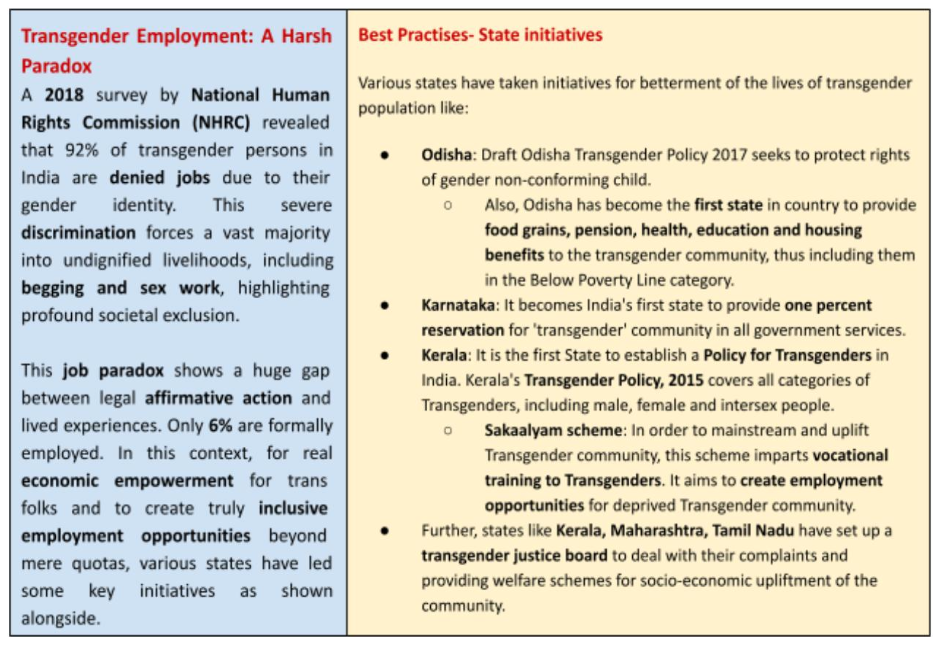
- The education system is unequipped to handle transgender students, leading to high dropout rates. Almost 60% of transgender persons never attended school due to harassment from both peers and teachers.
- Employment Disparities
- Widespread Unemployment:
- Transgender individuals experience widespread unemployment despite qualifications, with 89% facing employment challenges.
- Forced into Marginal Professions:
- Many are pushed into professions such as prostitution or begging for survival.
- Health Challenges
- Healthcare Discrimination:
- Transgenders face discrimination in healthcare, making it difficult to access essential medical care.
- HIV/AIDS Susceptibility:
- They are more susceptible to HIV/AIDS, with a prevalence rate of 3.1% among transgenders in India (2017).
- Mental Health Issues:
- Mental health issues such as depression, anxiety, and suicidal tendencies are prevalent.
- Accessibility Barriers
- Lack of Inclusive Infrastructure:
- Lack of gender-neutral or separate transgender toilets and barriers to public transport and healthcare facilities prevent full societal participation.
- Legal and Policy Gaps
- Inadequate Enforcement:
- Enforcement of the Transgender Persons (Protection of Rights) Act, 2019 has not been adequate.
- Legal Identification Concerns:
- Transgender Persons often face challenges with obtaining consistent identification documents, leading to Legal Identification concerns.
-
 - Side note
- Learning through Example- Lessons for Transgender Inclusion
-
 - In 2012, Argentina became a global pioneer with its Gender Identity Law, allowing individuals to legally change their gender based on self-identification—without medical or psychological requirements. This marked a major victory for transgender rights and dignity.
- But the story didn’t end there. Despite the progressive law, trans persons in Argentina continue to struggle for formal employment, revealing a gap between legal recognition and economic inclusion.
- Key Takeaway:
- Legal reforms are vital, but economic and social integration must follow
- India’s similar challenge is stark—over 92% of transgender people remain in informal work
- The next step in empowerment must include affirmative hiring, education access, and skill development, so rights on paper translate into real opportunity and dignity
- 1.10.2. Government Schemes and Policies for Protection and Welfare
- Constitutional Safeguards
- Preamble:
- Ensures justice, liberty, and equality for all citizens, including transgender individuals.
- Article 14:
- Guarantees equality before the law for all citizens.
- Article 15 & 16:
- Prohibits discrimination based on sex, caste, creed, or religion.
- Article 21:
- Right to life and personal liberty for all citizens, including transgender persons.
- Article 23:
- Prohibits forced labor and human trafficking, ensuring personal dignity.
- Legal Frameworks and Judicial Interventions
- NALSA v. Union of India Judgment (2014):
- Recognized the third gender and affirmed constitutional rights of transgender persons.
- Navtej Singh Johar v. Union of India (2018):
- Decriminalized same-sex relationships, striking down part of Section 377 of the IPC.
- Transgender Persons (Protection of Rights) Act, 2019:
- Prohibits discrimination in education, employment, healthcare, and access to public goods. Recognizes self-perceived gender identity, allowing transgender persons to self-identify. Establishes the National Council for Transgender Persons (NCTP) to address grievances.
- Institutional Support
- National Council for Transgender Persons (NCT):
- Constituted by MoSJE under Transgender Persons (Protection of Rights) Act, 2019. It consists of Chairperson (Union Minister of MoSJE- ex-officio), Vice-Chairperson (Union Minister of State for SJE- ex-officio).
-
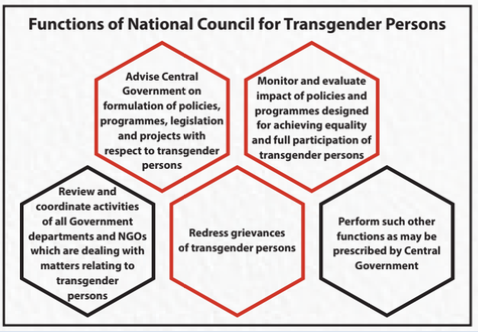 - National Portal for Transgender Persons:
- Launched in consonance with Transgender Persons (Protection of Rights) Rules, 2020, it would help transgender community in digitally applying for a certificate and identity card from anywhere in the country.
- Welfare Programs and Initiatives
- Department of Empowerment of Persons with Disabilities (Divyangjan):
- Coordinates policy formulation and support for PwDs and transgender persons.
- Garima Greh:
- Shelter homes provide food, clothing, recreation, and skill development for transgender persons.
- SMILE Scheme:
- Comprehensive rehabilitation for transgender persons through skill training, housing, and healthcare.
- Ayushman Bharat TG Plus and PM-DAKSH:
- Ayushman Bharat TG Plus provides health insurance coverage of ₹5 lakh annually for transgender persons, including coverage for gender-affirmation surgeries. PM-DAKSH imparts skill development training to Transgender beneficiaries of SMILE Scheme through PM-DAKSH- skill development scheme of MoSJE.
- Side note
- Yogyakarta Principles- Affirming Universal Rights for LGBTQ+ Persons
-
 - The Yogyakarta Principles (YP) are a set of 29 principles aimed at affirming the human rights of individuals with diverse sexual orientations and gender identities.
- These principles were adopted in Yogyakarta, Indonesia, in 2006, with signatories from various countries, including India, the USA, and the UK. In 2017, the YP Plus 10 was adopted in Geneva, Switzerland, to further strengthen these rights.
- These principles are binding international standards that apply to all individuals, ensuring equality and non-discrimination based on sexual orientation, gender identity, gender expression, and sex characteristics.
- They highlight the universal rights of LGBTQ+ persons, demanding that all states comply with these standards to promote equality, dignity, and protection from violence and discrimination.
- 1.11. Assessment of Government Schemes & Policies for Vulnerable Sections
- The Government of India (GoI) aims to enhance the welfare and upliftment of various vulnerable groups, such as children, women, the elderly, persons with disabilities, SCs, STs, minorities, migrants, and those living in poverty. However, despite these efforts, the schemes and policies have not yielded the expected outcomes due to several limitations and challenges, which have undermined the effectiveness of these initiatives.
- Effectiveness- Tangible Strides Towards Inclusivity
- Poverty Reduction
- Welfare Program Effectiveness:
- Welfare programs have been instrumental in lifting millions out of poverty by providing direct support and opportunities.
- NITI Aayog MPI Report:
- Example: NITI Aayog's Multidimensional Poverty Index (MPI) 2024 report indicated that 24.82 crore people moved out of multidimensional poverty in the last 9 years, because of the impact of various welfare programs like Pradhan Mantri Jan Dhan Yojana (PMJDY) and Pradhan Mantri Awas Yojana (PMAY).
- Financial Inclusion & DBT Efficiency
- Universal Banking Access:
- Universal access to banking has empowered vulnerable groups and revolutionized subsidy delivery, reducing leakages.
- PMJDY Achievements:
- Example: PMJDY has opened over 55.69 crore bank accounts as of June 25, 2025 (PIB, 2025), a significant portion belonging to women and rural poor, enabling efficient Direct Benefit Transfers (DBTs) and ensuring money reaches beneficiaries.
- Enhanced Social Security & Health Protection
- Safety Nets for Vulnerability:
- Critical safety nets for food security, health, and basic income support have reduced vulnerability to shocks.
- NFSA Coverage:
- Example: The National Food Security Act (NFSA) ensures highly subsidized food grains for over 80 crore beneficiaries (PIB, 2025).
- Ayushman Bharat - PMJAY Impact:
- Ayushman Bharat - PMJAY provides health coverage up to ₹5 lakh/family/year, with over 41.34 crore Ayushman Cards issued as of July 3, 2025 (PIB, 2025), drastically reducing out-of-pocket health expenditures for the poor.
- Empowerment of Specific Groups
- Targeted Interventions:
- Targeted interventions have demonstrably improved socio-economic indicators and legal protections for historically marginalized communities.
- BBBP Success:
- Example: Beti Bachao Beti Padhao (BBBP) contributed to the improvement of the Sex Ratio at Birth (SRB) from 918 (2014-15) to 930 (2023-24) (PIB, MWCD 2024).
- FRA Recognition:
- The Forest Rights Act (FRA) has recognized over 20 lakh individual and 1.15 lakh community forest rights titles (Ministry of Tribal Affairs, 2024), empowering tribal communities.
- Limitations- Persistent Bottlenecks Hindering Full Potential
- Implementation Gaps & Bureaucratic Hurdles
- Last-Mile Delivery Issues:
- Last-mile delivery remains problematic, often due to complex procedures, corruption, and insufficient ground-level capacity. Example: Historically, delays in scholarship disbursement (e.g., Post-Matric Scholarships for SCs) have been a persistent issue, leading to student dropouts.
- Awareness Deficit & Accessibility Barriers
- Lack of Awareness:
- Many eligible beneficiaries, especially in remote or marginalized communities, remain unaware of schemes or face difficulties accessing services. Example: A Supreme Court ruling in April 2025 highlighted that digital KYC processes (e.g., facial recognition) exclude visually impaired or acid attack survivors.
- Elderly Scheme Awareness:
- A July 2024 HelpAge India report found that one in three elders had no income in the past year, and only 29% accessed social security schemes, indicating widespread unawareness of existing benefits.
- Insufficient Funding & Meagre Benefits
- Inadequate Financial Support:
- While budgets are large, the actual quantum of financial support or resource allocation inadequate for dignified living or comprehensive development. Example: The 2025 Union Budget maintained the National Social Assistance Programme (NSAP) allocation stagnant at ₹9,652 crore, meaning the central contribution to old-age pensions (₹200-500) has not increased since 2007, eroding real value due to inflation.
- Lack of Inter-sectoral Convergence
- Fragmented Efforts:
- Schemes often operate in silos, leading to fragmentation of effort, reduced efficiency, and failure to provide holistic support. Example: Despite the comprehensive mandate of Integrated Child Development Services (ICDS), actual convergence with health and education departments at the ground level remains poor in many Anganwadi Centres, affecting holistic child development.
- Data Reliability & Monitoring Weaknesses
- Weak Monitoring Systems:
- While data collection is improving, robust, real-time, and outcome-based monitoring is often lacking, hindering effective evaluation and course correction. Example: While the e-Shram portal has registered 28.97 crore unorganised workers (IJLSI, Jan 2025), ensuring seamless linkage of all registered workers to relevant social security benefits and tracking their actual access remains a significant challenge.
- Suggestions for Enhancement- Towards a More Equitable Future
- Strengthen Last-Mile Delivery & Digital Governance
- Technology and Accountability:
- Leverage technology to simplify processes and ensure accountability, while simultaneously strengthening human capital at the grassroots. Example: Implement real-time, blockchain-enabled DBT systems to ensure transparent and tamper-proof delivery, as explored in some pilot projects. "Digital India" initiatives, if fully leveraged with adequate digital literacy programs, can significantly bridge the last-mile gap.
- Enhance Awareness & Community Participation
- Community Ownership:
- Move beyond top-down communication to foster genuine community ownership and awareness. Case Study: Replicate Kerala's "Janamaithri Suraksha Project" where community beat policing fosters trust and local participation in crime prevention and dissemination of welfare information. Community resource persons from National Rural Livelihood Mission (NRLM) Self-Help Groups (SHGs) could also be trained as welfare scheme facilitators, as seen in parts of Andhra Pradesh.
- Rationalize Benefits & Ensure Adequacy
- Adequate Support:
- Periodically review and adjust benefit amounts to align with living costs and ensure a dignified existence, while expanding eligibility where genuinely needed.
- Best Practice:
- Study models like Brazil's Bolsa Familia, which links cash transfers to conditions like school attendance and health check-ups, ensuring multi-dimensional impact and adequate support, rather than just minimal aid.
- Foster Inter-Ministerial Convergence
- Integrated Planning:
- Break down silos through integrated planning frameworks and shared platforms to ensure holistic development. Example: Implement "NITI Aayog-style" multi-sectoral working groups at state and district levels, with clear mandates for convergence, inspired by the success of coordinated efforts during the initial phases of the Swachh Bharat Mission.
- Robust Outcome-Based Monitoring & Evaluation
- Impact-Focused Monitoring:
- Shift focus from mere expenditure to actual impact on beneficiaries' lives, using data for continuous learning and adaptation.
- Best Practice:
- Adopt models similar to the Aspirational Districts Programme, which uses real-time data dashboards and competitive federalism to track key performance indicators (KPIs) across various development sectors, encouraging districts to learn from each other.
- Address Structural Inequities & Discrimination
- Legal Enforcement and Empowerment:
- Strengthen legal enforcement against discrimination and couple welfare with direct economic empowerment initiatives. Case Study: Learn from Colombia's "Resource Curse" management, which, despite complexities, aimed for royalty-sharing with local communities in mining zones to address resource exploitation. Similarly, ensuring full implementation of the PESA Act and FRA in tribal areas, empowering Gram Sabhas, can prevent alienation.
- Counter Exclusion in Urban Economies:
- Implement strong anti-discrimination laws in hiring and housing in urban areas, similar to those in developed economies. Promote inclusive incubation centers and mentorship programs specifically for entrepreneurs from vulnerable groups in urban settings, beyond just providing initial capital.
- UNIT 2- ISSUES RELATING TO DEVELOPMENT AND MANAGEMENT OF SOCIAL SECTOR
- 1. Part A- Health
- Definition by WHO:
- Health is a state of complete physical, mental, and social well-being and not merely the absence of disease or infirmity.
- Determinants of Good Health:
- Access to various types of health services
- An individual’s lifestyle choices
- Personal, family, and social relationships
- Healthcare in the Constitution of India
- Fundamental Rights (Part III)
- Article 21- Right to life, including health, as per Supreme Court.
- Directive Principles of State Policy
-
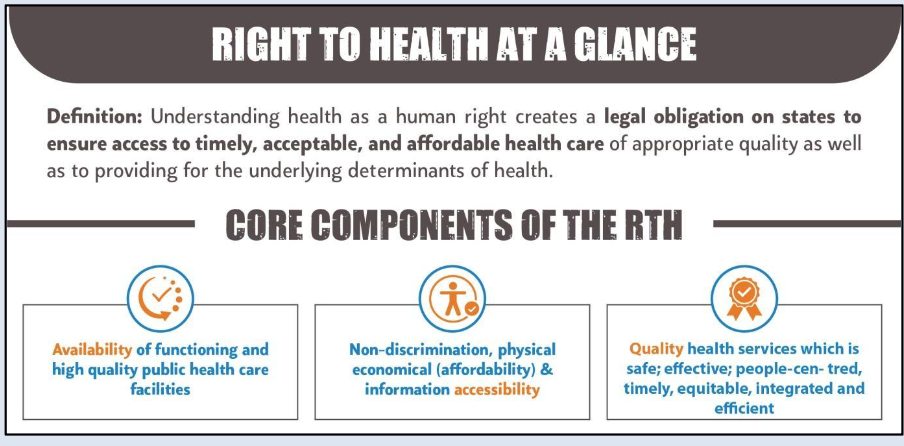 - Article 39(e)- Health of workers.
- Article 41- Assistance for sick and disabled.
- Article 42- Maternity benefits.
- Article 47- Nutrition, living standards, public health.
- Article 48A- Pollution-free environment for health.
- Right to Health- The Supreme Court has often affirmed the Right to Health under Article 21 as a fundamental right. Important Cases:
- CESC Ltd. vs. Subash Chandra Bose
- Paschim Banga Khet Mazdoor Samity
- Murali S. Deora
- N. D. Jayal
- 1.1. Healthcare Infrastructure in India
-
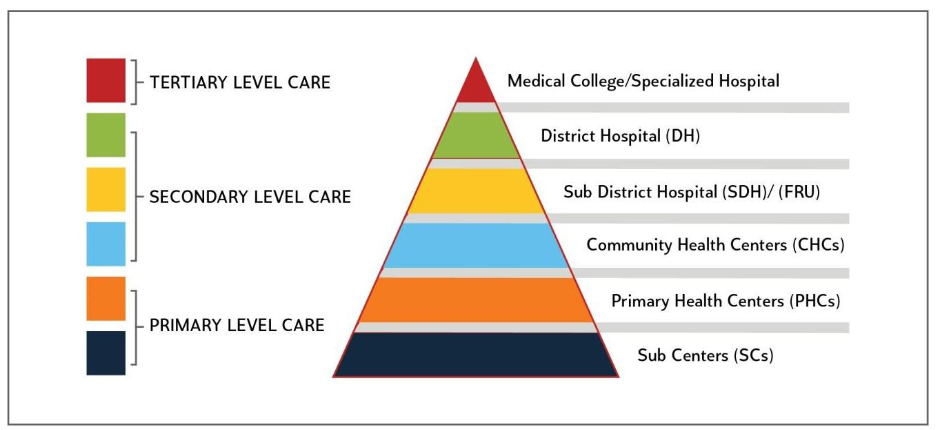 - 1.1.1. India’s Health Profile- Key Indicators
- The National Family Health Survey (NFHS-5, 2019-21) and Sample Registration System (SRS) data reveal key health metrics for India:
| Indicator | Value | Source |
|---|---|---|
| Total Fertility Rate (TFR) | 2.0 (below the replacement level) | NFHS-5 (2019-21) |
| Contraceptive Prevalence Rate | 67% | NFHS-5 (2019-21) |
| Institutional Deliveries | Increased to 88.6%, reaching 91.1% in 2021 | NFHS-5 (2019-21) |
| Full Immunization | Improved to 76.4% | NFHS-5 (2019-21) |
| Anaemia Prevalence | High among women (57%) and children (67.1%) | NFHS-5 (2019-21) |
| Child Malnutrition | Stunting at 35.5%, underweight at 32.1%, and wasting at 19.3% | NFHS-5 (2019-21) |
| Dual-Disease Burden | India faces both communicable diseases (e.g., tuberculosis) and a rising prevalence of non-communicable diseases (e.g., diabetes, hypertension) | - |
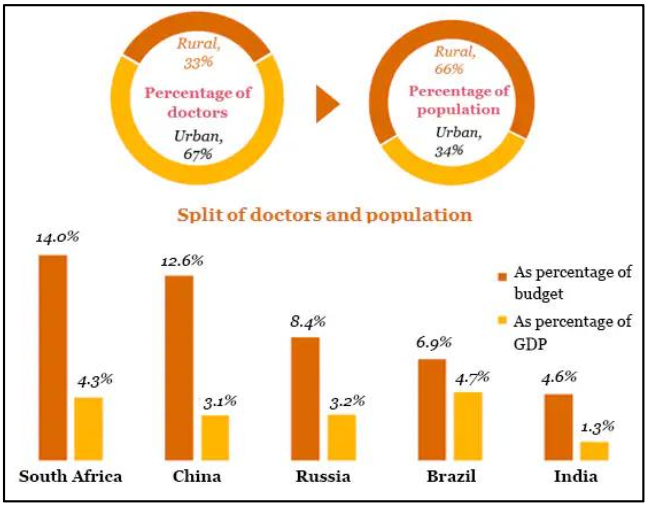 - Low Public Expenditure
- Insufficient Healthcare Spending:
- India spends 1.8% of GDP (2021-22) on healthcare, below WHO's 5% recommendation.
- High Out-of-Pocket Expenditure
- Reliance on Private Facilities:
- While the OOPE for India has declined from 64% in 2013 to 39% in 2021, still around 70% rural and 80% urban populations use private facilities, leading to high personal expenses (World Bank).
- Rising Costs of Treatment
- Affordability Issues:
- Increased public spending, but affordability remains a concern; cancer treatment can push families into debt (Public Health Foundation of India, 2022).
- Limited Health Insurance Coverage
- Coverage Gaps:
- Health insurance sector growing at 12.8% CAGR (2024–2028), yet coverage gaps persist. Over 80% of the population lacks health insurance, increasing financial vulnerability (FICCI report 2022).
- Inadequate Infrastructure
- Low Hospital Bed Availability:
- India has 1.3 hospital beds per 1000 population, compared to China's 2.3 and the US's 3.2 (2018).
- Human Resource Crunch
- Shortage of Healthcare Professionals:
- Shortage of over 8 lakh doctors and 24 lakh nurses despite meeting WHO's doctor ratio (NITI Aayog, 2021).
- 1.3. Addressing Challenges to Issues in Healthcare
- For Strengthening Primary Health Care in India
- Srinath Reddy Committee Report Recommendations
- Increased Public Spending
- Prioritize Primary Care:
- Allocate at least 70% of healthcare budget to primary care, aligning with WHO's 50% recommendation.
- Expanding Workforce and Infrastructure
- Strengthen Rural Healthcare:
- Increase healthcare professionals, especially in rural areas; establish an "all-India service of public health workers" like Tamil Nadu.
- New Medical and Nursing Schools
- Address Workforce Gaps:
- Establish more schools to address workforce gaps.
- Successful Models
- Cuba's Decentralized Care:
- Community-based polyclinics and neighborhood family doctor-and-nurse offices serve populations of 30,000-60,000, fostering community relationships.
- Thailand's Health System:
- By heavily investing in primary care through its Health Insurance System (HIS), Thailand achieved Universal Health Coverage (UHC) with low GDP spending (around 4.5%).
- For Strengthening Secondary Health Care in India
- District Health Plan
- Comprehensive Healthcare Strategy:
- Develop a comprehensive plan addressing bed availability (NHP 2017 targets), surgical capacity (4520 surgeries per 100,000 population), and emergency preparedness (serving 15% of the population).
- Urban Peripheral Hospitals
- Enhance Secondary Care:
- Establish 100-150 bedded government hospitals for every 3 lakh population in urban areas to enhance secondary care.
- Human Resource Development
- Public–Private Partnership (PPP) Model for Training:
- Implement NITI Aayog's PPP model by linking private medical colleges with district hospitals to increase medical seats, specialist availability, and provide practical training for students in real-world settings.
- Case Study
- Kenya's successful PPP model for staffing public hospitals with qualified professionals demonstrates the potential of this strategy.
- Colombia's successful public-private partnerships for building and managing hospitals showcases the potential of attracting private investment for expanding healthcare access.
- Common Strategies for Strengthening Overall Health Care in India
- Leveraging Technology
- Description:
- Telemedicine:
- Offers remote consultations and specialist support in rural areas.
- Health Information Exchange (HIE):
- Enables sharing of patient data between PHCs and secondary facilities to improve care coordination.
- Mobile Health (mHealth):
- Uses mobile technology for appointment reminders and medication adherence.
- Example:
- Rwanda's telemedicine connects rural centers with urban specialists. HIE systems in the US reduce medical errors and test duplications. Singapore's mHealth initiatives enhance patient care.
- Decentralized Institutions
- Description:
- Involve SHGs, PRIs, ANMs, and ASHAs to create teams for basic care, health awareness, and referrals in rural areas.
- Example:
- Ethiopia's Health Extension Program improves access to basic healthcare with trained health workers in rural communities.
- Increasing Insurance Coverage
- Description:
- Expand health insurance to improve access to secondary care and reduce financial hardships.
- Example:
- Ghana's National Health Insurance Scheme (NHIS) enhances healthcare access through expanded insurance coverage.
- 1.4. Burden of Disease & Key Health Issues in India
- India faces a complex health landscape shaped by multiple, overlapping challenges, including rising non-communicable diseases, persistent communicable diseases, and widespread mental health concerns.
- 1.4.1. Communicable Diseases
- 1. Tuberculosis (TB)
-
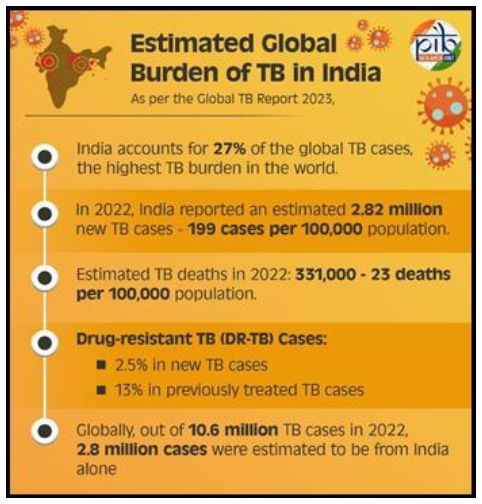 - India’s TB Burden:
- India accounts for 27% of the global TB burden. In 2023, 25.1 lakh TB cases were reported in India.
- Government Initiatives:
- The National TB Elimination Programme (NTEP) aims for TB elimination by 2025 (ahead of the global target of 2030).
- The Nikshay Poshan Yojana provides nutritional support to TB patients.
- Challenges:
- Long treatment regimens, drug resistance, and poor access to advanced diagnostics in rural areas remain significant hurdles. Poverty and poor living conditions exacerbate transmission of TB.
- 2. AIDS/HIV
- National Goals- The 95-95-95 goal by 2025 aims for:
- 95% of HIV-positive people are diagnosed.
- 95% of diagnosed individuals on ART (Anti Retroviral Therapy).
- 95% of ART patients achieve viral suppression.
- Important Initiatives for Eradication of AIDS:
- Since 2004, free ART has been provided to patients suffering from AIDS.
- The fifth phase of the National AIDS Control Programme (NACP) targets 80% reduction in new HIV infections and AIDS-related deaths.
- India's Progress in the Fight Against AIDS:
- On World AIDS Day 2024, the theme "Take the Rights Path" was emphasized, focusing on equal rights and healthcare access for those affected by HIV/AIDS.
- India's efforts have significantly reduced the HIV epidemic, with new infections in 2023 almost 44% lower than in 2010, surpassing the global reduction rate. AIDS-related deaths declined by 79%.
- India aims to eradicate epidemic diseases, including AIDS, by 2030.
- Current Status as per MoHFW:
- 81% of cases identified, 88% receiving antiretroviral therapy (ART), and 97% of identified people having their viral load suppressed.
- India has become a net supplier of affordable and effective HIV medicines globally, providing them for free.
- A state within India also aims to end AIDS as a public health threat by 2028.
- Challenges:
- Delays in ART initiation, non-compliance, and the need for integration with other health programs (e.g., hepatitis, NCDs).
- 1.4.2. Non-Communicable Diseases (NCDs)
- India faces a dual-disease burden with a rising prevalence of lifestyle diseases such as cardiovascular diseases, diabetes, and cancer, alongside persistent communicable diseases.
- Dominant Causes of Mortality:
- NCDs account for over 60% of all deaths. By 2030, they are projected to cause 75% of deaths.
- Economic Impact:
- NCDs are expected to cost India $6 trillion by 2030.
- Key Risk Factors:
- Unhealthy diets, sedentary lifestyles, and aging are driving the increase in obesity and NCD prevalence.
- Policy Strategies to control NCDs:
- India Hypertension Control Initiative (IHCI) and WHO’s SHAKE the Salt Habit program aim to reduce salt consumption and manage diabetes and hypertension.
- Multi-sectoral efforts are focused on preventing NCDs, promoting active lifestyles, and nutritional literacy.
- Fighting Obesity by Reducing Oil Intake:
- Recently the Prime Minister during his Mann Ki Baat address, urged citizens to reduce monthly edible oil consumption by 10% to combat rising obesity, especially among families.
- Citing support from athletes Neeraj Chopra and Nikhat Zareen, he emphasized how small lifestyle changes can lead to significant health benefits.
- Universal Immunisation and U-WIN Portal
-
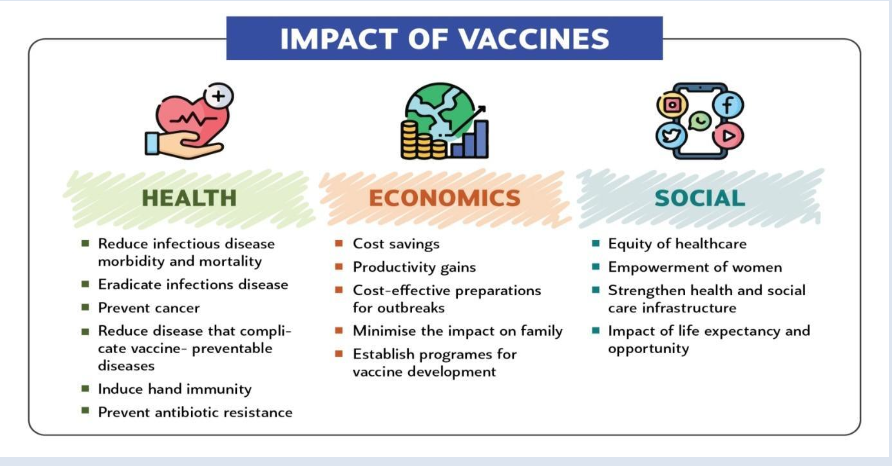 - Universal Immunization is a public health program providing free or subsidized vaccinations to all children, ensuring protection against preventable diseases.
- The U-WIN portal is a digital platform under India’s Universal Immunisation Programme, aimed at digitizing vaccination records for pregnant women and children up to 16 years.
- It offers self-registration, flexible scheduling, SMS reminders, QR-based e-certificates, and links to Ayushman Bharat Health Accounts (ABHA).
- The portal supports multilingual access in 11 languages and enables anytime, anywhere vaccination.
- As of November 2024, U-WIN had registered 7.44 crore beneficiaries, conducted 1.26 crore sessions, and tracked over 27 crore vaccine doses.
- By early November, 1.7 crore pregnant women and 5.4 crore children were digitally enrolled.
- 1.4.3. Mental Healthcare
- WHO Definition:
- Mental health is a state of mental well-being that enables people to cope with the stresses of life, realize their abilities, learn well, work well, and contribute to their community. It is an integral component of health, underpinning individual and collective decision-making, relationships, and world-shaping capacities.
- Mental health is a basic human right crucial to personal, community, and socio-economic development.
- India’s Mental Health Crisis:
-
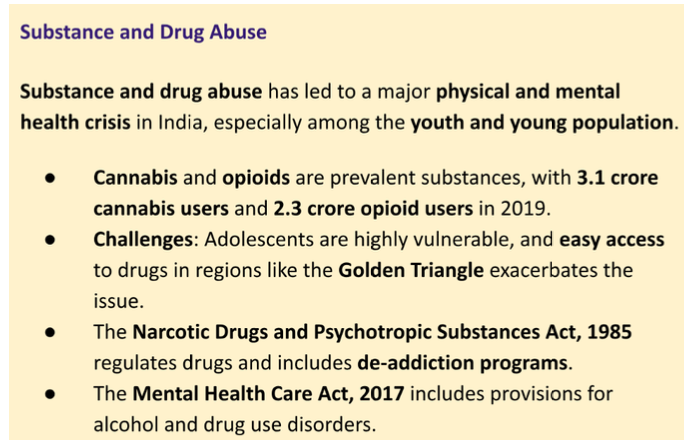 - 1 in 7 people are affected by mental illness, yet 80% lack access to treatment.
- The suicide rate remains high, with 1.30 lakh suicides reported in 2019.
- Challenges include stigma, lack of professionals (0.75 psychologists per lakh population), and poor utilization of mental health budgets.
-
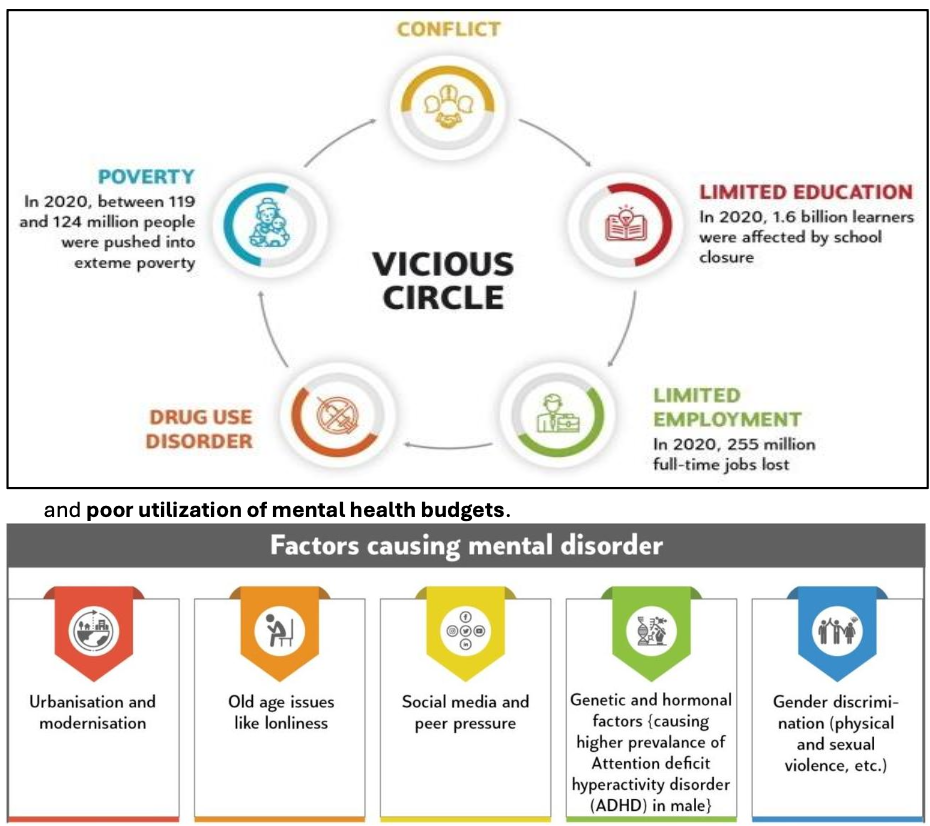 - Strategies for Handling Mental Health Crisis:
- Increase public spending on health to 2.5% of GDP by 2025, and allocate proportionately to Mental Healthcare.
- Strengthen primary healthcare and develop district health plans for Mental Healthcare.
- Address socioeconomic determinants of mental health such as poverty and discrimination.
- Key Government Initiatives:
- KIRAN Helpline:
- Provides early screening, first-aid, psychological support, and stress management.
- Tele MANAS:
- Offers free tele-mental health services across the country, 24/7.
- MANODARPAN:
- Provides psychosocial support to students.
- National Mental Health Programme and 'REDS' path for suicide prevention.
- 1.4.3.1. Mental Healthcare Act, 2017
-
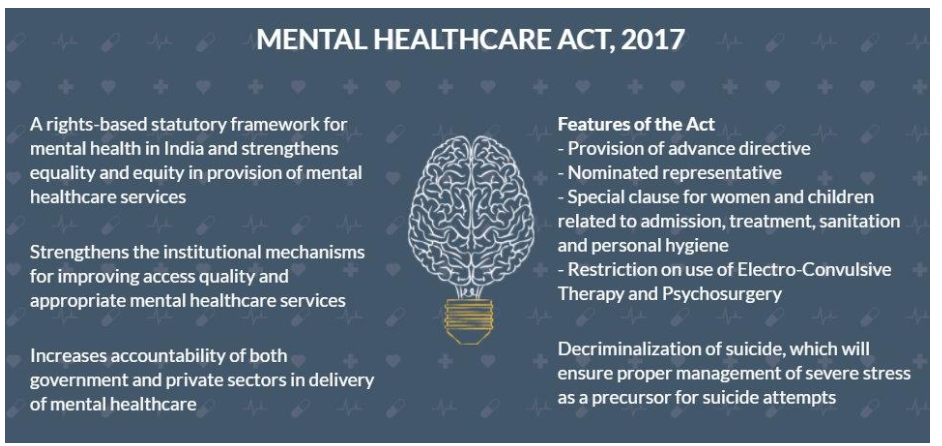 - Provides affordable, accessible mental healthcare services for individuals with mental health issues.
- Decriminalization of suicide attempts for mentally ill individuals.
- Treatment Gap:
- 80% treatment gap in mental health, compounded by inadequate funding and a shortage of professionals.
- Mental Health Abuse- Chaining Continues
- A grim reality persists in rural India (UP/Bihar)- people with mental illnesses are chained, often in facilities disguised as "de-addiction centers." This represents a severe human rights violation, fueled by pervasive stigma and a critical absence of formal mental healthcare facilities.
- This highlights an urgent systemic failure. Beyond mere confinement, comprehensive reform, including stringent regulation and expanded access to humane treatment, is essential to eradicate such abusive practices and ensure dignified care for all with mental illness.
- MindTech Vital Role in Bridging the Gap:
- The MindTech Gap reveals India's dire mental health crisis- with only 0.75 psychiatrists per 100,000 people, access to care is severely limited.
- AI therapists like Wysa are stepping in, having handled over 1 billion chats, offering crucial mental health support where human resources are scarce.
- Challenges In Implementing Mental Healthcare Act:
- Stigma
- Social Barriers:
- Mental health continues to be stigmatized, hindering access to care.
- Shortage of Professionals
- Insufficient Workforce:
- India has 0.3 psychiatrists per 100,000 people, far below the required ratio.
- Accessibility
- Urban-Centric Services:
- Limited services in rural areas, with a focus on urban centers.
- Disability-Adjusted Life Year (DALY) in India- A Simple Overview
- Definition:
- A Disability-Adjusted Life Year (DALY) is a measure that combines two factors:
- Years of Life Lost (YLL)- Due to premature death.
- Years Lived with Disability (YLD)- Due to living with illness or disability.
- One DALY equals one lost year of "healthy" life. It helps to understand the total burden of disease on a population.
- 14.1 Million DALYs were lost in 2020 due to COVID-19, with urban areas and men being more affected.
- Key Insights on DALY in India:
- Poverty Reduction
- Welfare programs have been instrumental in lifting millions out of poverty by providing direct support and opportunities.
- Example:
- NITI Aayog's Multidimensional Poverty Index (MPI) 2024 report indicated that 24.82 crore people moved out of multidimensional poverty in the last 9 years, because of the impact of various welfare programs like Pradhan Mantri Jan Dhan Yojana (PMJDY) and Pradhan Mantri Awas Yojana (PMAY).
- Financial Inclusion & DBT Efficiency
- Universal access to banking has empowered vulnerable groups and revolutionized subsidy delivery, reducing leakages.
- Example:
- PMJDY has opened over 55.69 crore bank accounts as of June 25, 2025 (PIB, 2025), a significant portion belonging to women and rural poor, enabling efficient Direct Benefit Transfers (DBTs) and ensuring money reaches beneficiaries.
- Enhanced Social Security & Health Protection
- Critical safety nets for food security, health, and basic income support have reduced vulnerability to shocks.
- Example:
- The National Food Security Act (NFSA) ensures highly subsidized food grains for over 80 crore beneficiaries (PIB, 2025). Ayushman Bharat - PMJAY provides health coverage up to ₹5 lakh/family/year, with over 41.34 crore Ayushman Cards issued as of July 3, 2025 (PIB, 2025), drastically reducing out-of-pocket health expenditures for the poor.
- Empowerment of Specific Groups
- Targeted interventions have demonstrably improved socio-economic indicators and legal protections for historically marginalized communities.
- Example:
- Beti Bachao Beti Padhao (BBBP) contributed to the improvement of the Sex Ratio at Birth (SRB) from 918 (2014-15) to 930 (2023-24) (PIB, MWCD 2024). The Forest Rights Act (FRA) has recognized over 20 lakh individual and 1.15 lakh community forest rights titles (Ministry of Tribal Affairs, 2024), empowering tribal communities.
- 1.5. Key Government Schemes & Missions on Healthcare
- 1.5.1. National Health Policy (2017)
- The National Health Policy 2017 emphasizes universal health coverage (UHC), prioritizing primary healthcare, prevention, and health promotion.
-
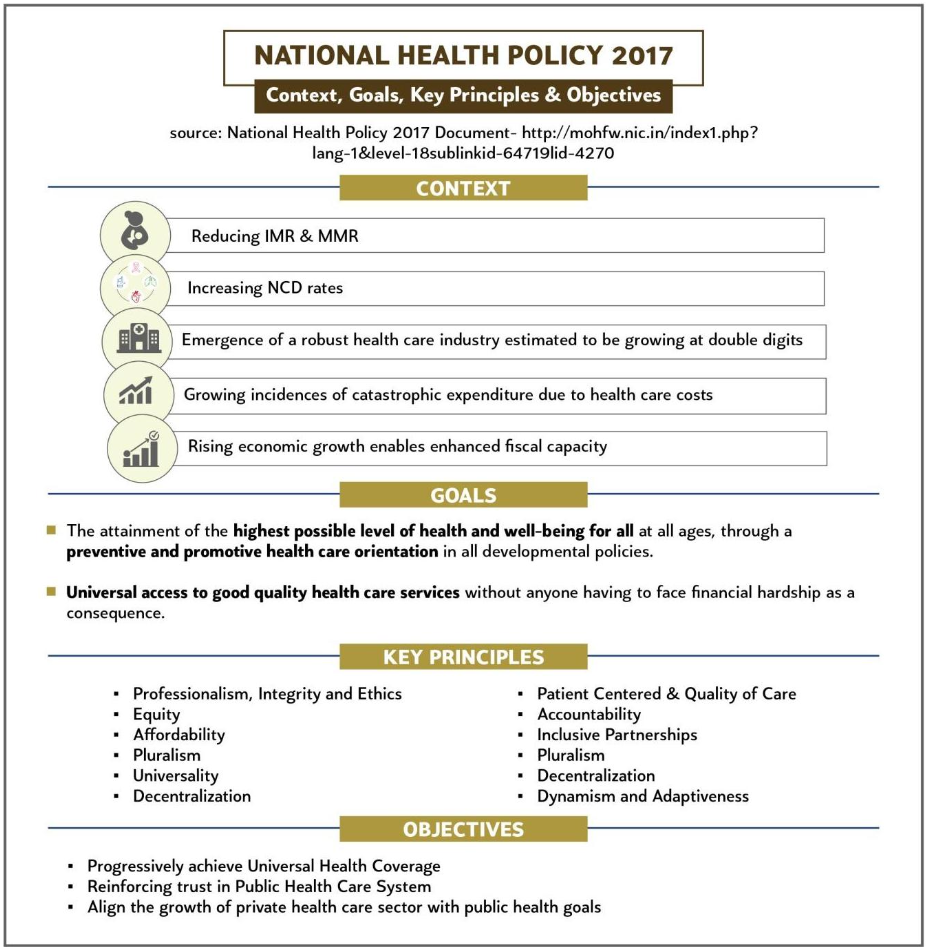 - 1.5.2. Ayushman Bharat
- Ayushman Bharat is a flagship health initiative launched by the Government of India in 2018, with the objective of achieving universal health coverage (UHC) and providing comprehensive healthcare services to all citizens. It aims to reduce the financial burden of healthcare and ensure affordable, accessible services for the population, with a strong focus on wellness.
- Key Components of Ayushman Bharat Scheme:
- Health and Wellness Centres (HWCs)
- Also known as Ayushman Arogya Mandirs (AAMs), these centers are designed to bring healthcare closer to people’s homes. The goal is to establish 1.5 lakh centers, offering primary healthcare services.
- Pradhan Mantri Jan Arogya Yojana (PMJAY)
- A comprehensive health insurance scheme targeting over 10 crore poor and vulnerable families, providing ₹5 lakh per family for secondary and tertiary care hospitalization.
- Key features include:
- Coverage of pre-existing diseases from the day of enrollment.
- Cashless and paperless services at empanelled hospitals across India.
- Portability across the country, allowing beneficiaries to access services anywhere.
-
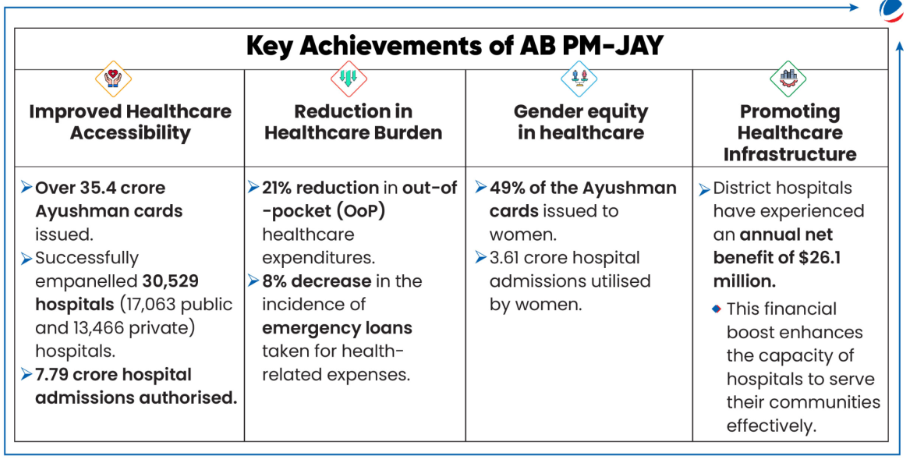 - Recent Updates to PM-JAY Scheme:
- Scheme benefits extended to 37 lakh ASHA workers and Anganwadi workers.
- Elderly individuals (aged 70+), regardless of income or pre-existing conditions, benefitting approximately 6 crore elderly people, especially women (58% of elderly).
- PMJAY merged the earlier Rashtriya Swasthya Bima Yojana (RSBY), which had been covering vulnerable sections since 2008.
- Challenges:
- Inaccurate beneficiary databases, with over 50% grievances linked to registration issues.
- Its narrow coverage excludes outpatient and elderly care, while infrastructure gaps in rural areas limit access.
- Variable care quality and budget shortfalls further hinder its effectiveness.
- Recommendations for Improvement:
- Ensure physical verification of hospitals, timely payments, and strong anti-fraud measures.
- Establish district grievance units and design policies for long-term elderly care.
- Health Insurance in India- Progress and Persistent Gaps
- By 2023, 40% of India’s population was insured, with projections estimating coverage to reach 50% by 2025.
- Government schemes like Ayushman Bharat–PMJAY, which now covers over 55 crore people, have driven this expansion.
- Yet, out-of-pocket expenditure (OOPE) continues to be among the highest globally, undermining the effectiveness of health insurance and exposing millions to medical impoverishment.
- Key Features of India’s Health Insurance Ecosystem:
- Ayushman Bharat–PMJAY
- Covers the poorest 40% of the population, recently extended to all citizens aged 70+.
- State-level schemes
- Telangana (Rajiv Aarogyasri), Tamil Nadu (CMCHIS), and others complement central coverage.
- Private sector participation
- Offers tax benefits (under Section 80D) and growing urban adoption.
- Digital push
- Ayushman Bharat Digital Mission aims to unify health records and improve service delivery.
- Challenges- Why Health Insurance Hasn't Reduced OOPE Enough
- OOPE still high
- Despite growing coverage, 47.1% of total health expenditure in 2021–22 was OOPE (down from 62.6% in 2014–15).
- Exclusions
- Many plans don’t cover outpatient care, diagnostics, or medicines—main contributors to OOPE.
- Affordability barriers
- Premiums, co-payments, and lack of cashless services affect low-income households.
- Awareness and digital literacy
- Rural and underprivileged groups often remain unaware or unable to enrol.
- Claim process inefficiencies
- Delays, rejections, and opaque procedures erode public trust.
- Way Forward:
- Expand coverage scope:
- Include outpatient services, medicines, and preventive care under standard policies.
- Subsidize premiums for the poor and informal sector workers.
- Invest in public health infrastructure to reduce dependence on costly private providers.
- Regulate claim processes and ensure transparency and standardization in policy terms.
- Boost awareness through mass campaigns and local facilitation centers, especially in rural areas.
- Conclusion:
- Health insurance in India has made important strides but remains insufficiently protective due to design flaws, gaps in access, and persistent OOPE. To truly achieve Universal Health Coverage, India must reorient its insurance ecosystem toward inclusivity, affordability, and comprehensive care.
- 1.5.3. National Medical Commission (NMC)
- The National Medical Commission (NMC) replaced the Medical Council of India (MCI) to regulate medical education and healthcare standards.
-
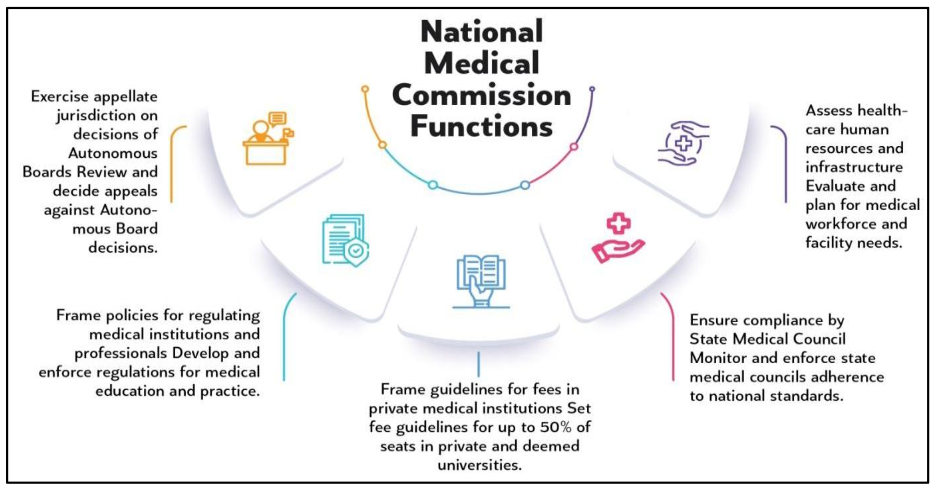 - Challenges:
- Lack of diverse stakeholders
- Limited representation from public health experts in decision-making.
- Limited state involvement
- Reducing local participation in health reforms.
- Focus on documentation
- Rather than quality education.
- 1.5.4. Human Resources for Health (HRH)
- India faces a critical shortage of healthcare professionals, particularly in rural areas. According to NITI Aayog’s 2021 report, there is a deficit of over 8 lakh doctors and 24 lakh nurses. The imbalance is exacerbated by the concentration of professionals in urban centers, resulting in inadequate healthcare access in rural regions.
- Efforts to address these gaps:
- Expanding medical and nursing schools.
- Public-Private Partnerships (PPP) to strengthen healthcare delivery.
- Improved rural postings for medical professionals.
- Addressing Human Resource Issues with ASHA and Anganwadi Workers:
- ASHA (Accredited Social Health Activists)
- Role:
- Community health workers serving as the first point of contact for rural populations, focusing on maternal health, immunization, and family planning.
- Number:
- Over 9 lakh ASHAs across India, including those under the National Urban Health Mission (NUHM).
- Challenges:
- Inadequate recognition and compensation, heavy workload, insufficient training, and lack of safety and support mechanisms.
- Anganwadi Workers
- Role:
- Central to Early Childhood Care and Education (ECCE), providing nutrition and health services under the ICDS scheme.
- Number:
- Work in Anganwadi centers under ICDS (no specific figure mentioned).
- Challenges:
- Shortage of trained workers, poor infrastructure and sanitation, and limited resources for early childhood education and care.
- Transforming India’s Healthcare Workforce:
- Over the last decade, India has undertaken major reforms to expand and strengthen its healthcare workforce. Key efforts have focused on increasing capacity, improving educational quality, and reducing rural–urban disparities.
- Healthcare workforce size has grown to nearly 1 crore, including:
- 13.9 lakh doctors, 7.5 lakh AYUSH practitioners.
- 39.4 lakh nurses (largest segment), and 17.6 lakh pharmacists.
- The doctor-population ratio now meets the WHO norm of 1:1000.
- Medical and nursing education expansion:
- Medical colleges increased from 387 (2014) to 780 (2024) — a 102% rise.
- MBBS seats grew from 51,000 to 1.18 lakh (130% increase).
- PG seats expanded from 32,000 to 74,000 (135% increase).
- B.Sc. Nursing institutions grew by 45%, with a 53% rise in seats.
- M.Sc. Nursing saw a 29% increase in institutions and 39% in seats.
- Addressing rural disparities:
- New medical colleges are set up in rural areas to improve access and train local health workers.
- Innovative initiatives:
- Over 1.25 lakh Community Health Officers (CHOs) have deployed at Ayushman Arogya Mandirs since 2018 to deliver primary care, elderly care, and NCD services.
- Regulatory reforms introduced:
- New acts for medical, nursing, and dental education to improve transparency and standards.
- Focus on quality:
- Implementation of Competency-Based Medical Education (CBME).
- Introduction of District Residency Program for PG students in public hospitals.
- Use of digital tools and simulation labs for training.
- Conclusion:
- India’s decadal healthcare workforce reform has focused on capacity building, quality education, and rural outreach. Continued efforts are needed in specialty training and allied health professional development.
- Contemporary Issues- Violence Against Healthcare Workers
- Prevalence:
- Reports show that 75% of doctors in India face violence. The causes include low patient satisfaction, poor doctor-patient communication, and inadequate security.
- Solutions:
- The Epidemic Diseases (Amendment) Act, 2020 provides legal protection to healthcare workers during pandemics, with severe penalties for violence. A comprehensive law beyond epidemics is needed to ensure long-term protection for healthcare professionals.
- 1.5.5. Pandemic Preparedness and the 'One Health' Approach
-
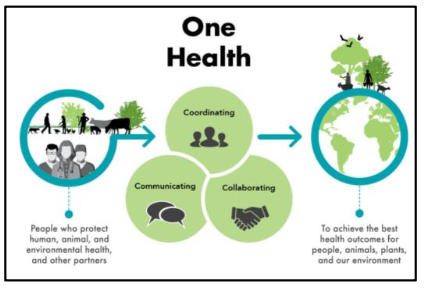 - The COVID-19 pandemic highlighted the weaknesses in global health systems and vaccine inequities. The WHO's Global Pandemic Treaty aims to ensure equitable access to health products in future pandemics.
- One Health Approach:
- The 'One Health' approach connects human health, animal health, and the environment.
- Many diseases, like COVID-19, start in animals and spread to people.
- It aims to prevent zoonotic diseases and antibiotic resistance by encouraging collaboration across sectors.
- With 'One Health', doctors, veterinarians, and environmental experts work together to identify risks early.
- This teamwork improves surveillance, shares information, and stops diseases at their source. Clean water, safe food, and healthy animals help keep people safe.
- Side note
- KARMI-Bot- A COVID-Era Innovation
- Kerala's KARMI-Bot was initially developed to serve COVID-19 patients by delivering food and medicine. Its primary aim was to reduce healthcare workers' exposure and conserve PPE, highlighting robotics' potential in infection control during crises.
- WHO Pandemic Treaty- A Global Step for Future Preparedness
- The WHO Pandemic Treaty, adopted on 20 May 2025 at the 78th World Health Assembly, is a legally binding agreement to improve global pandemic prevention, preparedness, and response. This treaty is the first global effort to reduce pandemic risks, promoting transparency and cooperation to make the world safer and more equitable.
- Key Features:
- Global Collaboration
- Encourages a whole-of-society approach to strengthen health systems and ensure fair access to vaccines and treatments.
- Equity Focus
- Aims to address inequities seen during COVID-19, ensuring a fair distribution of resources.
- Legal Framework
- The treaty will take effect after 60 countries ratify it and an annex on Pathogen Access and Benefit-Sharing (PABS) is adopted.
- Multilateral Commitment
- Dr. Tedros Adhanom Ghebreyesus called it a victory for public health and global cooperation.
- Challenges:
- Lack of Enforcement
- Critics say the treaty lacks enforcement and funding mechanisms.
- Deferred Issues
- Some issues, like vaccine inequity, will be addressed later.
- Political Concerns
- Some countries question the WHO’s authority.
- 1.6. The Future of Health in India
- India aims to achieve Universal Health Coverage (UHC) for all by 2030, ensuring that every individual has access to affordable, appropriate, and accountable health services of assured quality. In this context, the digital space offers significant opportunities to strengthen service delivery, enhance access, and improve healthcare outcomes across the country.
- 1.6.1. Digital Health Ecosystem
-
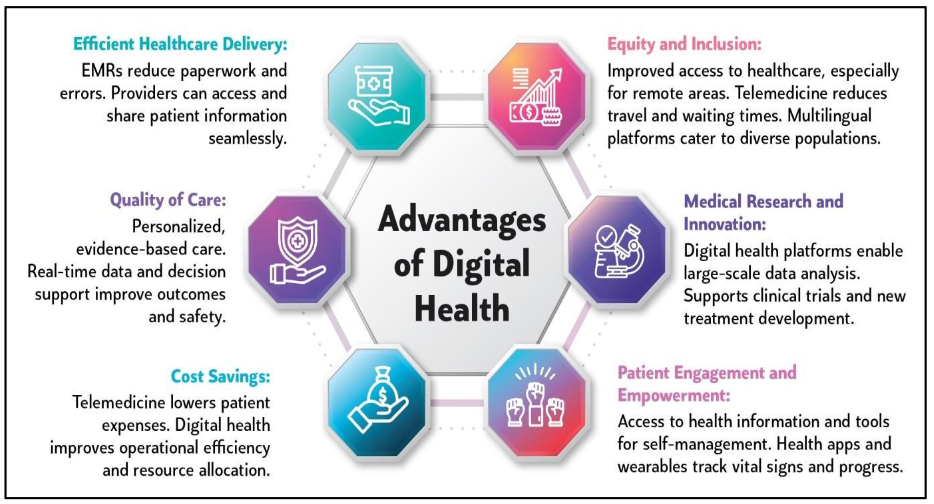 - Digital Health integrates technology with healthcare delivery:
- Key Components:
- Telemedicine, e-health records, robot-assisted surgeries, e-pharmacies, and e-insurance are reshaping patient care.
- The National Digital Health Mission (NDHM) aims to digitize healthcare across India.
-
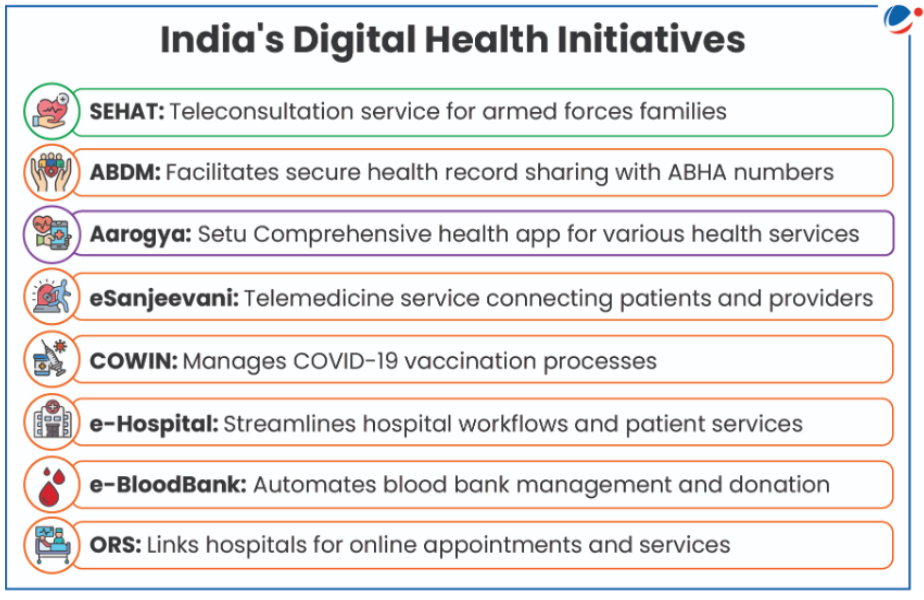 - National Digital Health Mission (NDHM):
-
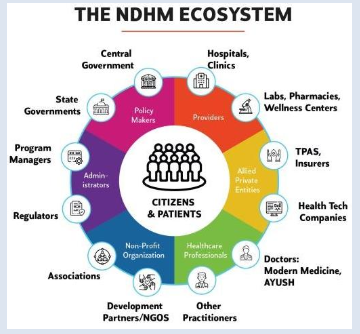 - Purpose:
- Digitize healthcare in India by connecting various stakeholders through digital platforms.
- Goals:
- Improve efficiency, effectiveness, and transparency in health services, and help achieve health-related Sustainable Development Goals (SDGs).
- Other Initiatives:
- National Digital Health Blueprint (NDHB):
- Plan for integrated and comprehensive digital health services.
- Support under National Health Mission (NHM):
- Funding for services like telemedicine, tele-radiology, tele-oncology, tele-ophthalmology, and hospital information systems.
- National Health Stack by Niti Aayog:
- A shared digital infrastructure for both central and state use, aiding in the rapid development of health solutions.
- The Ayushman Bharat Digital Mission (ABDM):
- Aims to connect digital health solutions across Indian hospitals, creating a unified ecosystem. This system facilitates digital consultations, patient consent, and ensures data privacy.
- ABDM's key principles include inclusivity, free registration, voluntary participation, and a single source of truth for medical records.
- The National Health Authority oversees its implementation under the Union Ministry of Health & Family Welfare.
- Components of ABDM Architecture:
- Ayushman Bharat Health Account (ABHA) ID
- A unique 14-digit number to store and manage health records.
- Healthcare Professionals Registry (HPR)
- A unified repository of healthcare professionals across all medicine.
- Health Facility Registries (HFR)
- Repository of health facilities of the nation (both public and private).
- Health Information Exchange and Consent Manager (HIE-CM)
- To ensure that data exchange is driven by informed consent.
- Unified Health Interface (UHI)
- To facilitate the discovery and delivery of health services.
- National Health Claims Exchange (HCX)
- To standardize the insurance payment ecosystem.
-
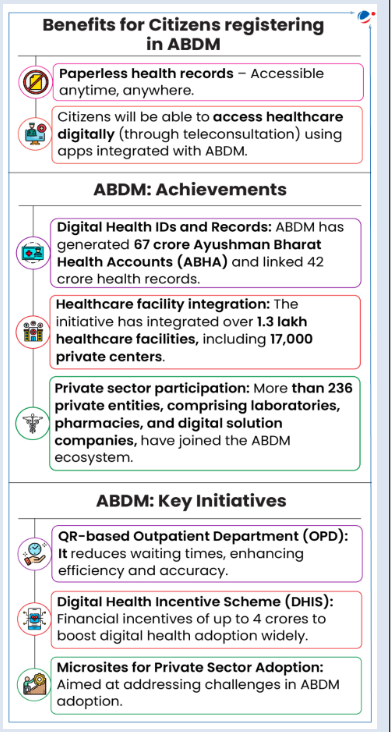 - Challenges of Digital Health Ecosystem:
- Lack of Standardization in Digital Cards
- India struggles to standardize coverage and quality of existing digital health cards (e.g., ESIC card, PM-JAY card), leading to data migration and transfer issues.
- Equity and Access Issues
- Unequal access to digital health technologies, digital literacy skills, etc., can exclude vulnerable populations, particularly in remote and rural areas. For example, the National Health Authority (NHA) reports that nearly 30% of healthcare institutions in India suffer from poor data connectivity.
- Privacy and Security Issues
- Unauthorized data access and breaches can compromise patient privacy and lead to identity theft. For instance, in November 2022, AIIMS experienced a cyber-attack, causing server downtime, disrupting the outpatient department (OPD), and withholding sensitive data of around 4 crore patients.
- Algorithmic Bias
- Technologies like AI can lead to unfair or discriminatory treatment, causing racial and ethnic disparities in healthcare. For example, AI in US health systems exhibited bias by prioritizing healthier white patients over sicker black patients for additional care, due to AI's training on cost data instead of care needs.
- Conclusion:
- India's digital healthcare infrastructure has great potential to improve accessibility and efficiency. With ongoing policy support (like cybersecurity frameworks), infrastructure development (such as BharatNet and Blockchain-based health records), public-private collaborations, and technological advancements, India's healthcare system is set to become a globally recognized model.
- 1.6.2. Telemedicine- eSanjeevani
-
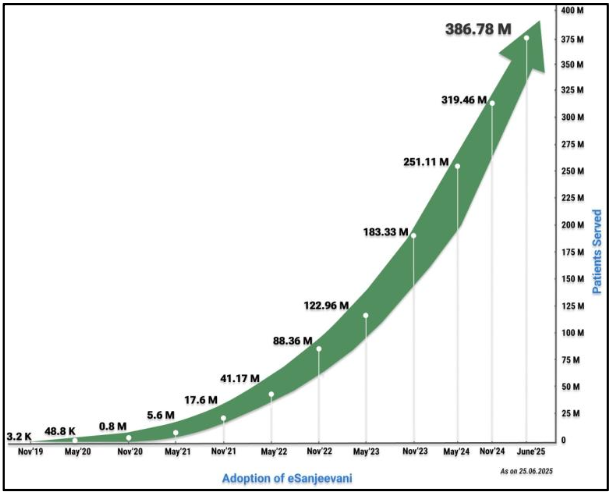 - Potential:
- Telemedicine, particularly platforms like e-Sanjeevani, offers remote consultations, expanding access to healthcare in rural areas.
- eSanjeevani is India’s national telemedicine platform offering both doctor-to-doctor and patient-to-doctor services.
- The eSanjeevaniAB-HWC variant connects over 1,00,000 Ayushman Bharat Health and Wellness Centres with district hospitals, enabling teleconsultations.
- Launched in 2022, it supports hub-and-spoke models for rural care.
- The eSanjeevaniOPD platform has facilitated over 22 crore consultations, marking a significant step in digital healthcare delivery.
- Hurdles:
- The digital divide poses significant challenges. Issues include poor internet connectivity, lack of computerization in public health centers, and privacy concerns regarding digital health data.
- 1.6.3. AI & Robotics in Healthcare
-
 - AI in Healthcare:
- AI holds the potential to transform diagnostics and drug discovery, reducing human error and improving efficiency.
- Concerns about the "black box" problem (lack of transparency in AI decision-making) and privacy remain.
- Robotics in Healthcare:
- Robot-assisted surgeries offer precision, but remote surgery by AI remains a future possibility that requires significant infrastructure investment and regulatory frameworks.
- Ethical Concerns:
- AI requires large amounts of personal data, raising concerns about data privacy and standardization.
- India needs a comprehensive regulatory framework for AI in healthcare to ensure ethical use.
- 1.6.4. Medical Tourism
- India is a global hub for medical tourism, driven by its low-cost, high-quality care, and expertise in pharmaceuticals. It contributed USD 9 billion to India’s economy in 2023 and is projected to grow further.
-
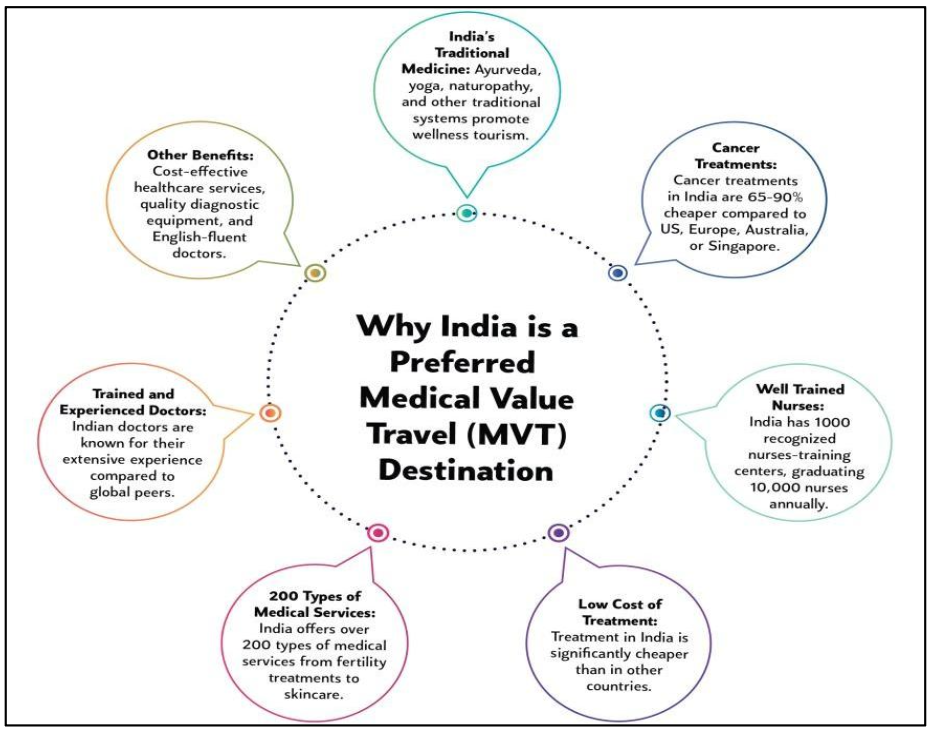 - Government Measures:
- India has introduced Medical Visas and a centralized portal for booking services.
- Challenges:
- Challenges remain in infrastructure, skills development, and policy coordination.
- Medical Tourism- Diplomacy & Dilemmas
- India views medical tourism as a way to enhance its global reputation and build international partnerships by showcasing its healthcare strengths. This strategy attracts foreign patients seeking quality and affordable treatments.
- However, the challenge is to maintain a strong domestic healthcare infrastructure while ensuring equitable access to healthcare for all Indian citizens. The goal is to benefit from medical tourism without compromising the essential healthcare services needed for India’s vast population.
- 2. Part B- Education
-
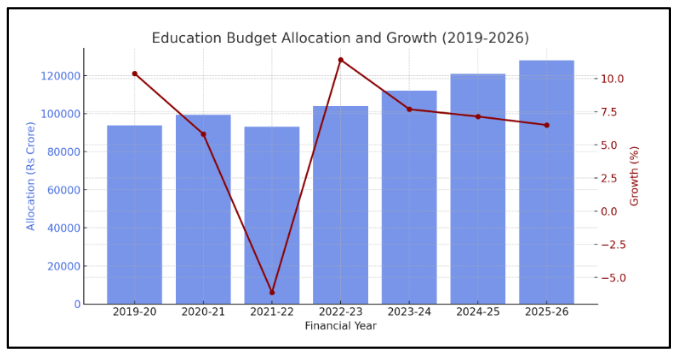 - Education is a powerful instrument of social justice, enabling individuals to break cycles of poverty and exclusion. Rooted in India’s civilizational values, it empowers minds to drive inclusive growth.
- Yet, persistent inequities and underfunding hinder progress toward SDG 4, which envisions equitable, quality education for all.
- Constitutional and Legal Provisions on Education
- The Indian Constitution underscores the importance of education, particularly for vulnerable sections of society through various sections:
- Article 29
- Ensures equality of opportunity in educational institutions and protects the culture, language, and script of minorities.
- Article 30
- Grants religious and linguistic minorities the right to establish and administer their own educational institutions.
- Articles 15(3) & 15(4)
- Allow the state to make special provisions for the advancement of children and women, and for the admission of backward classes, SCs, or STs in private educational institutions.
- Article 21A
- Guarantees free and compulsory education for all children aged 6 to 14 years as a fundamental right (inserted by the 86th Amendment Act, 2002).
- Articles 39(e) and 39(f)
- Directs the state to prevent the abuse of children at an early age and ensure they have the opportunities and resources to grow in a healthy and dignified environment.
- Article 45
- Mandates the state to provide early childhood care and education for children up to the age of six years.
- Article 46
- Emphasizes the promotion of educational and economic interests of the weaker sections, especially SCs and STs.
- Article 51A(k)
- A fundamental duty for parents to ensure education for children aged 6 to 14 years.
- Right to Education Act, 2009
- The Right of Children to Free and Compulsory Education (RTE) Act, 2009 came into effect on April 1, 2010, enforcing Article 21A as a fundamental right.
- Objectives:
- To ensure free and compulsory primary education for children aged 6 to 14 years.
- Key Provisions:
- No child shall be held back, expelled, or required to pass a board examination until elementary education is completed.
- Prohibits physical punishment, mental harassment, screening procedures, and capitation fees.
- Mandates 25% reservation for economically disadvantaged children in private schools for Class I admissions.
- Establishes norms for student-teacher ratios, school buildings, and teacher working hours.
- Limitations:
- Critics argue it is input-oriented rather than outcome-focused, and does not emphasize quality of learning. It also originally excluded children aged 0-6 and 14-18.
- 2.1. Education System of India
- 2.1.1. Early Childhood Care and Education (ECCE)
- Early Childhood Care and Education (ECCE) encompasses the holistic development of children from birth to age eight, focusing on their physical, cognitive, social, and emotional growth. This critical period lays the foundation for lifelong learning and well-being.
- India has 158.7 million children in the 0-6 years age group (Census 2011) and catering to this important segment of the population to ensure holistic development is imperative.
-
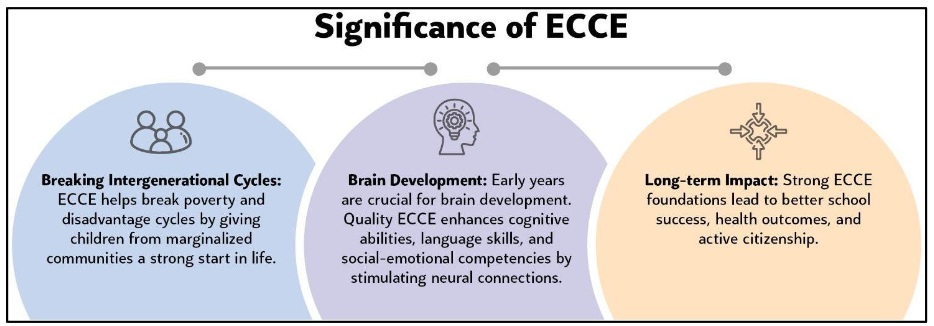 - Challenges in ECCE:
- Affordability and Accessibility
- High costs and geographical disparities, especially in rural and marginalized communities.
- Quality and Standards
- Focus on literacy and numeracy at the expense of holistic development (social-emotional learning, creativity, motor skills).
- Shortage of Centers and Trained Personnel
- Lack of qualified educators and training in child development.
- 2.1.2. School Education
-
 - In India, formal school education commences after Early Childhood Care and Education (ECCE), which covers children aged 3 to 6 years. Following ECCE, the education system is structured into the 5+3+3+4 model as per the National Education Policy (NEP) 2020:
- Foundational Stage (Ages 3–8):
- This includes 3 years of preschool or Anganwadi followed by Classes 1 and 2. The focus is on activity-based learning to develop cognitive and socio-emotional skills.
- Preparatory Stage (Ages 8–11):
- Classes 3 to 5 introduce subjects like languages, mathematics, science, and arts, aiming to build foundational literacy and numeracy.
- Middle Stage (Ages 11–14):
- Classes 6 to 8 delve into more abstract concepts in subjects such as mathematics, sciences, social sciences, arts, and humanities.
- Secondary Stage (Ages 14–18):
- Classes 9 to 12 focus on multidisciplinary study, critical thinking, and depth in chosen subjects. Board exams are conducted at the end of Classes 10 and 12.
- 2.1.2.1. Key Challenges in School Education
- The Learning Crisis
- ASER Report Findings
- Poor foundational skills in reading and arithmetic. A significant percentage of 14-18-year-olds cannot read simple texts or perform basic arithmetic.
- Rote Learning
- Emphasis on rote memorization leads to a lack of real-life application of knowledge.
- Fragmented Ecosystem
-
- Varied quality of education
- Varied quality of education across different institutions (e.g., Madrasas, tribal schools).
- Affordability, Access, and Equity
- Dropout Rates
- High dropout rates due to poverty, lack of infrastructure, and gender disparities. For example, in Bihar, the dropout rate at the secondary level is reported to be as high as 83%, indicating severe retention issues in certain regions.
- Out-of-School Children
- Over 1.4 million children aged 6-11 are out of school due to poverty and lack of digital access during the pandemic.
- Social Gaps
- Gender disparities and social norms (e.g., child marriage) limit education for girls and marginalized children. The ASER 2023 report indicates that 40% of girls aged 15-18 remain out of school due to early marriages, domestic duties, and gender-based violence.
- High School Fees
- Rising cost of private schools makes quality education inaccessible for many. In Telangana, private school fees have risen by up to 30% over the last decade, limiting the affordability of quality education.
- Infrastructure and Resource Gaps
- Lack of Basic Amenities
- Many schools, especially in rural areas, lack essential facilities like clean water, toilets, and playgrounds.
- Digital Gaps
- Rural areas face lack of digital infrastructure, hindering access to e-learning opportunities. Only 53.9% of schools in India have access to the internet, with rural areas facing significant barriers to digital learning. In rural areas, only 35% of students have access to digital devices for education.
- Underfunding
- Education expenditure remains well below the recommended 6% of GDP. The current education expenditure in India remains around 3.1% of GDP, well below the 6% recommended by experts and global organizations like UNESCO.
- 2.1.2.2. Major Government Initiatives
- Samagra Shiksha Abhiyan
- A comprehensive initiative that aims to improve learning outcomes and infrastructure development across schools.
- Mid-Day Meal (PM-POSHAN) Scheme
- Provides free nutritious meals to school children, improving attendance and addressing hunger.
- NIPUN Bharat Mission
- Targets foundational literacy and numeracy for all children by Class 3, ensuring universal foundational skills.
- Madrasa Modernization
- Efforts to modernize Madrasa education and integrate it into the formal school system to improve educational infrastructure.
- NIPUN Bharat:
- Foundational Literacy and Numeracy (FLN) is crucial for early childhood development, influencing long-term educational outcomes. Under NEP 2020, the NIPUN Bharat Mission promotes joyful, activity-based learning from preschool to grade 3, aiming to reduce dropouts and build strong foundations for learning.
-
 - Madarsa Education System in India:
- The madarsa education system is a traditional Islamic network focusing primarily on religious education—Quran, Hadith, Fiqh (Islamic law), and Arabic. Over time, many madarsas have introduced secular subjects like mathematics, science, and English to enhance student outcomes.
- Structure and Reach:
- Operates at primary to higher education levels, offering degrees like Maulvi (Class 10), Alim (Class 12), Kamil (Bachelor’s), Fazil (Master’s).
- As of 2018–19, India had 24,010 madarsas with 19,132 recognised and 4,878 unrecognised madarsas.
- Uttar Pradesh houses the largest number of madarsas.
- Modernisation Efforts:
- Launched in the early 2000s, aimed at integrating modern subjects and enhancing infrastructure.
- Key schemes:
- SPQEM (Scheme for Providing Quality Education in Madrasas).
- SPEMM (Scheme for Providing Education to Madrasas/Minorities).
- Focus areas:
- Teacher training, curriculum upgrades, and infrastructure development.
- Recent reforms:
- Uttarakhand introduced NCERT curriculum and Sanskrit as options.
- The 2024 Allahabad High Court struck down the UP Madarsa Board Act, raising legal and administrative questions.
- UP Madarsa Board Act, 2004 is the law that was passed by the Uttar Pradesh government in 2004. It established the UP Board of Madarsa Education, which regulated Islamic educational institutions (madarsas) across the state.
- The court decision delivered in March 2024, which struck down the 2004 Act as unconstitutional.
- Key Provisions of the UP Madarsa Board Act, 2004
- The Act provided a legal framework for madarsa education in Uttar Pradesh.
- It establishes the Uttar Pradesh Board of Madarsa Education which is tasked with preparing and prescribing course material, and conducting examinations for courses from Maulvi (equivalent of Class 10) up to Fazil (equivalent to postgraduate) under its scheme.
- It defines “Madarsa education” to include instruction in Arabic, Urdu, Persian, Islamic studies, philosophy (and other branches specified by the Board).
- The Act gives the state the power to regulate recognised madrasas in terms of standards of education, ensuring competency so that students can participate in mainstream education and society.
- It also included provisions for granting certain higher degrees such as Fazil and Kamil.
- Reason for Striking Down the UP Madarsa Board Act, 2004
- 1. Violation of Constitutional Principles (Secular Education)
- The Court held that the Act violated the principles of secularism — a basic feature of the Constitution.
- It said that the State cannot promote or administer education primarily based on religion, as education under the Constitution must be secular in nature.
- Since the Madarsa Board Act’s main purpose was to regulate and promote religious education (Islamic studies), it was seen as religion-centric and not neutral.
- 2. Contrary to Article 28 & Article 30
- Article 28(1) prohibits religious instruction in institutions wholly maintained by the State.
- The Act allowed madarsas (many fully funded by the government) to impart religious education, which was seen as a direct violation of Article 28.
- The court also observed that while Article 30 gives minorities the right to establish and administer educational institutions, the State itself cannot create or control religious boards for any one faith.
- 3. Unconstitutional Delegation of Powers
- The Madarsa Board, created under the Act, was given extensive powers over curriculum, recognition, and examinations — all centered around religious instruction.
- The court noted this as an excessive and arbitrary delegation of State authority to a religion-specific body.
- 4. Exclusion from Mainstream Education
- The judgment highlighted that madarsa students were being isolated from mainstream education, leading to educational inequality.
- It stated that every child has the right to modern, secular, and scientific education under the Right to Education Act (Article 21A) — something the Act failed to ensure.
- 5. Public Money Used for Religious Instruction
- The court found that public funds were being used to run and support institutions that imparted religious teaching.
- This was considered unconstitutional since taxpayer money cannot be used for promoting any religion.
- Side note
- Anjum Kadari & Another v. Union of India (2024):
- Supreme Court reversed the Allahabad High Court’s judgment that struck down the UP Madarsa Act.
- The court held that a law can be struck down only for violating Fundamental Rights, not the basic structure.
- Confirmed the Act is within state legislative competence under Entry 25, Concurrent List (Education).
- Stressed that the Act aims to ensure educational standards and socio-economic inclusion for madarsa students.
- Struck down provisions awarding degrees like Fazil and Kamil for violating Section 22 of UGC Act.
- Reaffirmed minority educational rights under Article 30(1) and the role of NCMEI in safeguarding them.
- Key Challenges and Way Forward:
- Key Challenges
- Outdated religious curricula in many institutions.
- Shortage of trained teachers for modern subjects.
- Inadequate funding and poor infrastructure.
- Resistance to change from within communities.
- Lack of formal certification, reducing employability and access to higher education.
- Social stigma and exclusion from mainstream education spaces.
- Way Forward
- Strengthen modernization schemes and ensure state recognition of madarsas.
- Introduce vocational training, digital literacy, and skill-based learning.
- Focus on teacher capacity building and community engagement.
- Promote a balanced approach to preserve tradition while ensuring mainstream integration and economic empowerment.
- The Impact of COVID-19 on Education in India:
- The COVID-19 pandemic led to one of the longest school closures in India, lasting over 73 weeks by September 2021. This caused disruptions in school enrollment, access to learning, and a significant learning loss among children.
- Shift in Enrollment- Private to Public Schools:
- Private to Government Shift:
- Enrollment in private schools for children (age 6-14) in rural India dropped from 32.5% in 2018 to 24.4% in 2021, while government school enrollment rose from 64.3% to 70.3%.
- Reasons for Shift:
- Financial distress made private schools unaffordable, while government schools offered free textbooks and food rations.
- Increase in Tuition:
- The number of students taking paid tuition jumped from 29% in 2018 to 40% in 2021.
- Digital Divide in Remote Learning:
- Smartphone Access:
- Although smartphone access increased, children from less-educated families had less access (45%) compared to those with highly educated parents (79%).
- Learning Materials:
- Over 80% of children received textbooks, but only 35% received additional materials like worksheets and online resources.
- Equity Gap:
- 26.7% of children with low parental education got extra learning materials, compared to 49% with more educated parents.
- Learning Loss:
- Evidence of Loss:
- A study found 92% of children in grades 2-6 lost at least one language skill, and 82% lost math skills.
- State-Level Data:
- Surveys in Karnataka, Chhattisgarh, and West Bengal showed sharp drops in basic reading and arithmetic skills.
- Magnitude of Loss:
- In Karnataka, learning progress was less than half of what it would have been in a normal year, showing a learning loss of over a year.
- Recommendations for Recovery:
- The Standing Committee on Education chaired by Dr. Vinay Sahasrabuddhe proposed several key measures to address these challenges:
- Reopening Schools:
- Safely reopen schools by vaccinating staff and students, holding classes in shifts, providing free masks, and offering incentives like food and study materials to re-enroll dropouts.
- Bridging Learning Gaps:
- Assess learning gaps, create bridge courses, and provide personalized remedial classes for students needing extra support.
- Strengthening Digital Education:
- Invest in digital infrastructure, distribute subsidized devices, train teachers for online content, and develop a hybrid model combining online and classroom learning.
- Rethinking Exams:
- Establish a continuous assessment system alongside traditional exams, using workbooks and presentations.
- 2.1.3. Teacher’s Training
- Teacher education is essential for developing skilled, knowledgeable, and value-driven educators who can shape young minds and strengthen the overall education system. Well-trained teachers not only deliver curriculum effectively but also inspire critical thinking and lifelong learning in students.
- To enhance the quality of teacher training, improved selection processes are necessary. These may include:
- General knowledge tests
- Subject-specific assessments
- Intelligence and language proficiency tests
- Interviews to assess attitude and interest
- Such multi-dimensional evaluations can ensure only competent and passionate individuals enter the teaching profession.
- Government Initiatives for Teacher Training:
- DIKSHA (Digital Infrastructure for Knowledge Sharing)
- Offers online and offline teacher training resources, helping educators collaborate, upgrade skills, and access diverse content anytime.
- Prashikshak Portal
- Developed by the Ministry of Education and Central Square Foundation, it supports District Institutes of Education and Training (DIETs) in improving teacher preparation programs.
- RTE Act Amendment (2017)
- Mandated all in-service teachers to acquire minimum qualifications as per NCTE norms by March 31, 2019, aiming to enhance classroom teaching standards.
- 2.1.4. Higher Education Ecosystem
- Higher education refers to formal education beyond secondary school, typically provided by universities and colleges. It involves in-depth study of a specific subject area or field, leading to qualifications like bachelor's degrees, master's degrees, and PhDs.
- India's higher education system is the third largest in the world, next to the United States and China.
-
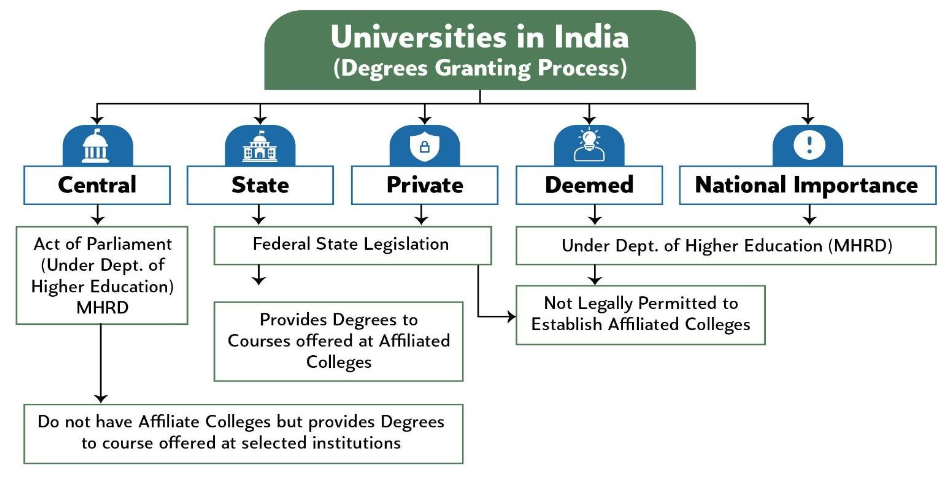 - 2.1.4.1. State of Higher Education
- Gross Enrolment Ratio (GER) rose from 24.3% (2014–15) to 27.1% (2019–20) and 28.4% (2020–21 and 2021–22).
- Gender Parity Index (GPI) improved, showing greater access for women in higher education.
- PhD enrolments nearly doubled from 1.17 lakh (2014–15) to 2.03 lakh (2019–20).
- 2.1.4.2. Key Issues in Higher Education
- 1. Bottlenecks in Regulation of Higher Education
- A complex and often opaque regulatory environment stifles institutional autonomy and innovation. This leads to inefficiencies and delays in implementing necessary reforms.
-
 - 2. Quality and Accreditation (NAAC) of Institutions
-
 - The National Assessment and Accreditation Council (NAAC) assesses the quality of Indian institutions, and reports indicate that 68% of institutions are of mediocre or poor quality.
- In global rankings, Indian institutions are making progress but still face significant challenges:
- QS World University Rankings:
- No Indian university is in the top 100.
- However, in the recent QS World University Rankings India has a record 54 institutions featured, the fourth highest globally after the US, UK, and China.
- 3. Faculty Shortage and Quality of Research
- India faces a critical faculty shortage across universities:
- 35% professor, 46% associate professor, and 26% assistant professor vacancies remain unfilled.
- Research output is low, with India's R&D expenditure at 0.64% of GDP (2020-21).
- Indian businesses contribute only 37% of Gross Expenditure on R&D (GERD), which hinders innovation and industry-academia collaborations.
- 37% seems high, but only when seen in isolation. For example China's is 76%, South Korea is 80%, etc
- So, in most innovation-driven economies, the private sector (industry) contributes the majority of R&D spending — two-thirds or more.
-
 - Revamping India's Research Ecosystem- The Role of NRF
- India’s research ecosystem has long suffered from fragmented funding, low R&D investment (about 0.7% of GDP), bureaucratic hurdles, and weak industry-academia collaboration. This has constrained India's global scientific standing and innovation capacity, especially when compared to nations like the US and China.
- To address these issues, the Anusandhan National Research Foundation (NRF) was established through the NRF Act, 2023, replacing the Science and Engineering Research Board (SERB).
- NRF’s Mandate and Structure:
- Acts as an apex body to provide strategic direction and seed research across universities, R&D labs, and colleges.
- Covers STEM fields, agriculture, health, and social sciences and humanities.
- Operates with a ₹50,000 crore budget for 2023–28 (28% public, 72% private/philanthropy).
- Governed by a board of scientists, industry leaders, and officials, with the Prime Minister as ex-officio President.
- Key Features and Reforms:
- Democratises research funding by supporting peripheral and rural institutions alongside elite centres.
- Streamlines processes by reducing bureaucratic delays and standardising funding mechanisms.
- Strengthens industry-academia linkages and promotes international research partnerships.
- Encourages interdisciplinary work, including priority areas like clean energy, sustainability, and climate change.
- Includes social sciences and humanities, broadening the research landscape.
- Challenges:
- Mobilising private sector contributions at such scale is untested.
- Ensuring inclusive access to smaller institutions remains a concern.
- Bureaucratic inertia may hinder reforms.
- Translating research into tangible societal or economic impact is still a systemic weakness.
- Way Forward:
- Incentivise private and philanthropic investment in research.
- Ensure merit-based and transparent funding through robust evaluation systems.
- Actively support underrepresented regions and disciplines.
- Focus on applied research that addresses real-world challenges.
- Foster global collaborations and align efforts with India’s target of 2% of GDP in R&D by 2047.
- 4. Financing of Higher Education (HEFA):
- The Higher Education Financing Agency (HEFA) was launched in 2017 as a joint initiative of the Ministry of Education and Canara Bank, to provide low-interest loans for the development of infrastructure and research facilities in India’s premier educational institutions. This model marked a shift from traditional direct grants to loan-based funding, aiming to raise the global competitiveness of Indian institutions.
- By March 2025, HEFA had sanctioned over ₹43,438 crore across 109 institutions, supporting the creation of labs, hostels, libraries, and innovation ecosystems.
- This financing mechanism aligns with the vision of the NEP 2020 to improve educational quality and outcomes, especially amidst concerns of chronic underfunding—India’s education spending still hovers below 3% of GDP, far short of the 4–6% recommended by global standards.
- Emerging Challenges of the Loan-Based Model:
- Rising Student Fees
- To service the HEFA loans, institutions—particularly IITs and Central Universities—have resorted to steep fee hikes. This undermines affordability, disproportionately impacting students from marginalized and low-income backgrounds.
- Risk of Commercialization and Exclusion
- The shift towards self-financing models pushes public institutions towards a quasi-private framework, potentially eroding their public character and inclusive mission.
- Diversion from Core Functions
- Institutions are compelled to divert funds for debt servicing, which can compromise investment in academic quality, teaching resources, and research.
- Neglect of State Public Universities
- While HEFA has focused on centrally funded institutions, 81% of India’s higher education students are in state public universities, which remain underfunded and excluded from HEFA support, relying on unpredictable state grants and limited fee-based income.
-
 - Way Forward:
- Increase Public Education Spending:
- The government should progressively raise education funding to 6% of GDP, reducing the burden on institutions to rely on fee income or loans.
- Expand Grants and Scholarships:
- Scale up need-based scholarships and targeted grants to cushion vulnerable groups from rising educational costs.
- Transparent Fee Regulation:
- Introduce strong oversight mechanisms to regulate tuition and prevent arbitrary fee hikes, ensuring financial predictability for students.
- State-Level Financing Innovations:
- Establish state-specific education finance agencies, as recommended by NITI Aayog, and explore alumni engagement models, corporate partnerships, and philanthropy to diversify funding sources for state universities.
- Balance Growth with Equity:
- While HEFA can continue to support capital-intensive expansion, it should be complemented by direct public grants, particularly for essential teaching infrastructure and student support services.
- 2.2. Miscellaneous Topics for Education
- 2.2.1. Internationalization of Higher Education- Foreign Universities in India
- The entry of foreign universities into India’s higher education sector is poised to transform the academic landscape well beyond just adding prestigious names.
- These institutions bring internationally benchmarked curricula, globally recognized degrees, and experienced faculty, allowing Indian students access to world-class education without incurring high overseas costs or facing visa hurdles.
- This not only makes quality education more affordable and inclusive but also helps retain talent and reduce the outflow of foreign exchange.
- Foreign campuses foster research collaboration, faculty exchange, and governance reforms, raising academic standards and research output in Indian institutions.
- Their industry-aligned programs focus on practical skills, internships, and entrepreneurship, directly enhancing the employability of Indian graduates in both domestic and global markets.
- Additionally, India’s strategic location and youthful, English-speaking population position it as a potential global education hub, attracting students from South Asia, Africa, and the Middle East.
-
 - Challenges:
- High Tuition Costs
- Risk of catering only to affluent students, excluding marginalized sections.
- Limited Reach
- Only a few campuses are operational in the short term, limiting system-wide impact.
- Cultural Disconnects
- Differences in pedagogy, governance styles, and student support systems may affect assimilation.
- Regulatory Uncertainty
- Approval processes, taxation, and autonomy concerns could deter full-scale participation.
- Commercialization Risk
- Risk of profit-driven models overtaking quality and public interest goals.
- Way Forward:
- Robust Regulatory Framework:
- Ensure clear, transparent rules with academic safeguards and grievance redressal mechanisms.
- Equitable Access:
- Offer scholarships, cross-subsidies, and inclusion mandates to prevent elitism.
- Domestic Collaboration:
- Encourage partnerships with Indian universities for joint degrees, research, and faculty development.
- Local Integration:
- Promote community engagement, Indian context-based courses, and bilingual pedagogy where needed.
- Gradual Expansion with Quality Focus:
- Prioritize quality over quantity in approving new foreign institutions.
- Conclusion:
- Foreign universities can raise India’s academic standards, improve employability, and internationalize education. However, their success depends on inclusive policies, regulatory clarity, and integration with local priorities to ensure that excellence goes hand-in-hand with equity.
- Expanding India's Academic Footprint- Indian Universities Going Global:
- The international expansion of Indian higher education institutions—such as IITs, IIMs, and leading private universities—into countries like the UAE, Tanzania, and Malaysia is reshaping India’s global academic presence. These overseas campuses offer Indian curricula, degrees, and pedagogical models, delivering affordable and quality education to both the Indian diaspora and local students.
- This move enhances India’s soft power, fosters cross-cultural collaboration, promotes joint research, and strengthens global academic networks, thereby raising the international profile of Indian institutions and contributing to the global talent pool.
- Challenges and Way Forward:
- Challenges
- Navigating diverse regulatory frameworks across countries.
- Ensuring consistent academic standards and infrastructure abroad.
- Facing stiff competition from well-established Western institutions.
- Faculty shortages and the complexity of managing cross-border operations.
- Adapting Indian curricula to local socio-cultural and economic contexts without compromising quality.
- Way Forward
- Establish robust quality assurance mechanisms to ensure academic integrity overseas.
- Invest in faculty development and global exposure to prepare teams for international roles.
- Forge strategic partnerships with local universities and industries for contextual relevance.
- Ensure government support through streamlined approvals, diplomatic facilitation, and incentive structures.
- Maintain a balance between global ambition and academic excellence, ensuring relevance in diverse educational ecosystems.
- Conclusion:
- As Indian institutions expand internationally, success will depend on maintaining quality, building local relevance, and leveraging this opportunity to position India as a global leader in affordable, high-impact education.
- 2.2.2. AI in Education- Personalized Learning and Ethical Challenges
- Artificial Intelligence (AI) is revolutionizing Indian education through personalized learning, where AI platforms customize content, pace, and assessments based on each student’s needs and strengths.
-
 - Key Highlights:
- Market Growth
- Valued at $4.74 billion in 2024, reflecting rapid expansion.
- Adoption
- Over 75% of higher education institutions use hybrid or AI-enabled models.
- Government Push
- e-Adhigam and 2025: Year of AI initiative target 40 million students.
- Learning Outcomes
- AI boosts academic performance by 17% and retention by 15%.
- Challenges:
- Digital Divide
- Limited access in rural areas due to poor connectivity and devices.
- Teacher Readiness
- Many educators lack training to integrate AI in classrooms.
- Ethical Concerns
- Issues of data privacy, algorithmic bias, and tech over-dependence.
- Affordability
- AI tools may be too costly for underfunded institutions.
- Way Forward:
- Invest in digital infrastructure and affordable AI solutions.
- Ensure teacher training in tech integration.
- Strengthen data protection laws and ethical AI frameworks to ensure equity and inclusion.
- Case Study- AI Maker Labs – Learning by Doing in Indian Education:
- AI-enabled maker labs represent a transformative shift in education, moving from passive textbook learning to hands-on experimentation. These labs allow students to interact directly with AI tools and applications, bridging the gap between abstract theory and real-world practice. Such experiential learning fosters deeper understanding, creativity, and problem-solving—skills essential for the AI-driven future.
- Key Features and Implementation:
- Real-World Application
- Students train AI models (e.g., object classification in environmental science), learning core AI functions and ethical considerations like bias.
- AI Made Tangible
- Labs help students grasp AI mechanics and limitations through direct interaction.
- Atal Tinkering Labs (ATLs)
- Over 10,000 labs under the Atal Innovation Mission provide foundational infrastructure for AI integration.
- Challenges
- Common issues include undertrained facilitators, underutilized tools, and lack of a creative experimentation culture.
- Targeted Outreach
- With 60% of labs in government schools, inclusive implementation needs state and community collaboration.
- Strategic Needs
- Success depends on teacher training, strong leadership, mentorship, and curriculum support.
- Conclusion:
- AI maker labs hold great promise in democratizing AI education. With the right support systems, they can prepare India’s students to innovate, adapt, and lead in an AI-powered world.
- 2.2.3. Private Sector in Education
-
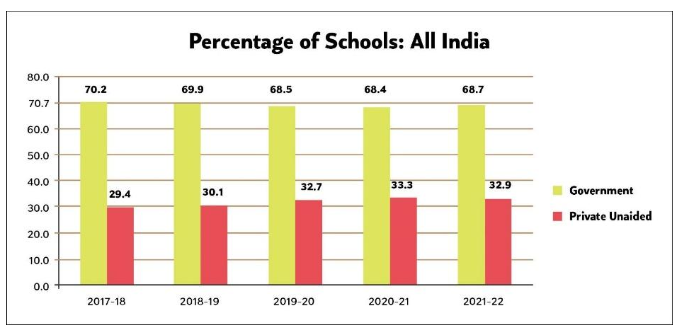 - There may be two types of providers of education in the Indian system- public and private. Private institutions are further classified as:
- Partly funded by the government (aided) or
- Entirely self-funded (unaided).
- Public institutions are established, funded and managed by the government. Private providers of education often step in when the government has limited resources to provide universal access to education.
- Over the past two decades, India has witnessed a rapid increase in privatization within its education sector.
- In 2021-22, private unaided schools accounted for over 32 percent of total schools imparting education in India.
- In higher education, 67% of universities and 37% colleges in India are private.
- Challenges and Issues in Private Sector Participation:
- Inequality and Affordability
- A study by the National Sample Survey Office (NSSO) found a significant correlation between household income and the likelihood of children attending private schools.
- The rising costs of private professional colleges, such as medical and engineering institutions, have made them financially out of reach for many students.
- Quality Concerns
- Studies by organizations like the Centre for Policy Research have highlighted inconsistencies in teaching quality, infrastructure, and learning outcomes across private schools.
- Studies by the National Institutional Ranking Framework (NIRF) have shown a wide range in quality parameters among private universities and colleges.
- Commercialization and Profit Motive
- The profit-oriented nature of some private institutions can lead to a compromise on academic integrity, focus on employability over holistic development, and unethical practices like capitation fees.
- The case of private universities offering degrees in dubious disciplines or with questionable academic rigor highlights the commercialization concerns.
- 2.2.4. Vocational Education and Skill Development
- India’s youth population presents an opportunity for a demographic dividend, but vocational education faces several challenges:
- Low Penetration:
- Only 3% of the workforce receives formal vocational training.
-
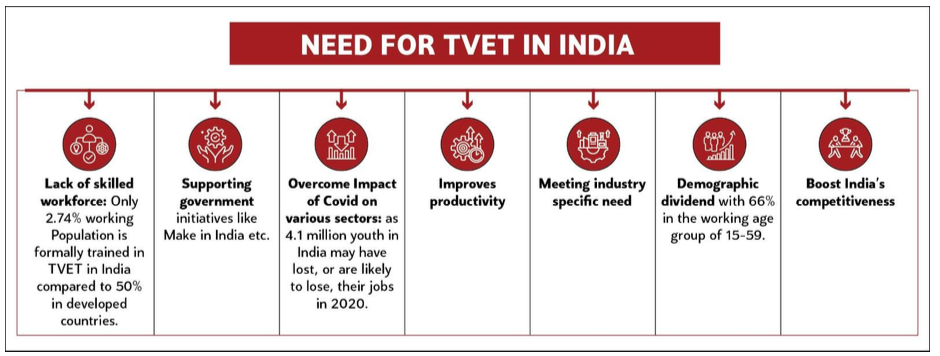 - Government Initiatives:
- Pradhan Mantri Kaushal Vikas Yojana (PMKVY)
- This flagship scheme provides skill training to the youth to enhance their employability.
- National Skill Development Mission (NSDM)
- NSDM acts as the overarching framework for coordinating skill development efforts across the country.
- National Apprenticeship Promotion Scheme (NAPS)
- This scheme promotes apprenticeships as a means of skill development and employment.
- Deen Dayal Upadhyaya Grameen Kaushalya Yojana (DDU-GKY)
- This scheme focuses on skill development for rural youth.
- Skill India Mission
- This is a broader campaign encompassing various initiatives to create a skilled workforce.
- Jan Shikshan Sansthan (JSS)
- These institutes provide vocational training to adults and out-of-school youth.
- 2.2.5. National Testing Agency (NTA) and Exam Paper Leak
- The National Testing Agency (NTA), established in 2017 under the Ministry of Education, is India’s premier autonomous body for conducting standardized and transparent entrance exams for higher education. It aims to ensure equity, quality, and reliability in assessments using scientific and fair testing systems.
- Key exams conducted by NTA include:
- NEET (UG)
- JEE Main
- CUET (UG & PG)
- UGC-NET
- Paper Leak Controversy:
-
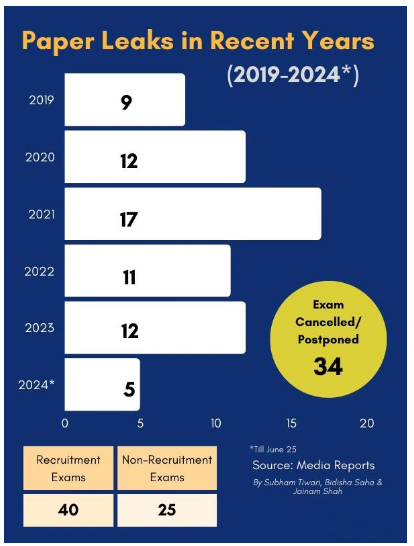 - In recent months, NTA has come under scrutiny due to serious paper leak allegations, especially in NEET-UG and CUET. These have highlighted major systemic issues:
- Lapses in test security and confidentiality
- Outdated exam conduct practices (offline pen-paper mode)
- Insufficient vetting of exam center staff and IT systems
- These failures have eroded public trust, triggered widespread protests, and raised concerns about fairness and transparency in national-level exams.
- Government Response & Legislative Action:
- To address these concerns, the Central Government announced major NTA reforms in December 2024:
- NTA to exit recruitment exams and focus solely on higher education entrance exams from 2025.
- Restructuring of NTA:
- Creation of an empowered governing council with domain experts.
- Addition of 10 verticals including test security, research, and infrastructure.
- Launch of computer-adaptive testing systems and AI-enabled monitoring tools.
- A shift towards online testing for major exams like NEET is under active discussion.
- Way Forward:
- Strengthen digital infrastructure and adopt adaptive computer-based testing.
- Enhance exam security through biometric verification, AI-based proctoring, and real-time surveillance.
- Ensure transparency and accountability through audits, public disclosures, and strict penalties.
- Legislative measures to criminalize organized exam fraud and plug legal gaps in enforcement.
- Side note
- Public Examinations (Prevention of Unfair Means) Act, 2024:
- Enacted in February 2024, effective June 21, 2024, to curb exam paper leaks in tests like NEET and UGC-NET. First national law specifically addressing unfair means in public exams.
- Objective:
- To restore public trust by ensuring exam integrity, accountability, and severe deterrence against malpractice.
- Key Provisions:
- Strict Punishments
- Paper leak offenders: 3–5 years’ jail + ₹10 lakh fine.
- Organized crime: 5–10 years’ jail + ₹1 crore minimum fine.
- Cognisable & Non-bailable
- Police can arrest without a warrant; offences are non-compoundable.
- Institutional Accountability
- Exam service providers failing to report offences: fined up to ₹1 crore.
- Institutions involved may face property seizure and cost recovery.
- Targets Organised Crime
- Covers leaks, impersonation, hacking, and related offences.
- Student Protection
- Genuine candidates are shielded from punishment.
- Conclusion:
- The NTA is pivotal to India’s higher education admission system, but recent paper leaks have exposed critical weaknesses. With the government's reform push, there is an opportunity to rebuild credibility, modernize exam conduct, and ensure that merit, not malpractice, determines opportunity.
- 2.2.6. National Education Policy
- Early Childhood Education (3-6 years)
- Policy Recommendation:
- Incorporate Early Childhood Care and Education (ECCE) into the school curriculum through a 5+3+3+4 design.
- It should be play-based and activity-based learning.
- Potential Impact:
- This recommendation will ensure that children receive a strong foundation in their early years, promoting brain development.
- It could lead to better learning outcomes in later stages of education, as early childhood education is critical for cognitive and emotional development.
- Foundational Stage (3-8 years)
- Policy Recommendation:
- Establish foundational literacy and numeracy by grade 3 through the National Mission on Foundational Literacy and Numeracy.
- Potential Impact:
- Ensuring that every child achieves foundational literacy and numeracy by grade 3 will enhance long-term academic success and reduce dropout rates.
- It will also improve student performance in higher grades, contributing to a more competent workforce in the future.
- Preparatory Stage (8-11 years)
- Policy Recommendation:
- Reducing curriculum load to focus on core subjects and enhancing critical thinking and analytical skills.
- Potential Impact:
- By reducing the content load and focusing on critical thinking, students will be better prepared for complex subjects in the later stages of education.
- This could make learning more engaging and help students retain knowledge better, moving away from rote memorization.
- Middle Stage (11-14 years)
- Policy Recommendation:
- Introduce flexibility in subject selection, offering a broader range of choices to students in secondary school.
- Potential Impact:
- Allowing students to choose subjects will lead to more personalized learning experiences, encouraging exploration of different areas of interest.
- This could reduce stress related to rigid subject structures and promote a more well-rounded skill set in students.
- Secondary Stage (14-18 years)
- Policy Recommendation:
- Reform board exams to assess core concepts and allow multiple attempts.
- Promote the use of local languages as a medium of instruction.
- Potential Impact:
- These reforms will reduce the pressure associated with high-stakes exams, allowing students to focus on conceptual understanding.
- The shift towards using local languages will enhance comprehension and inclusivity, enabling students from diverse linguistic backgrounds to better grasp subjects.
- Higher Education
- Policy Recommendation:
- Increase Gross Enrolment Ratio (GER) to 50% by 2035 through online and open distance learning options.
- Restructure institutions into multidisciplinary universities.
- Potential Impact:
- Improving GER will promote greater access to higher education, especially for marginalized communities.
- The restructuring of institutions into multidisciplinary entities will foster cross-disciplinary learning, preparing students for the complexities of the global workforce.
- Vocational Education
- Policy Recommendation:
- Integrate vocational education into all levels of school and higher education, aiming for 50% exposure by 2025.
- Potential Impact:
- This policy will address the skills gap in India, as many students currently graduate without job-ready skills.
- Expanding vocational education will enable more students to acquire practical skills that can enhance employability and economic productivity, particularly in industries requiring specialized knowledge.
- Teacher Training and Management
- Policy Recommendation:
- Replace B.Ed. with a 4-year integrated program and ensure continuous professional development for teachers.
- Potential Impact:
- This reform will improve the quality of teacher education, ensuring teachers are well-prepared and updated with the latest teaching methods.
- Continuous development will contribute to better classroom practices, leading to improved student outcomes.
- Governance and Regulation
- Policy Recommendation:
- Establish school complexes and independent state school standards authorities for better governance and quality.
- Potential Impact:
- This will create more efficient school management systems, pooling resources and teachers to improve the quality of education in rural and underserved areas.
- It will also decentralize power, ensuring that local governments have more autonomy to cater to regional needs.
- Research and Innovation in Higher Education
- Policy Recommendation:
- Establish a National Research Foundation to fund and promote quality research.
- Potential Impact:
- Increased funding and support for research will boost innovation, contributing to scientific, technological, and social progress.
- It could also enhance India's global academic standing, leading to more collaboration with international institutions and attracting global talent.
- UNIT 3- POVERTY AND DEVELOPMENT ISSUES IN INDIA
- 1. Poverty in India
- Poverty in India is a complex and multidimensional issue which has been conventionally understood through the lens of low income or inadequate calorie intake.
- Modern definition of Poverty is characterized by deprivation in multiple aspects of life, such as health, education, access to basic goods and services, and opportunity for self-improvement.
- While income is a central component in defining it, poverty also involves social exclusion, lack of physical security, and disempowerment. These factors contribute to an overall sense of deprivation that severely impacts an individual's quality of life.
- This multifaceted nature of poverty leads to intergenerational transmission of poverty, where the children of poor families are more likely to remain poor due to limited access to education, nutrition, and employment opportunities.
-
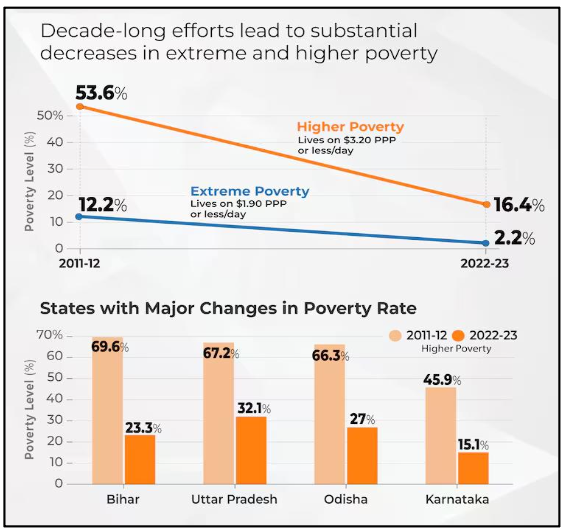 - Types of Poverty
-
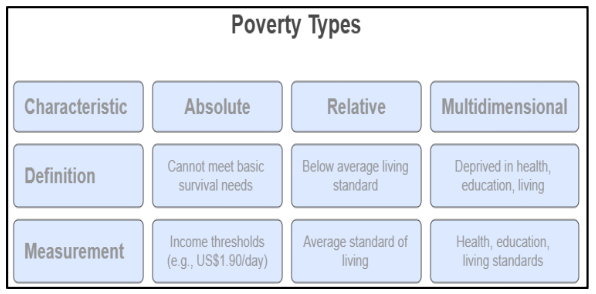 -
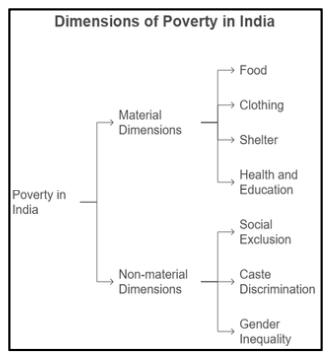 - The Poverty Trap
- Economists often describe poverty as a "trap"—a self-reinforcing condition where deprivation perpetuates further deprivation. In India, this trap is sustained by multiple interlinked factors:
- Lack of Income and Purchasing Power
- Individuals living below the poverty line often lack the resources to afford basic necessities like food, shelter, healthcare, and education.
- Underemployment and Low Productivity
- Scarcity of quality jobs, informal employment, and low agricultural productivity limit income generation, reinforcing poverty across generations.
- Inadequate Social Infrastructure
- Poor access to education, healthcare, sanitation, and housing further reduces human capital development, keeping individuals in a state of marginalization.
- Understanding the Vicious Cycle of Poverty
-
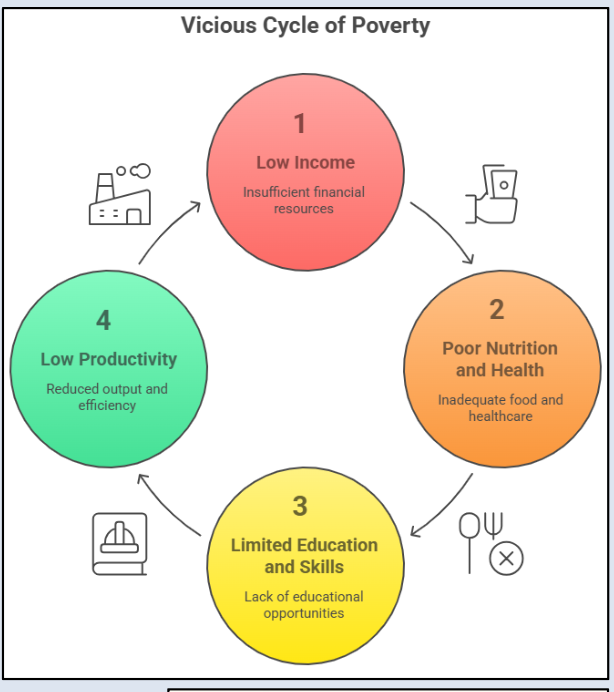 - This complex situation leads to a vicious cycle of poverty as shown below:
- Poor families can’t invest in their children’s education or health.
- Children grow up with fewer skills and limited job prospects.
- They enter adulthood trapped in the same conditions, repeating the cycle.
- This intergenerational transfer of poverty is further worsened by limited access to credit, insecure land rights, social exclusion, and ineffective safety nets.
- Breaking the Cycle- Towards a Virtuous Loop
-
 - The Economic Survey of India has consistently argued for a transition from a vicious cycle to a virtuous cycle of growth. This requires:
- Strategic public investment in education, health, and infrastructure.
- Skill development and entrepreneurship promotion to enhance productivity.
- Job creation through industrial diversification and formalization.
- Social mobility initiatives, including credit access and targeted welfare.
- Poverty in India is not merely a result of income deficiency, but a multidimensional trap that reinforces itself through poor capabilities and limited opportunities. Breaking this trap demands holistic policy efforts that empower individuals and enable them to participate meaningfully in economic growth.
- Creating a virtuous cycle, where higher incomes lead to better health and education—and, in turn, higher productivity—offers the most sustainable path to poverty eradication.
- Note:
- Detailed Discussion on Poverty is provided in VISIONIAS Economics Value Added Material accessible from UPSC Mains Corner. The discussion in this document is limited to Poverty and its association with Hunger (& Malnutrition)
- 2. Hunger and Malnutrition
- Hunger is defined as prolonged food insecurity, where individuals are unable to access enough food due to financial constraints or a lack of resources.
- According to the WHO, hunger arises when people are unable to obtain sufficient calories or essential nutrients to maintain good health.
-
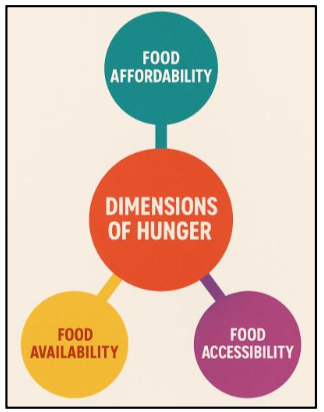 - Malnutrition is another significant problem. It refers to deficiencies in the intake of necessary nutrients, which can either be caused by undernutrition or overnutrition.
- Undernutrition leads to problems like stunting, wasting, and micronutrient deficiencies. On the other hand, overnutrition, resulting from excessive consumption of unhealthy foods, leads to obesity, cardiovascular diseases, and diabetes.
- One major aspect of undernutrition is hidden hunger, which occurs when individuals do not consume enough vitamins and minerals despite sufficient calorie intake. Hidden hunger significantly impacts children, pregnant women, and adults, contributing to poor cognitive development, illness, and reduced productivity.
-
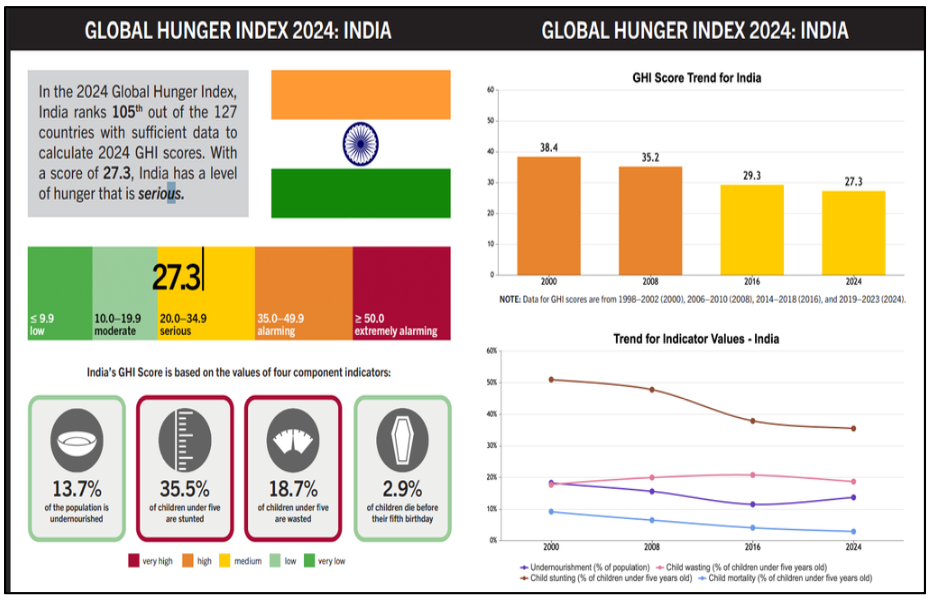 - Hidden Hunger and Malnutrition
- Despite significant strides in poverty reduction, hidden hunger and malnutrition continue to affect millions, particularly children and women, hindering overall health and productivity.
- Hidden Hunger
- Hidden hunger refers to micronutrient deficiencies—the lack of essential vitamins and minerals such as vitamin A, iron, and iodine—despite an adequate caloric intake. It remains a silent epidemic in India, especially among children and pregnant women.
- This type of hunger significantly impacts cognitive development, immune function, and overall health, leading to poor educational outcomes and reduced productivity in adulthood. Hidden hunger is particularly prevalent in rural and marginalized urban areas, where access to diverse and nutritious food remains limited.
- Malnutrition
- Malnutrition continues to be a pervasive issue in India, contributing to high rates of child stunting, wasting, and underweight. According to the Global Hunger Index (GHI) 2023, India ranks 111th out of 125 countries, reflecting its serious hunger levels.
- Child wasting, defined as low weight-for-height, remains a major concern, with India holding the highest global rate of 18.7% for child wasting. High rates of anemia in women (57%) and stunting (35.5%) among children are also prominent indicators of the scale of malnutrition in India.
-
 - Causes of Hunger and Malnutrition
- Poverty
- Families below the poverty line cannot afford nutritious food, leading to issues like stunting and wasting. For instance, 31.4% of children in India are stunted due to chronic malnutrition caused by poverty. The World Bank estimates that 22% of India’s population lives below the poverty line, limiting their access to nutritious food.
- Social and Cultural Factors
- Gender inequality is a critical factor. Women often have limited access to food within households, particularly in patriarchal societies. Cultural norms also play a role, where children and girls are sometimes deprived of adequate nutrition, leading to nutritional deficiencies. A study by UNICEF India found that gender inequality leads to food insecurity, where girls in rural Bihar were often fed last in their households, leading to nutritional deficiencies. Cultural norms prioritize male family members over females for food intake.
- Economic Factors
- Insufficient government expenditure on child nutrition, food wastage, and underutilization of welfare funds exacerbate hunger and malnutrition. Additionally, low agricultural productivity and underemployment in rural areas contribute to food insecurity. According to the Food and Agriculture Organization (FAO), India faces significant food wastage—about 40% of food production is wasted annually. The Government of India’s Economic Survey 2020-21 highlighted that underutilization of funds allocated for child nutrition and low agricultural productivity contribute to malnutrition.
- Governance Issues
- Corruption, mismanagement, and inefficient monitoring of welfare schemes, such as the Public Distribution System (PDS), hinder the effective distribution of food and nutrition to the poor. Despite numerous government schemes, leakage, and ineffective implementation continue to pose significant challenges. A 2018 report by the Comptroller and Auditor General of India (CAG) found that 30-40% of food grains allocated for the Public Distribution System (PDS) in Bihar were lost due to leakage and mismanagement, preventing effective delivery to vulnerable populations.
- Environmental Factors
- Climate change is increasingly affecting agriculture and food production, leading to food insecurity. Poor sanitation and hygiene also result in diseases that hinder nutrient absorption, exacerbating malnutrition. A 2019 report by the Indian Meteorological Department (IMD) highlighted that climate change is affecting food production in India. For example, wheat and rice production in states like Punjab and Haryana have been impacted by shifting monsoon patterns, leading to food insecurity. Moreover, poor sanitation continues to hinder nutrient absorption, exacerbating malnutrition.
- 2.1. Link Between Poverty and Hunger
-
 - Limited Access to Food:
- Poverty restricts financial resources, making it difficult for families to afford enough food, let alone nutritious options. A significant portion of the population in developing nations cannot afford a healthy diet, leading to undernutrition and food insecurity.
- Impact on Human Capital:
- Hunger, especially in children, impairs physical growth, cognitive development, and learning abilities. This affects educational outcomes, leading to reduced opportunities for better employment in the future, and contributes to the intergenerational transmission of poverty.
- Reduced Productivity in Adults:
- Malnutrition weakens the body’s immunity and causes fatigue, making it difficult for adults to work at full capacity. This leads to underemployment or unemployment, which deepens the cycle of poverty.
- Poor Sanitation and Healthcare:
- In impoverished areas, poor access to clean water, sanitation, and healthcare contributes to diseases like diarrhea, which further hinders nutrient absorption and worsens malnutrition. This health crisis increases medical costs, taking away resources from food.
- Vicious Cycle:
- Poverty leads to hunger, and hunger reduces the capacity to work, earn, and thrive, making it harder to break free from the cycle of poverty and malnutrition. Both issues need to be tackled together to disrupt this ongoing loop.
- Ultra Processed Food and Hunger
- The increasing consumption of ultra-processed foods (UPFs) in India highlights the intersection between health, hunger, and poverty. These foods are affordable, convenient, and widely accessible, making them particularly attractive to low-income populations who often struggle to afford healthier, fresh food. As a result, UPFs contribute to hidden hunger, where individuals consume sufficient calories but lack essential nutrients, leading to malnutrition.
- Health Implications:
- UPFs are linked to chronic conditions like obesity, cardiovascular diseases, and type 2 diabetes, which disproportionately affect impoverished communities. This exacerbates their already vulnerable health status and limits their ability to work or attend school, reinforcing the cycle of poverty.
- Economic Burden:
- The affordability of UPFs often comes at the cost of nutrient-rich alternatives, such as fruits and vegetables, which are more expensive and less accessible. This imbalance leads to nutrient deficiencies and poor long-term health outcomes, increasing healthcare costs.
- In essence, the rise of UPF consumption in poverty-stricken areas creates a vicious cycle of poor health and limited opportunities. Addressing this issue requires multi-pronged policy measures, focusing on education, regulation, and promotion of healthy food options.
- 3. Government Response to Eliminate Poverty and Hunger
- Poverty Alleviation Programs
- The Indian government has implemented several key welfare programs aimed at tackling poverty and hunger, especially among marginalized and vulnerable groups. These programs seek to address both economic deprivation and social exclusion, with a focus on improving the living standards of the poor, ensuring access to essential services, and empowering individuals to improve their socio-economic conditions.
- National Rural Employment Guarantee Act (MGNREGA)
- MGNREGA is a flagship program aimed at providing guaranteed employment to rural households. It ensures that at least one adult member of a household is employed for a minimum of 100 days per year, providing income support for rural families.
- The program focuses on creating rural infrastructure through public works projects such as road construction, irrigation works, and afforestation. By providing employment opportunities, MGNREGA helps reduce rural poverty and improves the standard of living for millions of rural households.
- Public Distribution System (PDS)
- The PDS is one of the largest food security systems in the world, designed to provide subsidized food grains to the poor. It aims to ensure that vulnerable populations, especially those in rural and remote areas, have access to essential food items like rice, wheat, and sugar at affordable prices.
- The system is essential in preventing hunger and malnutrition by guaranteeing access to basic food for those unable to purchase it from the open market. However, challenges related to leakage, corruption, and inefficient distribution have hampered its effectiveness in some regions.
- Pradhan Mantri Awas Yojana (PMAY)
- PMAY is a housing scheme aimed at providing affordable housing to the urban poor. With a goal to construct millions of affordable homes for the homeless and those living in inadequate conditions, PMAY focuses on urban slums and underdeveloped rural areas.
- The program aims to reduce homelessness and improve living standards, ensuring that the poor have access to safe and secure housing. It is part of the government's broader strategy to tackle urban poverty and create sustainable cities.
- Swachh Bharat Abhiyan
- The Swachh Bharat Abhiyan (Clean India Mission) is an initiative to improve sanitation and hygiene nationwide, with a particular focus on rural areas. The mission aims to eliminate open defecation, improve access to clean drinking water, and promote the use of toilets.
- By improving sanitation, the program directly impacts public health, reducing the incidence of waterborne diseases like diarrhea and malaria, which are prevalent in poor communities. Improved hygiene practices also contribute to reducing malnutrition and hidden hunger by ensuring safe environments for food consumption.
- Programs for Removal of Hunger and Malnutrition
- India has implemented multiple programs to address hunger and malnutrition, focusing on both immediate food access and long-term nutrition improvement.
- National Food Security Act (NFSA):
- Covers around 81 crore people.
- Targets 75% of the rural population and 50% of the urban population.
- Provides subsidized food grains through the Targeted Public Distribution System (TPDS).
- Pradhan Mantri Garib Kalyan Anna Yojana (PMGKAY):
-
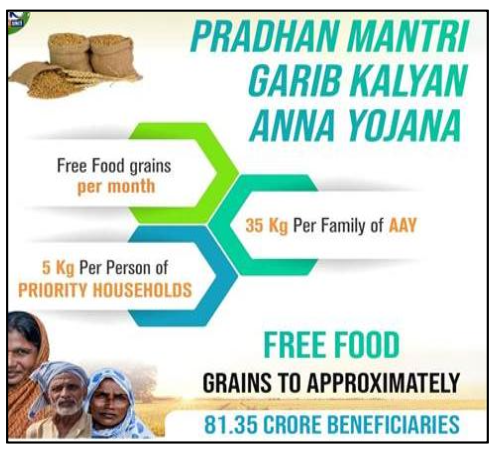 - Extended till 2029.
- Ensures free food grains to 81.35 crore beneficiaries.
- Acts as a buffer for the poor against economic shocks.
- Integrated Child Development Services (ICDS):
- Targets children under six, as well as pregnant and lactating women.
- Provides supplementary nutrition, health checkups, and early education support.
- Mid-Day Meal Scheme (now PM POSHAN):
- Provides nutritious meals to school children.
- Aims to improve child nutrition, increase school attendance, and reduce dropout rates.
- POSHAN Abhiyaan
- Goals:
- Reduce stunting, wasting, underweight, and anemia in children and women. NFHS-5 data shows modest improvements in all indicators. Promotes breastfeeding, dietary diversity, and hygiene during the critical first 1,000 days.
- Technology Use:
- Real-time tracking via the ICDS-CAS app enables data-driven planning.
- Community Engagement:
- Jan Andolan campaigns have reached over 30 crore people to spread nutrition awareness.
- Convergence:
- Integrates efforts across 18 ministries, with localized action plans.
- Progress in Poverty Reduction
-
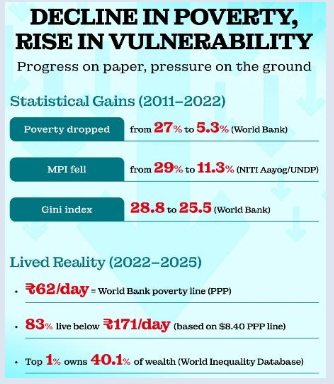 - The government’s poverty alleviation programs have made significant strides in reducing poverty across India, with substantial improvements in key poverty indicators.
- Reduction in Poverty Rates
- According to the NITI Aayog’s Multidimensional Poverty Index (MPI) report, 13.5 crore people were lifted out of poverty between 2015-16 and 2019-21.
- The national poverty rate declined from 24.85% to 14.96%, showing a marked improvement in the socio-economic conditions of millions. The decline in poverty has been more pronounced in rural areas, which have traditionally had higher poverty rates.
- Government Commitment to Poverty Reduction
- These improvements reflect the government's commitment to addressing multidimensional poverty, which includes not just income but also access to healthcare, education, and basic services like water and sanitation.
- However, challenges remain in fully eradicating hunger and malnutrition, particularly in regions with historical and social inequalities.
- 4. Multidimensional Poverty Index (MPI)- Improvements and Challenges
- India has made significant progress in reducing multidimensional poverty, as highlighted by the latest United Nations and Human Development Reports. Unlike income-based poverty measures, the MPI captures simultaneous deprivations across health, education, and living standards using indicators like nutrition, child mortality, years of schooling, sanitation, and access to electricity.
- Key Data on MPI (2025 Human Development Report)
-
| Indicator | Details |
|---|---|
| Multidimensionally Poor | 16.4% of Indians are multidimensionally poor |
| Severe Poverty | 4.2% are in severe poverty |
| Vulnerable to Poverty | 18.7% are vulnerable to falling into poverty |
| Poverty Reduction | Poverty fell from 24.85% in 2015–16 to 14.96% in 2019–21 |
| People Escaped Poverty | About 415 million people escaped poverty in 15 years |
| Urban Poverty | Urban poverty is now 5.5% |
| Rural and State Disparities | Rural areas and poorer states like Bihar, Jharkhand, and Uttar Pradesh saw the fastest reductions but still have high absolute numbers |